Used as an Indicator of Impending War
Pizza Orders Surged Before Israel's Attack on Iran
Before the first bomb from Israel's attack on Iran fell, an internet user predicted the attack by monitoring the number of pizza orders around the Pentagon in Washington, D.C., United States, drawing attention.
On the 13th (local time), foreign media outlets including The Guardian reported that an X (formerly Twitter) account called "Pentagon Pizza Report" posted a message about an hour before Iranian state TV first reported a large explosion in Tehran. The post stated, "As of 6:59 p.m., there has been a surge in activity at nearly every pizza shop near the Ministry of Defense."
The Pentagon Pizza Report account has provided information related to "late-night activity surges" at U.S. military command centers. This is because when late-night activity at military command centers increases, pizza orders at nearby shops also rise, allowing people to infer that an attack might be imminent. While there are many fast-food restaurants inside the Ministry of Defense building, there are no pizza shops, so orders must be placed from outside. Three hours later, the account also noted that "there was an unusually small crowd at a nearby gay bar for a Thursday night," implying "a busy night at the Pentagon."
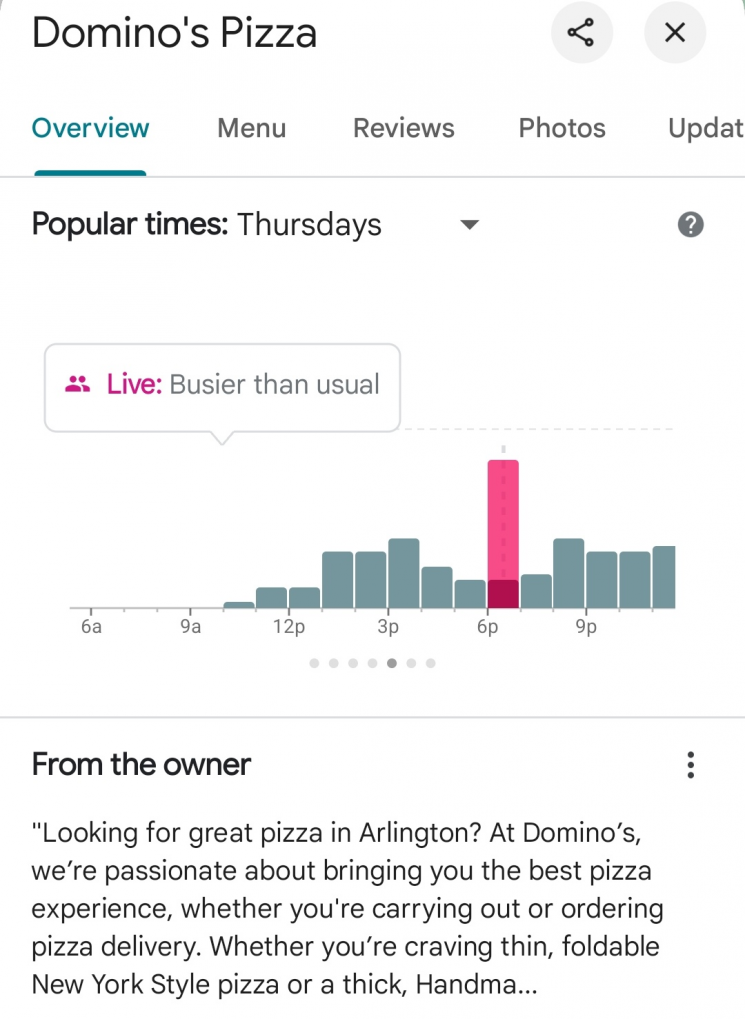 An hour before the state-run Iranian TV first reported a large explosion in Tehran on the 13th (local time), the number of orders at a pizza shop near the Ministry of Defense sharply increased. Screenshot from X (formerly Twitter)
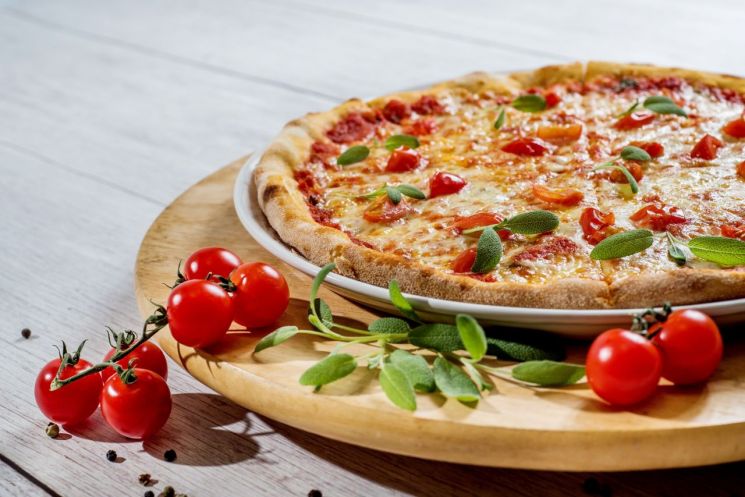
This phenomenon is sometimes called the "Pizza Meter." When a specific crisis such as war intensifies, government office employees tend to stay at work longer, which leads to an increase in pizza orders. Therefore, the more pizza orders there are, the more severe the crisis is likely to be, making it a kind of "virtual indicator."
This concept originated from an interview with Frank Micks, who operated 60 Domino's Pizza stores in the Washington, D.C. area?a region with many government offices?in 1991. In that interview with the Los Angeles Times, he said, "At 2 a.m., news media are in bed and can't know about major incidents, but all the delivery drivers are out. On the night before Iraq invaded Kuwait, more than 20 pizzas were delivered to the CIA."
After his remarks, more people began paying attention to pizza order volumes near government offices ahead of war crises, and the term "Pizza Meter" was coined. Wolf Isaac Blitzer, who was a Pentagon correspondent for CNN in the 1990s, even advised junior reporters, "If you want to know what's happening at the Pentagon, always monitor the pizza."
In fact, right before the Gulf War, the number of pizza orders going into the White House surged from about 50 to 125. Just before the U.S. invasion of Panama in December 1989, pizza deliveries to the Pentagon doubled. During the Iranian missile attack in 2024 as well, pizza shops near the Pentagon were reportedly much busier than usual.
Previously, in the early morning of the 13th, two days before the sixth round of nuclear talks between the United States and Iran, Israel launched a surprise strike on dozens of Iran's nuclear and military facilities. At the same time, targeted airstrikes were carried out against nuclear scientists, including Hossein Salami, commander-in-chief of the Islamic Revolutionary Guard Corps (IRGC), and Fereydoon Abbasi, former head of the Atomic Energy Organization of Iran. In response to Israel's attack, Iran launched a large number of missiles at Israeli territory as retaliation. Iran's airstrikes continued for about four rounds until the early morning of the following day.
© The Asia Business Daily(www.asiae.co.kr). All rights reserved.
![Clutching a Stolen Dior Bag, Saying "I Hate Being Poor but Real"... The Grotesque Con of a "Human Knockoff" [Slate]](https://cwcontent.asiae.co.kr/asiaresize/183/2026021902243444107_1771435474.jpg)

















