Survey of SMEs on Minimum Wage
22% of Respondents Say "Next Year's Minimum Wage Should Be Lowered"
6 Out of 10 Companies Report "Worse Business Conditions Than Last Year"
66% of small and medium-sized enterprises (SMEs) said that next year’s minimum wage should be either frozen or reduced.
According to the “Survey on Difficulties and Opinions Regarding Minimum Wage Among SMEs” released by the Korea Federation of SMEs on June 15, 72.6% of SMEs responded that this year’s minimum wage is a burden, and 66% said that next year’s minimum wage should be either frozen or reduced. The survey was conducted with 1,170 SMEs.
Regarding next year’s minimum wage level, 75.3% of companies with annual sales of less than 1 billion KRW and 73% of companies with fewer than 10 employees responded that the minimum wage should be either frozen or reduced. The smaller the company, the greater the difficulties they face due to the minimum wage.
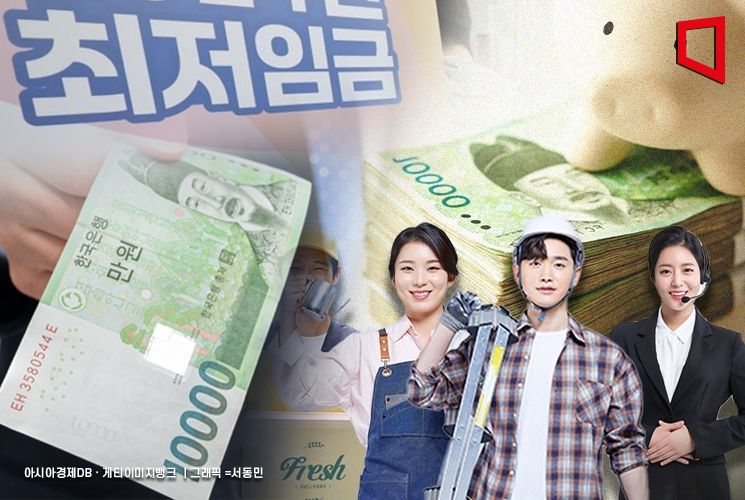
In particular, the proportion of respondents who said the minimum wage should be reduced was 22.2%, a significant increase from 2.8% in the previous year. This increase is analyzed as a result of the growing number of SMEs and small business owners who have reached their limits amid worsening business conditions, such as continued sluggish domestic demand.
In fact, 64.1% of SMEs said that their business situation had worsened compared to the previous year. The main employment and labor factors that worsened the business environment were cited as minimum wage increases (54%), increases in social insurance premiums (37.6%), and labor shortages (29.7%).
When asked how they would respond if the minimum wage were raised above a tolerable level, 45.8% of SMEs answered that they would either “reduce existing staff” or “cut back on new hires.” The proportion of those planning to reduce existing staff increased from 6.8% last year to 23.2%. There are growing concerns that if the minimum wage rises, employment will be significantly reduced, especially at small businesses with fewer employees.
Regarding the most urgent improvement needed in the minimum wage system, 33.2% of SMEs selected “differentiated application for certain vulnerable industries” as the top priority, while 31.8% said that the decision cycle should be extended from one year to more than two years. By sales volume, 38.8% of companies with less than 1 billion KRW in annual sales, and by workforce size, 37.2% of companies with 1 to 9 employees felt a greater need for differentiated application as company size decreased.
Lee Myungro, head of the Human Resources Policy Division at the Korea Federation of SMEs, said, “Since the minimum wage system depends on the payment capacity of companies, we need to enhance the sustainability of the system by applying industry-specific minimum wages to sectors with low acceptance of the minimum wage, freezing or minimizing increases in the minimum wage, and easing the burden on companies to restore the innovation and growth momentum of our economy.”
© The Asia Business Daily(www.asiae.co.kr). All rights reserved.
![Clutching a Stolen Dior Bag, Saying "I Hate Being Poor but Real"... The Grotesque Con of a "Human Knockoff" [Slate]](https://cwcontent.asiae.co.kr/asiaresize/183/2026021902243444107_1771435474.jpg)
















