NH Nonghyup's Mortgage Loans Up 5.6% Since Start of Year
Other Banks See Growth of 0.8% to 2.4%
Loan Inspections Begin as Seoul Metropolitan Home Prices Surge
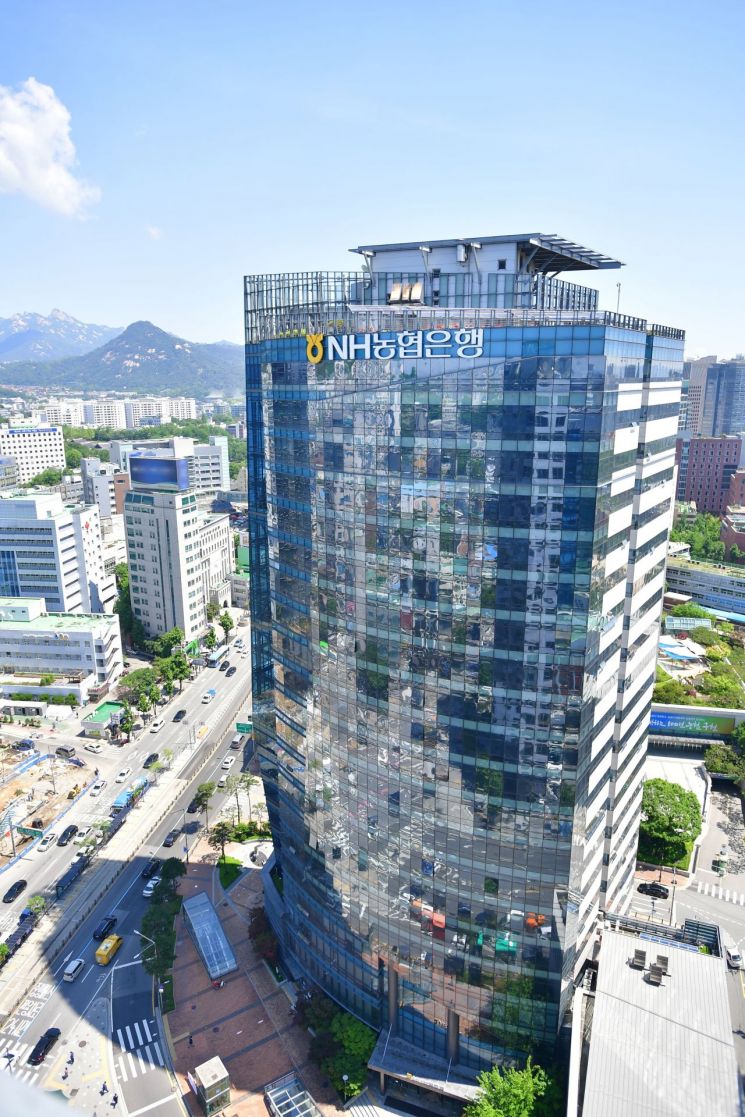
As housing prices in the Seoul metropolitan area have surged recently, the Financial Supervisory Service has begun inspecting banks' management of household loan targets. This is the first time this year that the financial authorities have directly checked banks' household loan management plans. The first bank to be inspected is NH Nonghyup Bank.
According to the financial authorities on June 15, the Financial Supervisory Service plans to conduct both a document review and an on-site inspection of NH Nonghyup Bank regarding household loans next week. The inspection will cover issues such as reducing loan limits for multiple-home owners, managing mortgage loans in speculative areas, prohibiting loans conditional on property disposal, verifying actual residence registration, and applying loan-to-value (LTV) ratios.
An official from the financial authorities stated, "We finalized the annual household loan targets in February and March this year, and agreed to normalize any excess through voluntary measures. We will directly check whether banks with rapidly increasing loan growth are implementing their management plans and following the proper procedures."
The reason NH Nonghyup Bank was selected as the first target is that among the five major commercial banks, its mortgage loan growth rate has surged much more sharply than the others. Comparing the growth rates of mortgage loans in May versus January of this year: Hana Bank recorded 0.8%, KB Kookmin Bank 1.4%, Shinhan Bank 1.6%, Woori Bank 2.4%, and NH Nonghyup Bank 5.6%.
Previously, the Financial Services Commission announced that, in order to manage household debt this year, it would keep the growth rate of household debt relative to gross domestic product (GDP) within the nominal growth rate of 3.8%. The authorities have communicated monthly and quarterly household loan management standards to banks to prevent concentrated lending at specific times, as happened last year. However, only NH Nonghyup Bank has exceeded the 3.8% growth rate.

The financial authorities explained that, considering the annual target, the overall volume of household loans is not at a concerning level. Nevertheless, they have initiated the inspection because the increase in household loans in the Seoul metropolitan area last month was seen as unusual. In May, household loans across all financial sectors increased by 6 trillion won compared to the previous month, a significant jump from the 5.3 trillion won increase in the previous month.
The composition of household loans has also raised concerns. In April, personal credit loans for stock investment and policy loans drove the growth in household lending. However, in May, both individual mortgage loans and policy loans saw a substantial increase, resulting in the largest monthly rise in household loans so far this year.
The increase in household loans is due to multiple factors. First, the lifting of land transaction permit zones in February and March led to a rise in housing transactions. Second, interest rates were lowered. Third, ahead of the implementation of the third stage of the stress-based debt service ratio (DSR) regulation in July, there has been a rush in demand to secure loans before the new rules take effect.
The Financial Supervisory Service plans to conduct document or on-site inspections not only at NH Nonghyup Bank but also at other banks with rapid loan growth. If the increase in household loans in the Seoul metropolitan area does not subside despite these measures, additional responses are expected.
Starting July 1, when the third stage of the stress-based DSR is implemented, an additional interest rate margin of 1.50% will be applied to household loans in the metropolitan area, and further increases in the margin are under consideration. In addition, the current guarantee ratio for jeonse loans provided by guarantee institutions has already been reduced from 100% to 90%, and lowering the guarantee ratio even further for the metropolitan area is also being considered.
© The Asia Business Daily(www.asiae.co.kr). All rights reserved.

![A Woman with 50 Million Won Debt Clutches a Stolen Dior Bag and Jumps... A Monster Is Born [Slate]](https://cwcontent.asiae.co.kr/asiaresize/183/2026021902243444107_1771435474.jpg)
















