President Lee Appoints Three Special Prosecutors, People Power Party Objects
"Politically Motivated... Doubts About Investigation Fairness"
Democratic Party Welcomes Move as "Restoration of Constitutional Order, Not Retaliation"
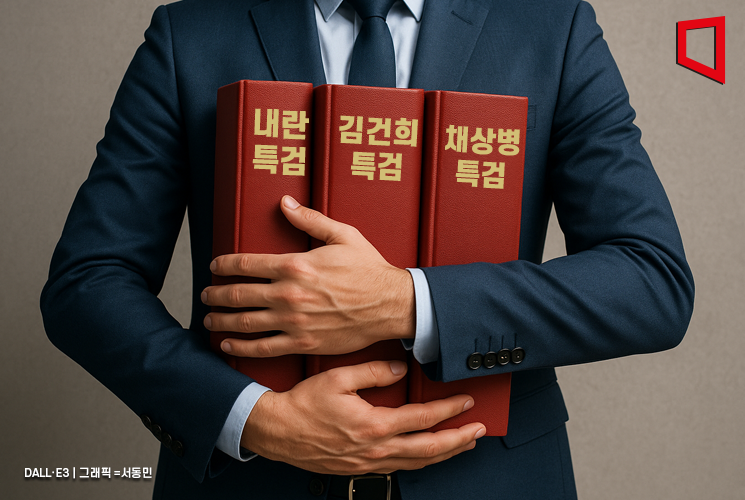
President Lee Jae Myung has appointed three special prosecutors for the so-called “three major special investigations” (Insurrection, Kim Keon Hee, and Chae Sangbyeong special prosecutors), drawing significant attention in political circles. The Democratic Party welcomed the appointments, stating, “We ask for an unreserved investigation that looks only to the people.” In contrast, the People Power Party is closely monitoring the potential impact of the special prosecutors and is struggling to devise countermeasures.
At the Democratic Party’s Supreme Council meeting held at the National Assembly in Yeouido, Seoul, on the 13th, Supreme Council member Jun Hyun Hee evaluated, “As the roots of evil run deep, resistance will be fierce, but all three special prosecutors possess investigative capabilities and integrity that will not be shaken by external pressure.” Supreme Council member Kim Byung Joo also stated, “With the presidential office immediately appointing the special prosecutor candidates recommended by the Democratic Party and the Cho Kuk Innovation Party yesterday, the three major special investigations are now gaining momentum.”
The previous day, around 3 p.m., the Democratic Party and the Cho Kuk Innovation Party each recommended three candidates for the three major special prosecutor posts to the presidential office. About eight hours later, at 11:09 p.m. on the same day, the presidential office appointed Cho Eun Seok, former Board of Audit and Inspection commissioner, as the special prosecutor for the Insurrection case; Min Jung Ki, former chief judge of the Seoul District Court, as the special prosecutor for the Kim Keon Hee case; and Lee Myung Hyun, former chief prosecutor of the Ministry of National Defense’s High Prosecutors’ Office, as the special prosecutor for the Chae Sangbyeong case. Cho and Min were recommended by the Democratic Party, while Lee was recommended by the Cho Kuk Innovation Party.
Yoon Jae Kwan, spokesperson for the Cho Kuk Innovation Party, said, “The three appointed special prosecutors possess expertise, competence, leadership, and a reformist spirit,” adding, “We trust that they will respond to the people’s expectations with just and fair investigation results.”
With the selection of the three special prosecutors proceeding rapidly, the People Power Party, which has been experiencing internal strife since its presidential election defeat, finds itself cornered. The party has strongly objected, calling it “political retaliation,” but as a minority opposition party with no veto power, it appears to lack clear countermeasures.
Ham In Kyung, spokesperson for the People Power Party, argued in a commentary on the 13th, “The promise made during the presidential campaign that ‘there will be no political retaliation’ has turned out to be the exact opposite. The pledge to ‘put people’s livelihoods first’ has disappeared, and the direction of the new administration has been derailed by massive political retaliation investigations.”
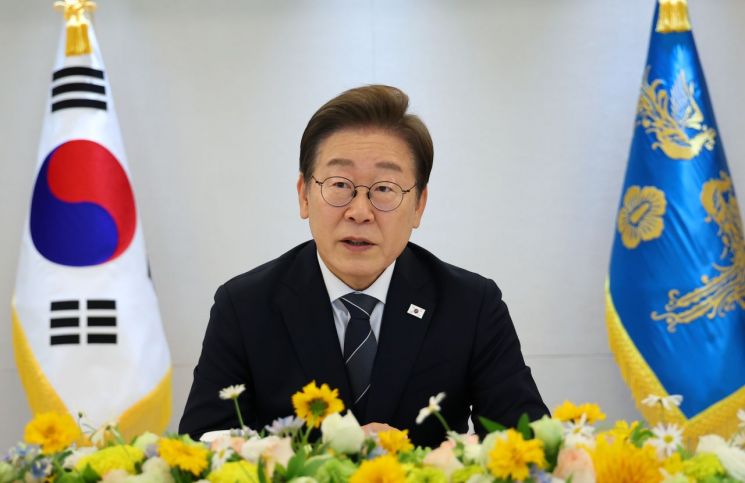 President Lee Jae Myung is speaking at the meeting with six economic organizations and business leaders held at the Presidential Office in Yongsan, Seoul on the 13th. Photo by Yonhap News
With the appointments completed, the “mammoth special prosecution team,” which could include up to 577 members, is expected to begin work as early as this month. The investigations will cover 11 allegations related to emergency martial law, 16 allegations concerning First Lady Kim Keon Hee, and 8 allegations regarding the death of Chae Sangbyeong. Not only former President Yoon Suk Yeol and his wife, but also a significant number of officials from the previous administration and the People Power Party are expected to be subjects of investigation.
In particular, within and outside the People Power Party, there is a growing sense of crisis that the results of the insurrection special prosecutor’s investigation could further fuel controversy over the party being labeled as an “unconstitutional party.” Park Hyung Soo, the People Power Party’s chief deputy floor leader, dismissed such concerns, saying, “We cannot become an unconstitutional party.” However, if the special investigation reveals evidence that the party leadership at the time was involved in martial law, the situation could change.
A People Power Party lawmaker representing the Busan-Gyeongnam (PK) region said in a phone call, “Although the appointing authority nominates the special prosecutors, the process must be fair through bipartisan agreement,” adding, “There are lawmakers within the party who genuinely feel a sense of crisis about the potential dissolution of the party.” Another People Power Party lawmaker commented, “It is highly inappropriate for the new administration to push the country into a prosecutorial state immediately after taking office,” and criticized, “There are significant constitutional issues, such as excluding the People Power Party from the nomination process.”
However, as internal divisions within the People Power Party have deepened since the presidential election defeat, the party’s struggle against the dominant ruling party appears to be losing momentum. In particular, conflicts between pro-Yoon (pro-Yoon Suk Yeol) and pro-Han (pro-Han Dong Hoon) factions over whether to extend the term of interim leader Kim Yong Tae and pursue party reform plans remain unresolved.
© The Asia Business Daily(www.asiae.co.kr). All rights reserved.


















