Buldak Export Base Completed
Press Conference Held Ahead of Miryang Plant No. 2 Completion Ceremony on June 10
Completed in 15 Months After Groundbreaking in March Last Year
Annual Production of 2.8 Billion Buldak Units Across All Plants Including Miryang
On Trump Administration Tariffs: "Responding with Regional Cost Structures"
"Our goal is to catch up to the stronghold of major global brands like Coca-Cola."
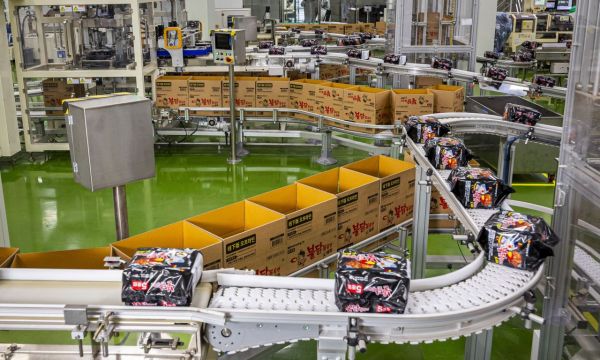
Kim Dongchan, CEO of Samyang Foods, made this statement during a press conference held on June 10 at the Nano Convergence National Industrial Complex in Bubuk-myeon, Miryang-si, Gyeongnam. He said, "The Buldak brand has become one enjoyed by people all over the world, but we are not at our peak yet; we have just entered the trajectory."
This press conference was held ahead of the completion ceremony for Samyang Foods' Miryang Plant No. 2, which will serve as an export base for targeting the global ramen market. Kim's remarks emphasize the company's commitment to strengthening the export competitiveness of its flagship 'Buldak' brand and advancing it into a major global brand.
Kim Jeongsu, Vice Chairman of Samyang Foods, also expressed high expectations in his congratulatory speech at the completion ceremony on June 11, saying, "The star called Buldak has only just begun to burn," and, "It will burn hotter and shine brighter in the future."
Vice Chairman Kim stated, "We must become the bible of spicy flavors going forward." He added, "Just as Carbo Buldak, with its milder spiciness, is currently the most beloved, we will continue to explore and segment spicy flavors, expanding our range and demonstrating what it means to be the bible of spiciness." He further said, "We aim to make the Buldak brand a cultural icon," and, "While the past decade has been driven by content focused on eating more, faster, and spicier, we now want to become a platform that creates more enjoyable and entertaining content."
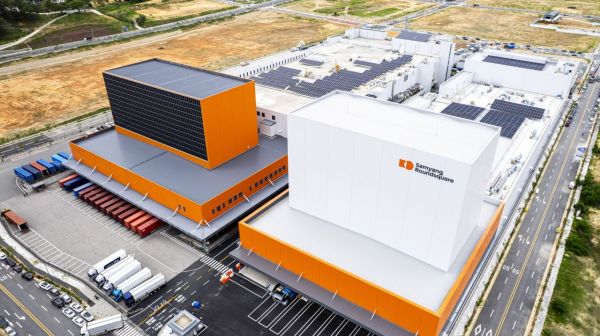
The newly built Miryang Plant No. 2 is a production base constructed three years after Miryang Plant No. 1, which was completed in May 2022. Construction began in March last year and was completed in about 15 months. The facility covers a building area of 15,840 square meters, with one basement level and three above-ground floors, and a total floor area of 33,000 square meters.
When Samyang Foods developed Buldak Bokkeummyeon in 2012, its annual sales were 350 billion KRW. By 2023, annual sales surpassed 1 trillion KRW, and last year, they reached 1.7 trillion KRW. This was driven by Buldak Bokkeummyeon selling so rapidly that it caused global shortages. Kim stated, "When Buldak was first developed, no one imagined it would become such a hot item not only in Korea but also globally," and added, "This year, we are working hard to achieve even higher goals."
Samyang Foods plans to resolve supply shortages and strengthen its global export capacity through Miryang Plant No. 2. Buldak Bokkeummyeon is currently experiencing supply shortages in global markets including the United States, China, and Europe. Last year, exports accounted for approximately 77% of Samyang Foods' total sales. With the addition of Miryang Plant No. 2, annual production of Buldak Bokkeummyeon is expected to increase from 2.08 billion units to 2.8 billion units. The plant is equipped with six production lines?three for bag noodles and three for cup noodles?and can produce about 830 million units annually.
Kim stated, "Plant No. 1 produces about 730 million units per year, and combined with Plant No. 2, we can produce 1.5 billion units annually, which accounts for about 50% of our export volume." He emphasized, "We will continue to expand capacity and improve production efficiency to achieve our sales targets."
The company is also preparing countermeasures for the tariff policies of the Trump administration. Although Samyang Foods has a high export ratio, all products are manufactured in Korea, raising concerns about direct impacts from tariffs. Kim said, "Tariffs on ramen were previously 0%, but it appears a 10% tariff will be imposed." He continued, "Although the future is still uncertain, we have formed a task force aligned with the Trump administration's timeline and are thoroughly preparing countermeasures, including regional cost structures."
Samyang Foods also plans to expand the use of eco-friendly energy at Miryang Plant No. 2. Notably, the plant is structured to reduce annual carbon dioxide emissions from 194 tons to 622 tons.
Oh Seungyong, head of the Miryang plant, said, "The solar power facility at Miryang Plant No. 2 has a capacity of 750 kW, and combined with the 443 kW at Plant No. 1, we have established a total of 1.2 MW of solar power facilities." He added, "This enables the use of 1,530 MWh of eco-friendly energy annually, which is expected to contribute to ESG (Environmental, Social, and Governance) management."
The plant is also set to serve as a smart factory hub. Miryang Plant No. 2 has an automated logistics warehouse and has introduced autonomous mobile robots (AMR) to optimize the logistics process between Plants No. 1 and No. 2. Manufacturing processes built on global quality certifications such as RSPO (Roundtable on Sustainable Palm Oil) and Halal are integrated with the Quality Management System (QMS), allowing real-time management of quality indicators across all processes and enabling preemptive responses to even minor risk factors.
A Samyang Foods representative said, "By applying advanced smart factory systems, we have improved the utilization of production data," and added, "This is a cutting-edge plant that achieves maximum production capacity through preventive maintenance of production facilities, energy savings, and real-time monitoring of production data."
© The Asia Business Daily(www.asiae.co.kr). All rights reserved.