German DAX Index Doubles Since September 2022
Financial Sector, SAP, and Rheinmetall Lead the Surge
Korea Needs Financial Value-Up and Support for AI and Defense Industries
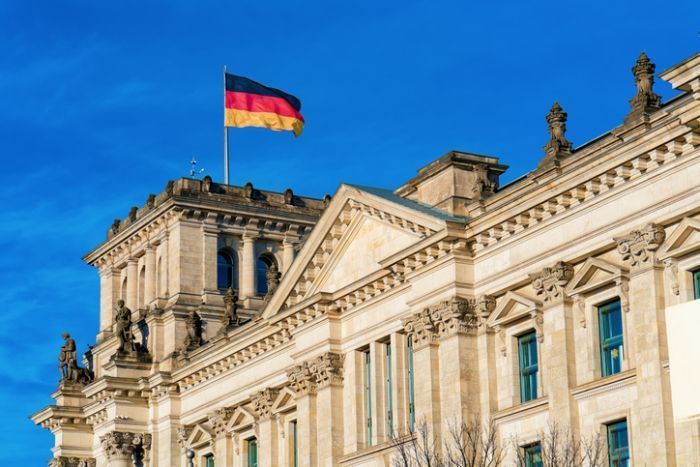
On June 10, iM Securities published a report titled "KOSPI 5000, Let's Find the Answer in the German Stock Market," in which it pointed out that the doubling of the German stock index over the past three years was driven by the growth of tech industries such as SAP, the defense industry including Rheinmetall, and the value-up of the financial sector. The report argued that Korea needs similar policies.
iM Securities noted that the KOSPI 5000 index, proposed by the new administration, may not be an entirely unattainable goal, citing the German DAX index as a representative example. As of the closing price on June 6, the German DAX index stood at 24,304, having risen by more than 100% compared to its low point in September 2022.
It is difficult to attribute the sharp rise in the German stock market to economic fundamentals, as there are no significant differences between Korea and Germany in terms of GDP growth rate, inflation, or export trends. In fact, over the past three years, Korea's growth rate has been relatively better than Germany's. Apart from economic fundamentals, commonly cited reasons for the surge in the German stock market include: stabilization of prices resulting from the decline in energy prices that had previously soared due to the Russia-Ukraine war; an accommodative monetary policy stance, including interest rate cuts; and expectations for strong fiscal policies such as increased defense industry spending by the new German government.
iM Securities also identified other factors behind the surge in the German stock market, including: a sharp rise in the stock prices of top market cap companies, particularly in the financial sector; the emergence of new growth industries; and fiscal soundness. While the German DAX index has soared over the past three years, not all sectors have risen together. Stock prices in the financial, communication services, technology, and industrial sectors have increased significantly, whereas the healthcare and consumer discretionary sectors have actually declined during the same period.
Above all, the upward trend in financial sectors such as banking and insurance has been particularly notable. German banks, which once faced a serious crisis, saw an increase in institutional investors' allocations to financial stocks?such as insurance companies and pension funds?due to increased market liquidity resulting from expansionary fiscal and monetary policies. At the same time, these banks achieved structural improvements. This phenomenon is referred to as the "value-up" of financial stocks.
The emergence of growth industries is also a key factor. For example, SAP, an IT company and the largest by market capitalization in Germany, saw its stock price rise by 119% compared to early 2022. Just as the "Magnificent 7" led the U.S. stock market, SAP drove the German market. Additionally, due to the Russia-Ukraine war and the "America First" policy of the Trump administration, the defense company Rheinmetall's market capitalization soared by an astonishing 2,100% compared to early 2022.
Germany's fiscal soundness cannot be overlooked either. Although the new German government has announced ambitious fiscal expansion pledges and is strengthening expansionary fiscal policies, concerns about Germany's fiscal soundness are not as pronounced as in the United States. This is because Germany maintains a stable level of government debt. Despite bold fiscal policy initiatives, the financial market does not view fiscal risks as significant, allowing the German stock market to fully benefit from fiscal and monetary liquidity effects. According to IMF data from April this year, the ratio of government debt to GDP is 123% in the United States and 65% in Germany.
Comparing the German and Korean economies, there are many similarities, particularly in the high proportion of manufacturing centered on exports. Park Sanghyun, an analyst at iM Securities, emphasized, "To achieve the KOSPI 5000 index, consistent and strong policy implementation and institutional reforms must go hand in hand, and this should lead to a visible value-up centered on the domestic financial sector." He also noted, "In the case of the German stock market, it is noteworthy that stock price increases were concentrated among large-cap companies with global competitiveness or those aligned with new growth industries," adding, "The new administration has also pledged aggressive investment in the AI industry, so it is necessary to restore industrial competitiveness through this, and additional policy support is needed for sectors such as defense and shipbuilding, which have found new growth momentum."
Currently, Korea's government debt-to-GDP ratio stands at 54.5%, which is lower than Germany's. However, since global investors are paying attention to fiscal soundness, efforts to balance soundness with fiscal or monetary policy are also necessary.
© The Asia Business Daily(www.asiae.co.kr). All rights reserved.
![Clutching a Stolen Dior Bag, Saying "I Hate Being Poor but Real"... The Grotesque Con of a "Human Knockoff" [Slate]](https://cwcontent.asiae.co.kr/asiaresize/183/2026021902243444107_1771435474.jpg)











