Statistics on Most Common Diseases in 2024
Cataract is the Leading Cause of Hospitalization
Alzheimer's Disease Incurs the Highest Medical Expenses
Periodontal Disease Remains the Most Common Outpatient Condition
Last year, the most common disease among inpatients covered by the National Health Insurance was age-related cataract. Cataract is an ophthalmic condition in which the lens inside the eye becomes cloudy due to aging or damage, causing blurred vision as if looking through fog.
According to the 2024 statistics on frequently occurring diseases released by the Health Insurance Review and Assessment Service on June 8, a total of 337,027 inpatients were treated for cataracts last year. This represents a 5.4% increase compared to 320,061 patients in the previous year.
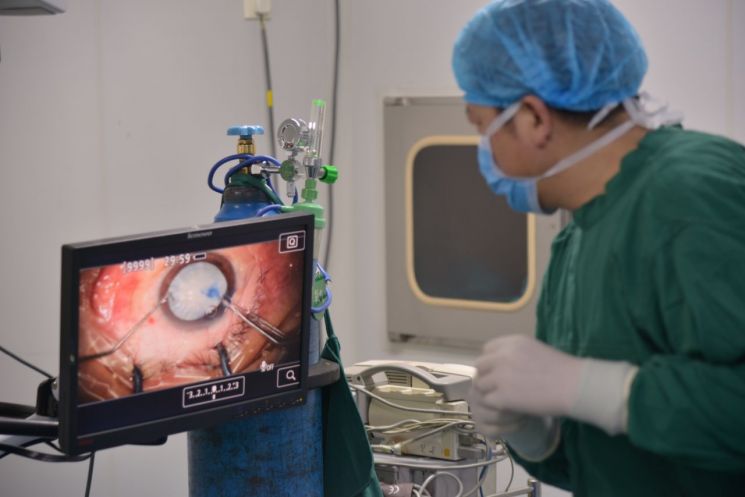
Following age-related cataract, "pneumonia due to unspecified organism" (308,287 patients), "other and unspecified gastroenteritis and colitis of infectious origin" (244,125 patients), and "other intervertebral disc disorders" (220,212 patients) ranked as the second to fourth most common causes of hospitalization.
Ten years ago, in 2014, the most common inpatient diagnosis was "liveborn infants according to place of birth," a term used for newborns, with 373,597 cases. At that time, the number of inpatients with age-related cataract was 251,008, ranking third.
Over the past decade, the number of births has rapidly declined from about 430,000 in 2014 to approximately 240,000 last year. In contrast, the elderly population has increased rapidly, leading to changes in the ranking of hospitalization causes. Last year, "liveborn infants according to place of birth" ranked fifth with 207,398 inpatients.
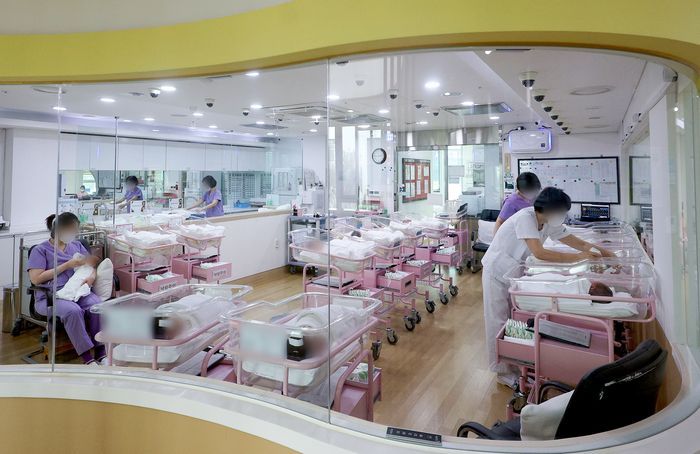 On the afternoon of February 28, nurses and related personnel were caring for newborns in the neonatal room of a postpartum care center in downtown Seoul. Photo by Yonhap News
In terms of health insurance medical expenses for inpatient treatment last year, Alzheimer's disease incurred the highest costs, amounting to 1.8694 trillion won. According to statistics from the Ministry of Health and Welfare's "Pilot Project for Dementia Management Primary Physicians," the annual management cost per dementia patient?including medical and nursing care expenses?reached about 22 million won as of 2023. The "Fourth Comprehensive Dementia Management Plan" announced by the Ministry in 2020 projected that national dementia management costs would reach approximately 103.1 trillion won by 2050, accounting for about 3.8% of the country's gross domestic product (GDP).
After Alzheimer's disease, cerebral infarction, pneumonia due to unspecified organism, and gonarthrosis (knee osteoarthritis) were the next most costly diseases in terms of health insurance medical expenses.
For outpatient care, "gingivitis and periodontal diseases" remained the most common reason for National Health Insurance patients to visit a hospital last year, with 19.59 million patients, maintaining its top position from the previous year. Periodontal disease also ranked first in terms of total outpatient medical expenses. Periodontal disease is an oral condition that can lead to more severe consequences than dental caries and, in severe cases, may result in tooth loss, making preventive care especially important.
This was followed by "acute bronchitis" (17,604,128 patients), "vasomotor and allergic rhinitis" (7,407,001 patients), and "essential hypertension" (7,329,913 patients) as the most common reasons for outpatient visits.
© The Asia Business Daily(www.asiae.co.kr). All rights reserved.


















