Lee Heonseung of People Power Party Proposes Amendment
Creditors Seizing Payments Leaves Subcontractors Helpless
Half of Subcontractors' Payments to Be 'Absolutely Protected'
Recently, even major construction companies have fallen into management crises, raising concerns that subcontractors working with them could also collapse in a domino effect. In this context, analysis suggests that the proposed amendment to the Act on the Fairness of Subcontract Transactions (Subcontract Act Amendment), currently before the National Assembly, could serve as a safeguard to reduce payment damages suffered by subcontractors.
"Major Construction Firms' Crisis Threatens Small and Medium Subcontractors"
According to the construction industry on June 7, Park Seungkuk, Senior Research Fellow at the Construction Policy Research Institute of Korea, stated in the monthly report "Construction Brief" that "the overall management crisis in the construction sector is serious, with major construction companies such as Daewoo Shipbuilding & Marine Engineering Construction, Taeyoung Construction, and Byucksan Construction facing bankruptcy threats or entering rehabilitation procedures."
He especially warned that mid-sized construction companies, which have invested heavily in regional real estate projects, are also in precarious situations, making it likely that the crisis could spread to subcontractors. If a major construction company fails to pay construction costs on time, subcontractors responsible for portions of the project will suffer consecutive damages.
Park emphasized, "The insolvency of major and mid-sized construction companies is highly likely to be transmitted immediately to specialized construction firms in subcontracting relationships, causing a 'domino-type chain insolvency.' Strengthening payment guarantees for subcontractors and improving the effectiveness of direct payment systems are urgently needed."
Establishing a 'Safe Zone': Direct Claims Allowed After a Single Delay
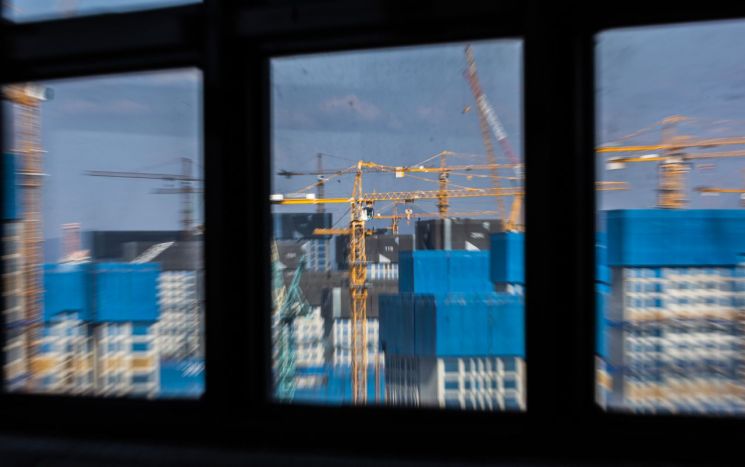
The Subcontract Act Amendment, proposed by Lee Heonseung, a member of the National Assembly's Political Affairs Committee from the People Power Party, on May 15, addresses precisely these issues.
The most significant change is the relaxation of requirements for "direct payment." Currently, the ordering party can only make direct payments if the main contractor fails to pay the subcontractor at least twice. The amendment would allow subcontractors to request direct payment from the ordering party if the main contractor fails to pay even once within the deadline.
The amendment also expands protection to cases where payment is not made in cash. Even if the main contractor offers promissory notes or goods instead of cash, the subcontractor can refuse and request direct payment in cash from the ordering party.
A new "prohibition of seizure" clause has also been introduced. Previously, even if a subcontractor had the right to receive payment, other creditors of the main contractor could seize those funds first, leaving the subcontractor unpaid. The amendment blocks seizure of up to half of the payment corresponding to the actual work performed by the subcontractor, ensuring that subcontractors maintain a minimum level of protection even if the main contractor's financial troubles involve other creditors.
Additionally, exceptions that allowed the main contractor to avoid providing payment guarantees have been strictly limited. Previously, exceptions could be made by presidential decree, but under the amendment, only small-scale projects with a contract value of 10 million won or less will be exempt.
Currently, subcontractors are required to provide performance guarantees to complete the project, but cannot receive guarantees ensuring they will actually be paid after completing the work. Park noted, "Subcontractors are being subjected to unfair practices, being required to provide performance guarantees without being able to receive payment guarantees from the main contractor. The conditions for exemption from guarantees must be clearly stated in the law."
This amendment is currently pending in the National Assembly's Political Affairs Committee. It has not yet been discussed in the subcommittee for bill review, but will proceed through the committee's subcommittee in the future. If it passes the review, it will move to the Legislation and Judiciary Committee before being presented at the National Assembly plenary session. Park assessed that, if enacted, the amendment would clarify payment guarantee and direct payment requirements, strengthen creditor protection measures, reduce chain insolvencies, and help foster a culture of fair trade.
© The Asia Business Daily(www.asiae.co.kr). All rights reserved.

![Clutching a Stolen Dior Bag, Saying "I Hate Being Poor but Real"... The Grotesque Con of a "Human Knockoff" [Slate]](https://cwcontent.asiae.co.kr/asiaresize/183/2026021902243444107_1771435474.jpg)














