Taiwan Implements Revised "Good Food Hygiene Practice Guidelines"
Stricter Rules for Street Vendors Handling Food and Money
Violators Face Fines Up to 200 Million New Taiwan Dollars
Taiwan, known as the "kingdom of street food," has decided to impose fines of up to 200 million New Taiwan dollars (approximately 9.086 billion won) on street vendors who handle food after touching money, as part of efforts to strengthen food hygiene standards.
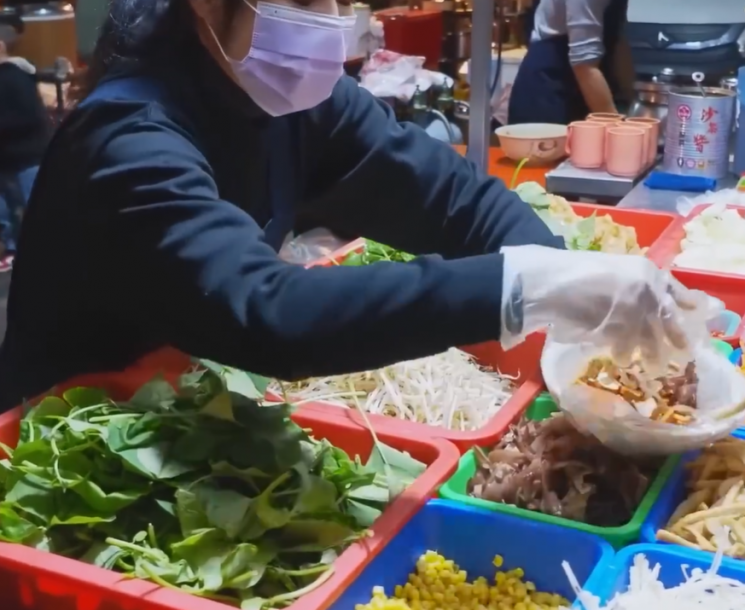
According to Taiwanese media outlets such as United Daily News and China Times on June 5, the Taiwan Food and Drug Administration (TFDA) under the Ministry of Health and Welfare announced that it would immediately implement the revised "Good Food Hygiene Practice Guidelines," which were amended the previous day.
The revised guidelines expand regulations that previously applied only to food manufacturing companies to now include all food-related businesses and delivery services, such as general restaurants, snack bars, and delivery personnel. In addition, food industry workers are prohibited from simultaneously or continuously touching money or other potentially contaminated objects while preparing or cooking food.
All new employees, including both full-time and part-time staff, must complete at least three hours of training and receive an additional three hours of refresher training annually. Delivery riders are required to fully cover food to prevent contamination and avoid sudden temperature changes during delivery.
Delivery riders were included in the regulations because there have been controversies over cases where food that fell to the ground during delivery was repackaged and delivered to customers.
The TFDA emphasized that businesses violating these guidelines may be penalized under Article 44, Paragraph 1, Subparagraph 1 of the Food Safety and Sanitation Management Act. Offenders must take corrective action within a specified period, and if they fail to do so, they may face fines ranging from 60,000 New Taiwan dollars (approximately 2.7258 million won) up to 200 million New Taiwan dollars (approximately 9.086 billion won).
This measure is intended to strengthen food safety. Authorities explained that since most street stalls selling items such as Bungeoppang or egg bread are operated by a single person who handles both food and money, there is a risk of "cross-contamination," and the new rules are designed to prevent this.
If a violation of the regulations is witnessed, it can be reported to the local health authorities. The authorities encouraged active reporting, stating that if the report is found to be true, a whistleblower reward of 2-5% of the imposed fine may be granted, along with an additional reward of 4 million New Taiwan dollars (approximately 18 million won).
However, Taiwanese media pointed out that an increase in reports motivated by whistleblower rewards could lead to social distrust. They also noted that with more than 125,000 street vendors in Taiwan, most of whom only accept cash, it may be difficult for them to comply with the stricter guidelines.
© The Asia Business Daily(www.asiae.co.kr). All rights reserved.

















