Business Agreement Signed for Regional and Corporate Co-Prosperity
Led by the Ministry of the Interior and Safety... Five Local Governments Including Sejong Participate
Aiming to Raise Waste Banner Recycling Rate from 30% to 100%
SK Chemicals is collaborating with the Ministry of the Interior and Safety, local governments, and private companies to recycle discarded banners. When five local governments, including Sejong, collect used banners within their jurisdictions, SK Chemicals will break them down and turn them into recyclable materials. Ultimately, the company aims to establish a 'closed-loop' system that returns waste banners back into banner fabric.
On June 5, SK Chemicals announced that it had signed an 'Agreement on Recycling Waste Banners' at its Ulsan plant in Nam-gu, Ulsan, together with five local governments?Sejong City, Gangneung City in Gangwon Province, Cheongju City in North Chungcheong Province, Naju City in South Jeolla Province, and Changwon City in South Gyeongsang Province?as well as the eco-friendly startup Revelop, the social enterprise Sejinplus, and Kakao. The core of this agreement is for the Ministry of the Interior and Safety, local governments, and companies to join forces to collect waste banners and establish a resource circulation system using SK Chemicals' chemical recycling technology.
Under the agreement, the Ministry of the Interior and Safety will support cooperation between local governments and companies, while the five local governments will ensure the stable collection of waste banners in their regions and expand the adoption of recycled products made from these banners. SK Chemicals will break down the collected banners at the molecular level to produce recycled PET of the same quality as petroleum-based PET. The company will first apply mechanical recycling technology suitable for electrical and electronic products, and from the end of this year, will begin to fully establish a chemical recycling-based circular system.
The recycled PET produced by SK Chemicals will be used by Revelop and Kakao to manufacture and distribute a variety of products, including clothing, desks, and banners. Sejinplus plans to physically process waste banners into upcycled products such as automotive interior materials and building materials. SK Chemicals expects that this agreement, through cooperation among the government, local governments, and companies, will significantly increase the current recycling rate of waste banners, which stands at about 30%.
According to the Ministry of Environment, approximately 6,000 tons of waste banners are generated annually in South Korea, of which 70% are either incinerated or landfilled. The five local governments participating in this agreement alone generate 200 tons of waste banners each year. Until now, most waste banner recycling has been limited to single-use products such as shopping bags, and even these recycled products were eventually incinerated or landfilled. In contrast, chemical recycling allows for repeated use without loss of quality.
An official from the Ministry of the Interior and Safety stated, "Based on the results of this pilot project, we plan to establish recycling guidelines at the central government level and expand the initiative nationwide," adding, "We will also discuss ways to expand the use of recycled products in consultation with the Ministry of Environment and other relevant agencies."
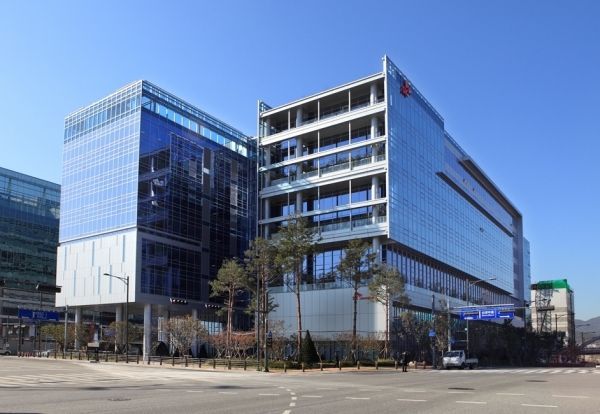
SK Chemicals plans to continue developing businesses and technologies to expand the circular economy beyond just waste banners. Kim Hyunseok, Head of the Recycling Business Division at SK Chemicals, said, "Most banners have been discarded after a single use, creating a significant environmental burden," and added, "With this agreement, we aim to establish a closed-loop system for waste banners and expand the circular recycling ecosystem into various fields."
Meanwhile, in 2023, SK Chemicals invested approximately 130 billion won to establish 'SK Shantou' in China and secured the world's first commercialized chemical recycling facility. In South Korea, the company also operates the 'Recycle Innovation Center' at its Ulsan plant, where it breaks down waste plastics to produce recycled raw materials.
© The Asia Business Daily(www.asiae.co.kr). All rights reserved.
![Clutching a Stolen Dior Bag, Saying "I Hate Being Poor but Real"... The Grotesque Con of a "Human Knockoff" [Slate]](https://cwcontent.asiae.co.kr/asiaresize/183/2026021902243444107_1771435474.jpg)












