Cruise Tourist Arrivals in Korea Up 23% Year-on-Year
K-Content Drives Rising Popularity of Domestic Ports
Infrastructure and Tourism Content Expansion Needed for Sustained Growth
The number of foreign tourists visiting Korea by cruise ship is rapidly increasing. As interest in Korea grows, more cruise routes are choosing domestic ports?once considered barren ground for cruises?as destinations. However, experts point out that in order to maintain this growth in cruise tourism and achieve higher profitability, it is necessary to improve infrastructure, such as expanding home ports in Korea, and to enhance tourism content at each port of call.
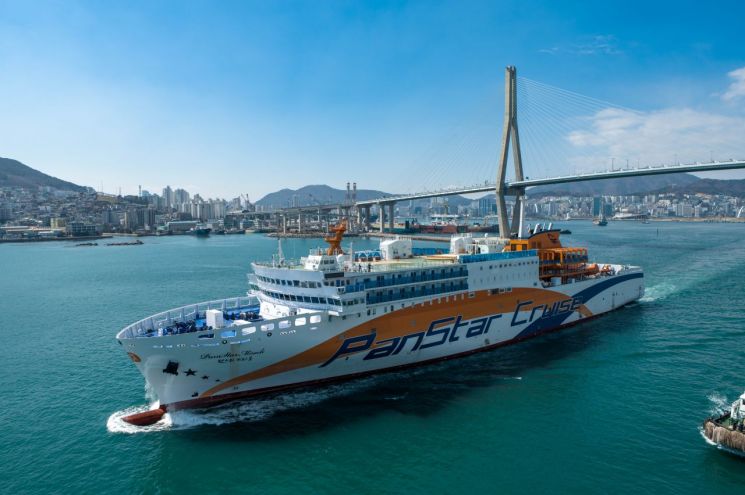
According to the Korea Tourism Organization on June 6, the number of foreign tourists who visited Korea by cruise ship reached 266,262 as of April this year, a 22.6% increase from the same period last year (217,164). During this period, the total number of foreign visitors to Korea was 5,577,360, up 14.6% from the same period last year (4,865,670), meaning the growth rate of cruise tourists exceeded the overall inbound growth by nearly 10 percentage points.
The number of cruise tourists entering Korea, which stood at around 170,000 in 2019, dropped sharply to zero for three years after the outbreak of the COVID-19 pandemic in 2020. With the resumption of overseas travel in 2022, the number rose to 200,000, and last year it expanded to 730,000. Given the current growth trend, the number is expected to exceed 900,000 this year.
By port, Busan Port recorded the highest number of cruise arrivals with 147,655, a 68.0% increase from the same period last year (87,884). Jeju Port followed with 62,559 arrivals, up 18.8% from 52,672 a year earlier. By age group, those aged 61 and over accounted for a large proportion, increasing by 13.9% from 134,976 to 153,679 year-on-year. The 21?30 age group grew by 38.7%, from 78,513 to 108,868 over the same period.
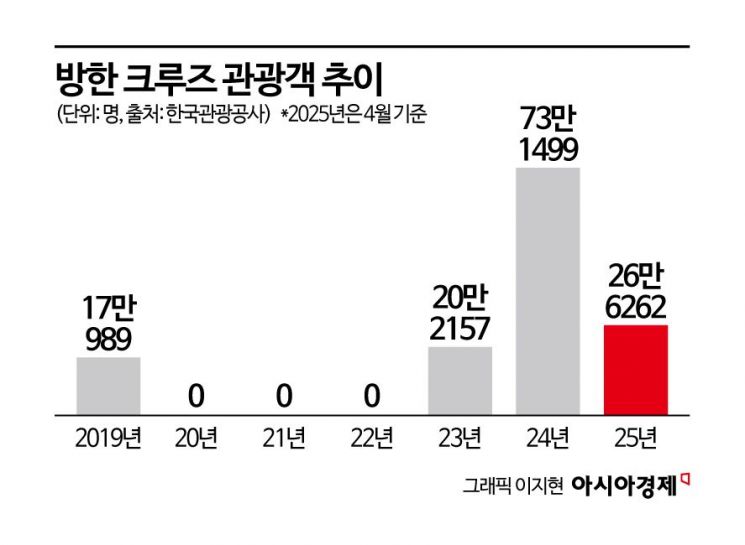
The increase in cruise tourists is attributed to Korea's steadily rising appeal as a port of call. In the past, cruise destinations in East Asia were concentrated mainly in Japan and China, but in recent years, growing interest in Korea?led by K-content?has resulted in more domestic cities being included in cruise itineraries.
In addition, the introduction of the quasi-home port system at places like Jeju Gangjeong Port, where both domestic and foreign passengers can embark and disembark, has made longer stays possible. The approval of group tours from China has also created a favorable environment for attracting tourists to major ports of call such as Jeju, further boosting cruise arrivals. Cruise ports are generally classified as home ports (where cruises begin and end), ports of call (where ships stop briefly), and quasi-home ports (a mix of both functions).
An industry official explained, "While cruise travel is still unfamiliar in Korea, it has long been a popular form of overseas travel abroad. The recent rise in Korea's popularity as a port of call, combined with pent-up demand for travel after years of restrictions due to the COVID-19 pandemic, is driving the increase in cruise arrivals."
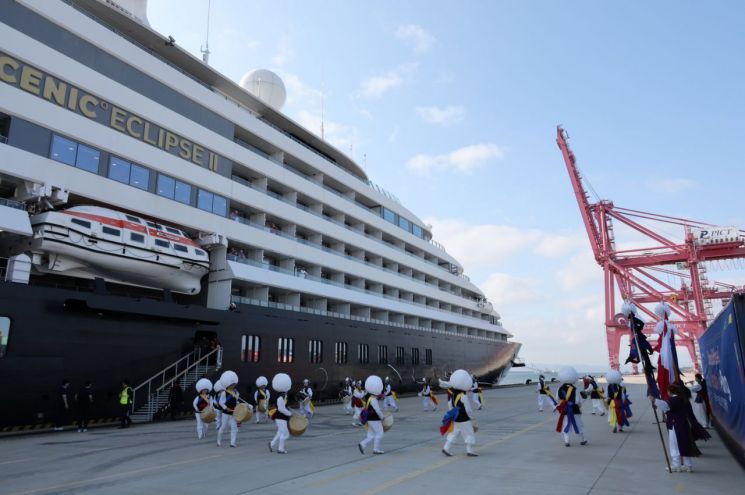 The ultra-luxury 6-star cruise ship "Scenic Eclipse II" that docked at Pohang Yeongilman Port on the 30th of last month.
However, it is seen as a drawback that most domestic ports currently serve only as ports of call on cruise routes. Home ports, where cruises start and end, generate greater economic benefits due to longer stays and higher spending by tourists, as well as increased port revenues. In contrast, ports of call, where passengers disembark briefly for sightseeing, have limited docking times and functions, resulting in clear limitations on profitability. In fact, at ports of call where the average stay is only half a day, spending on accommodation, food and beverage, and shopping is much more limited compared to home ports.
For this reason, there are calls to expand the number of cruise home ports in Korea. Utilizing major ports such as Busan, Incheon, and Jeju as home ports could promote outbound cruise use by both domestic and foreign passengers, leading to higher profitability and tangible contributions to the local economy.
To achieve this, measures such as marketing initiatives targeting cruise operators?including discounts on docking and port usage fees?support for developing new routes, and forming partnerships with major overseas ports are needed. In addition, it is necessary to improve infrastructure and diversify tourism products. An industry official stated, "We need to enhance accessibility to cruise terminals, operate shuttle buses, provide multilingual guidance, and expand infrastructure for tourist convenience. Developing regionally specialized tourism products linked to cruises will also increase visitor satisfaction and encourage repeat visits."
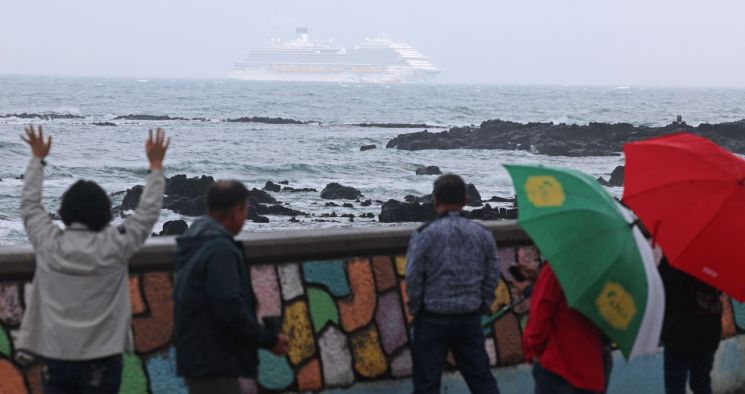 Last month, the Adora Magic City ship docked at Gangjeong Port, a quasi-commercial port in Seogwipo City, Jeju. Photo by Yonhap News
The travel industry believes that the cruise tourism sector has high growth potential. This is because the aging population is increasing demand for leisurely and comfortable travel, while younger generations seeking new travel experiences are also showing greater interest. An industry official predicted, "If we develop cruise products linked to Korean Wave content, it will have a positive effect on attracting foreign tourists. Furthermore, if domestic shipbuilders actively participate in cruise ship construction, the overall competitiveness of the industry can be strengthened."
The government also sees strong growth potential in the cruise industry and is working to improve port infrastructure and expand tourism content at ports of call. The Ministry of Culture, Sports and Tourism and the Ministry of Oceans and Fisheries recently held a 'Cruise Tourism Promotion Roundtable' with seven major port local governments?in Incheon, Busan, Jeju, Yeosu, Sokcho, Pohang, and Seosan. Together, they agreed to review and improve each port's readiness to accommodate cruise tourists and to develop and enhance tourism products that reflect each port's regional characteristics.
Additionally, starting this year, the government is collaborating with the Ministry of Justice to extend terminal operating hours and support onboard immigration inspections, aiming to increase the length of stay for inbound cruise tourists at ports of call. Through these measures, the government intends to encourage cruise tourists to enjoy sightseeing at ports of call and nearby areas, thereby supporting the revitalization of regional tourism.
© The Asia Business Daily(www.asiae.co.kr). All rights reserved.

![Clutching a Stolen Dior Bag, Saying "I Hate Being Poor but Real"... The Grotesque Con of a "Human Knockoff" [Slate]](https://cwcontent.asiae.co.kr/asiaresize/183/2026021902243444107_1771435474.jpg)

















