International Oil Prices Drop 24.2% Year-on-Year
Vegetable Prices Fall 5.4%, Marking Largest Decline in 37 Months
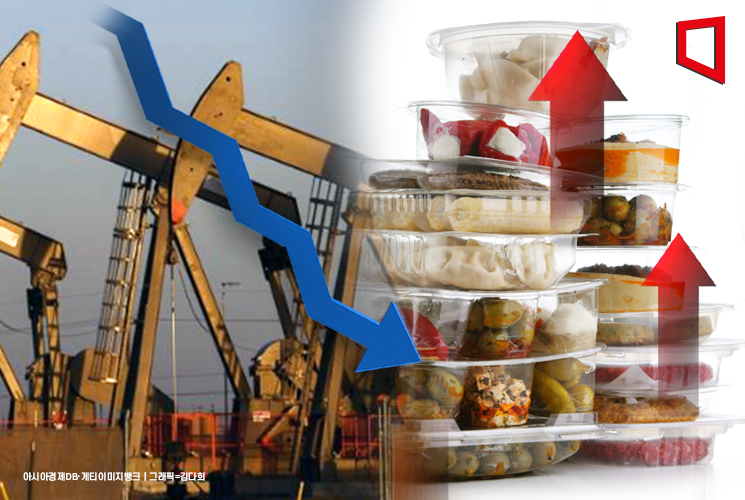
Last month, the consumer price index rose by 1.9%, dropping into the 1% range for the first time in five months. This was mainly due to improved weather conditions, which led to a decline in agricultural product prices, and falling international oil prices, which resulted in lower petroleum prices. However, prices for food items such as processed foods and dining out continued to show high growth rates.

According to the “May Consumer Price Trends” released by Statistics Korea on June 4, the consumer price index last month increased by 1.9% compared to one year earlier. The consumer price inflation rate had remained in the low 2% range from December 2024 (1.9%) through April 2025, but has now dropped to the 1% range for the first time in five months.
The continued decline in international oil prices had a significant impact, leading to lower petroleum prices. Petroleum prices fell by 2.3% in May compared to the same period last year, following a 1.7% decrease the previous month. Petroleum prices had started to rise in December 2024 (1%), reaching a peak increase of 7.3% in January 2025. After continuing to rise through March, prices began to fall in April (-1.7%) and continued to decline for two consecutive months through last month. Lee Dowon, Director of Economic Trend Analysis at Statistics Korea, explained, “The international oil price in May 2024 was $84, but as of last month it had dropped to $63.7, a decrease of about 24.2% over one year,” adding, “This decline in international oil prices appears to have played a major role.”
The drop in the Fresh Food Index also contributed to keeping inflation in the 1% range. Improved weather conditions led to better harvests and increased shipments of vegetables and other produce. The Fresh Food Index fell by 5.0% compared to a year earlier. Having declined by around 1% since February (-1.4%), the drop became more pronounced last month. While the Fresh Fish and Seafood Index, which includes fish and seafood products, rose by 5.4%, the Fresh Vegetable and Fresh Fruit Indices fell by 5.5% and 9.7%, respectively. However, the sharp decline in fresh fruit prices reflects a base effect from significant increases in the previous year.
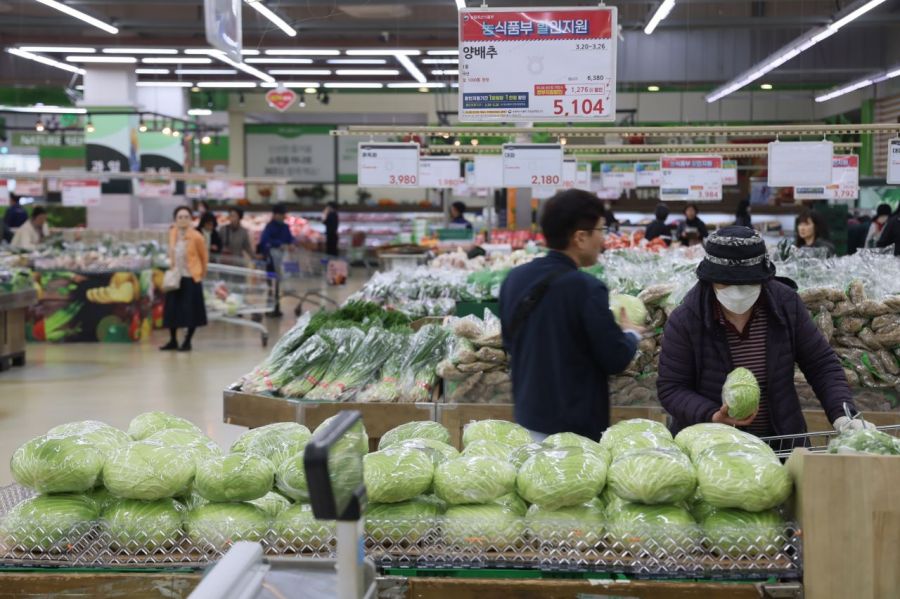
Breaking down agricultural, livestock, and fishery products, vegetable prices fell by 5.4% compared to the same period last year, marking the largest drop in 37 months since April 2022 (-5.4%). Compared to the previous month, vegetable prices declined by 12.1%. As a result, agricultural product prices as a whole fell by 4.7% year-on-year. The declines were especially notable for apples (-11.6%), oriental melons (-27.3%), green onions (-33.4%), tomatoes (-20.6%), napa cabbage (-15.7%), pears (-14.4%), and sweet potatoes (-8.7%).
Livestock and Fishery Product Prices Remain High... Processed Foods Also Rise Due to Cost Pressures in the Food Industry
However, livestock prices rose by 6.2% year-on-year, and fishery product prices increased by 6.0%. For livestock products, this was the largest increase in two years and eleven months since June 2022 (9.5%). In particular, prices rose for pork (8.4%) and domestic beef (5.3%), among other items. Lee explained, “The price of imported pork is rising, and the price of beef is increasing due to a decrease in the number of cattle slaughtered. As a result, the price of chicken, a substitute, has also been rising for several months.”
Meanwhile, the inflation rate for processed foods remained at 4.1%, the same as the previous month, continuing its upward trend. This was the largest increase in 16 months since December 2023 (4.2%). The inflation rate for dining out also remained at the previous month’s level, the highest in 14 months since March 2024 (3.4%). Lim Hyeyoung, Director of Price Policy at the Ministry of Economy and Finance, explained, “Recently, the food industry has faced unavoidable price increases due to higher costs for raw materials and exchange rate fluctuations.”
The core inflation index, which excludes items with large price fluctuations, also continued to rise in the 2% range. The OECD-style index, which excludes food and energy, rose by 2.0%. This marked the second consecutive month in the 2% range, following 2.1% the previous month. The domestic-style index, which excludes agricultural and petroleum products, rose by 2.3%, maintaining a 2% increase for three consecutive months since March (2.1%).
The Living Price Index, which reflects the prices of frequently purchased items and is closely linked to perceived inflation, rose by 2.3%, slightly lower than the previous month (2.4%). However, when isolating food items, the increase was 3.0%, following a relatively large rise from the previous month (3.3%). The increase for non-food items was 1.9%. The Living Price Index, including rents, was 2.1%, the same as the previous month.
The government plans to closely monitor supply and distribution conditions, especially for items with high price volatility such as agricultural, livestock, and fishery products, and to swiftly implement response measures as needed. Lim added, “To ease cost pressures in the food industry, the government is providing tax and financial support, such as applying tariff quotas and exempting import value-added tax on food raw materials,” and stated, “Even if cost pressures remain, we will continue consultations with the industry to minimize price increases.”
© The Asia Business Daily(www.asiae.co.kr). All rights reserved.
![User Who Sold Erroneously Deposited Bitcoins to Repay Debt and Fund Entertainment... What Did the Supreme Court Decide in 2021? [Legal Issue Check]](https://cwcontent.asiae.co.kr/asiaresize/183/2026020910431234020_1770601391.png)


















