Key Variables: Interest Rate Cuts, Loan Regulations, and Supply Shortages
Real Estate Market Expected to Remain Similar for the Time Being
No Specific Policies Announced Yet
There are forecasts that the upward trend in housing prices, particularly centered on Seoul, will continue even after the presidential election. This outlook is based on the expectation that factors such as interest rate cuts, loan regulations, and supply shortages will continue to impact the market, especially as President Lee Jaemyung's specific real estate policies have not yet been revealed.
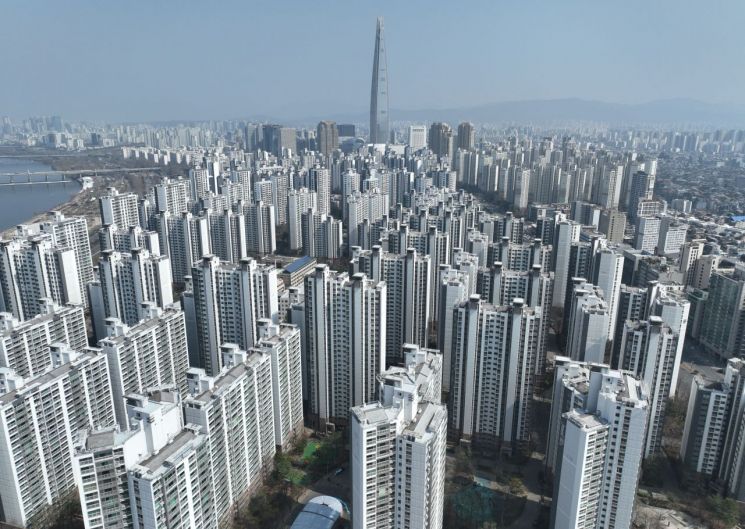
Experts: "Seoul Housing Prices Will Continue to Rise"
Experts predict that the upward trend in apartment sales prices will persist after the presidential election. Kim Jaekyung, head of Toomee Real Estate Consulting, stated on the 4th, "I believe the upward trend in Seoul housing prices will remain unchanged. The situation where supply will be halved starting next year cannot be reversed even after the election." He added, "Seoul needs to increase supply through redevelopment projects, but simply easing regulations without abolishing the 'Reconstruction Excess Profit Recovery System' has its limits." He further explained, "A base interest rate cut is a factor that stimulates real estate prices, but since the government is controlling market interest rates, it remains uncertain whether the new administration will allow liquidity to flow into the real estate market."
Kwon Youngsun, team leader at Shinhan Bank's Real Estate Investment Advisory Center, also predicted, "Even after the new administration takes office, the real estate market will continue in a similar manner for the time being," adding, "If interest rates fall, liquidity will increase and investment demand will be concentrated in higher-end areas." He continued, "Due to the supply shortage, upward pressure on Seoul real estate will persist, and I believe there will come a time when even mid- to lower-tier areas in Seoul will see price increases. It's not that there is no demand for purchases, but rather that buyers have been waiting and watching. As monthly and jeonse rental prices rise, the upward trend could spread to the outskirts of Seoul as well."
Three Key Variables: Policy, Interest Rates, and Supply
Experts cited the new government's policy direction, interest rate cuts, and the pace of housing supply as the main variables for this outlook. During the presidential campaign, President Lee Jaemyung emphasized taking a 'different path from the Moon Jaein administration,' stating that he would focus on expanding supply rather than suppressing demand. However, although there is precedent for a sharp rise in housing prices during the Democratic Party's rule, the short election period means that the contours of Lee Jaemyung's real estate policies have yet to be revealed.
The trend of interest rate cuts is expected to be a major variable in the real estate market. On May 29, the Bank of Korea lowered the base interest rate from 2.75% to 2.5%. The GDP growth forecast was also sharply lowered from 1.5% to 0.8%. Bank of Korea Governor Rhee Changyong, upon lowering the base rate, stated, "We need to decide on interest rates while observing the impact on Seoul's real estate prices and household debt."
As commercial banks plan to further tighten loan regulations by implementing the third stage of the stress DSR (Debt Service Ratio) from next month, the effect of the interest rate cut is expected to be limited. Strengthening these regulations will reduce loan limits, potentially diminishing the purchasing power of those seeking to buy mid- to low-priced homes. This could particularly affect young people and those without homes. There is also the possibility that prices may rebound in the short term before and after the implementation of the regulations, followed by a period of wait-and-see sentiment. However, there are also projections that prices are unlikely to fall significantly in popular areas of Seoul and the surrounding metropolitan region.
Yang Jiyeong, head of Asset Management Consulting at Shinhan Investment & Securities, explained, "In the second half of this year, the real estate market is likely to see a structure where the 'benefits of interest rate cuts' and 'strengthening of loan regulations' collide." She added, "Areas centered on high-value residential assets are expected to respond more flexibly. In contrast, polarization could intensify in the outer regions or local markets for genuine end-users as restrictions expand."
A decrease in the number of new housing units being supplied could also stimulate rising home prices. According to Real Estate R114 and the Korea Real Estate Board, the nationwide forecast for new apartment supply this year is about 274,360 units, more than 20% lower than last year's actual figure. Next year's supply forecast is 190,773 units, which is 30% less than this year. In particular, Seoul is expected to see a sharp drop from 46,710 units this year to 24,462 units next year.
Housing Prices Continue to Rise Despite Land Transaction Permit Zone Re-designation, Listings Decline
Even though the land transaction permit zones were expanded before the presidential election, the number of apartment listings in Seoul is decreasing. According to the real estate big data platform Asil, as of the 3rd, there were 81,468 apartment sales listings in Seoul, a 12.4% decrease from three months ago (92,937 listings). This was the second largest decrease after Sejong (-18.2%). Listings also declined sharply in districts not designated as land transaction permit zones, such as Seongdong, Dongjak, and Gwangjin. Compared to a month ago, sales listings decreased by 16.2% in Seongdong-gu, 12.6% in Gwangjin-gu, and 11.8% in Dongjak-gu.
Prices are on an upward trend. According to the Korea Real Estate Board's weekly apartment price trends for the fourth week of May, Seoul's prices rose by 0.16%. The rate of increase accelerated throughout the month. The first week of May saw a 0.08% rise, followed by 0.10% and 0.13% in subsequent weeks. During the same period, nationwide weekly sales prices declined slightly.
It is analyzed that more buyers are rushing to purchase, anticipating a rise in housing prices after the presidential election. According to the Seoul Real Estate Information Plaza, as of the 3rd, there were 4,724 apartment transactions in May. Given that the reporting period runs until the end of the month, it is expected that May's transaction volume will surpass April's total of 5,351 transactions.
As the upward trend continued even after the expansion of land transaction permit zones, the government stated on May 23, "We will consider additional measures to stabilize the market, such as designating more regulated areas, speculative zones, and land transaction permit zones."
© The Asia Business Daily(www.asiae.co.kr). All rights reserved.
![Clutching a Stolen Dior Bag, Saying "I Hate Being Poor but Real"... The Grotesque Con of a "Human Knockoff" [Slate]](https://cwcontent.asiae.co.kr/asiaresize/183/2026021902243444107_1771435474.jpg)











