White House Sends Letters to Negotiating Countries
Negotiation Deadline Set for July 8
South Korea Also Believed to Have Received the Letter
The White House announced on the 3rd (local time) that it had sent letters to all countries currently engaged in trade negotiations, requesting them to submit their "best offers" related to the negotiations by the 4th. At the same time, President Donald Trump is set to sign an executive order on this day to double the existing 25% tariffs on imported foreign steel and aluminum to 50%. The short deadline is interpreted as reflecting President Trump's intention to seize the initiative in trade talks. For South Korea, which has just inaugurated a new president, this means facing the need to make a swift decision on a major trade issue with the United States before the government transition and cabinet appointments are even completed.
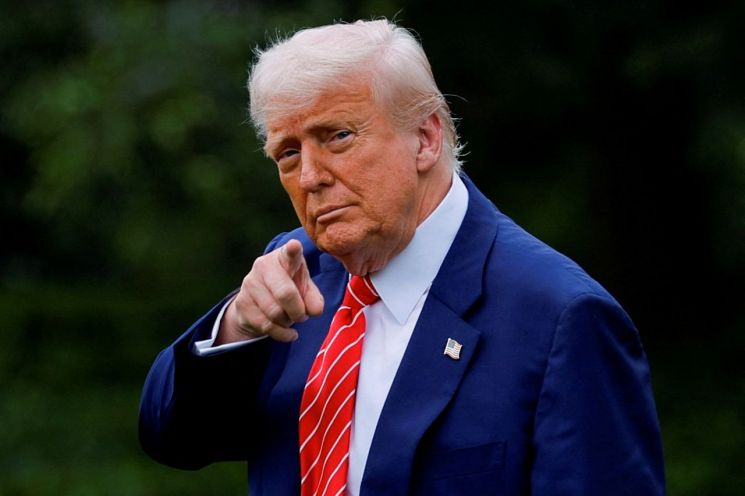
Trump Administration Pressures for Final Offers by the 4th... South Korea Faces Tight Review Timeline
White House spokesperson Karoline Leavitt, when asked to confirm the Reuters report, stated, "I can confirm the contents of the letter," adding, "The United States Trade Representative (USTR) sent this letter to all of our trading partners as a friendly reminder that the deadline is approaching."
Previously, Reuters reported that the USTR had sent letters to major negotiating countries demanding their final offers by the 4th and plans to analyze the scope for reaching agreements based on the responses from each country. Given that spokesperson Leavitt referred to "all trading partners," it is presumed that the South Korean government also received this letter.
The Trump administration is accelerating negotiations with major countries in order to conclude agreements before the mutual tariff suspension deadline of July 8. Leavitt emphasized, "This letter is simply a reminder to these countries that the deadline is approaching, and the President is hoping for a good deal."
When asked whether the trade negotiations are limited to mutual tariffs, Leavitt explained, "Each country has its own unique advantages and challenges depending on their markets and what we export to each other," adding, "That is why the President wisely advised the trade team to pursue tailored negotiations." She continued, "The President wants to see these customized agreements concluded," and added, "The plan is to announce such agreements very, very soon."
South Korea is now under immediate pressure. With the presidential election concluding on the 3rd and the actual government transition and cabinet formation still requiring time, it is not easy to quickly formulate policy decisions or trade negotiation strategies and respond to the United States. President Lee Jaemyung's term officially begins at 6:21 a.m. KST on the 4th, leaving only about 24 hours to review the proposals. Upon inauguration, he faces a diplomatic test as he must immediately respond to trade pressure from Trump.
Japan's Nihon Keizai Shimbun (Nikkei) reported, "South Korea has typically operated a transition committee for two to three months after the presidential election, during which the prime minister nominee is appointed, Blue House staff are selected, and policies are coordinated. However, this time, the new government is being launched immediately after the election." The UK's Financial Times (FT) noted that the Trump administration is imposing high tariffs on South Korean steel and automobiles and reported that President Lee may declare an "economic wartime system" and engage in trade negotiations with the United States.
Amid the ongoing ceasefire in the US-China tariff war, it was also reported that a summit-level dialogue between the two countries is expected soon. Leavitt stated, "The administration is closely monitoring China's compliance with the Geneva trade agreement," and added, "A conversation between the leaders will take place very soon." The Geneva Agreement was reached during high-level US-China talks held on May 10-11, under which both countries agreed to reduce mutual tariffs by 115 percentage points for 90 days, and China agreed to withdraw non-tariff measures introduced in response to US tariffs. However, the United States claims that China is still maintaining export restrictions on key minerals and rare earths, arguing this constitutes a violation of the agreement.
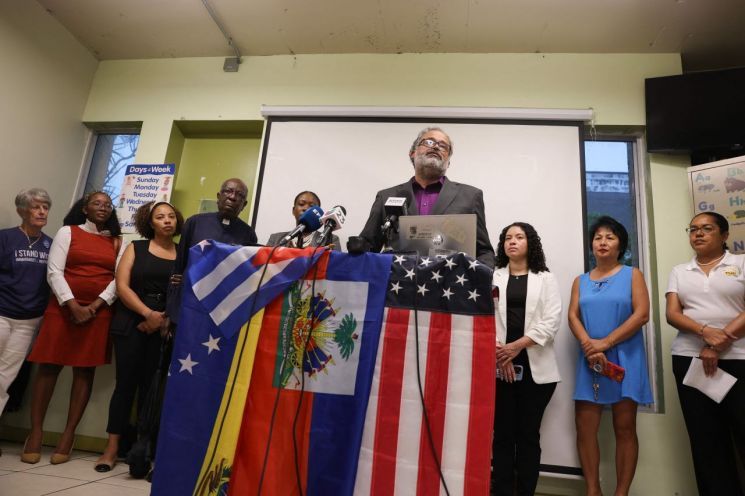
Steel and Aluminum Tariffs Raised to 50% as President Lee Jaemyung Takes Office... South Korea Faces Inevitable Export Disruptions
As President Lee Jaemyung is inaugurated, US tariffs on steel and aluminum will also be raised. President Trump will sign an executive order on this day to increase the existing 25% tariffs on imported foreign steel and aluminum to 50%. On the same day, spokesperson Leavitt stated in a briefing, "The President is scheduled to sign the executive order today, and the tariffs on steel and aluminum will be raised to 50%."
This measure was first announced by President Trump on May 30 at a US Steel plant outside Pittsburgh, Pennsylvania. He later posted on his social media platform, Truth Social, that the increased tariffs would take effect starting June 4.
Since March 12, President Trump has imposed 25% tariffs on imported foreign steel and aluminum products based on Section 232 of the Trade Expansion Act. With this new measure, the tariff rate will be raised to 50%, which is expected to deal a significant blow to steel and aluminum exports to the United States from major exporting countries, including South Korea.
The Trump administration is embroiled in legal disputes over most of these tariffs, which were imposed based on the International Emergency Economic Powers Act (IEEPA). However, the tariffs on steel and aluminum are being implemented under different legal authority and are therefore not subject to these legal challenges.
The New York Times (NYT) stated, "President Lee faces a major challenge from the moment he takes office," adding, "With the prolonged economic downturn, he must immediately begin tariff negotiations with US President Trump. In particular, the Trump administration is imposing high retaliatory tariffs on South Korean steel and automobiles and is even considering expanding the 25% 'reciprocal tariff.'"
© The Asia Business Daily(www.asiae.co.kr). All rights reserved.


















