Focused Campaign in Daegu and Early Morning Greetings
Aiming for a Double-Digit Vote Share
Lee Junseok, the presidential candidate of the Reform New Party, chose Daegu and Gyeongbuk (TK) as the final destination for his campaign on June 2, just one day before the 21st presidential election. Last week, Lee focused on expanding his support base in the Seoul metropolitan area, but his strategy for the final campaign stop is to visit Daegu, known as the "heart of conservatism," to make a last-minute appeal to consolidate his support base.
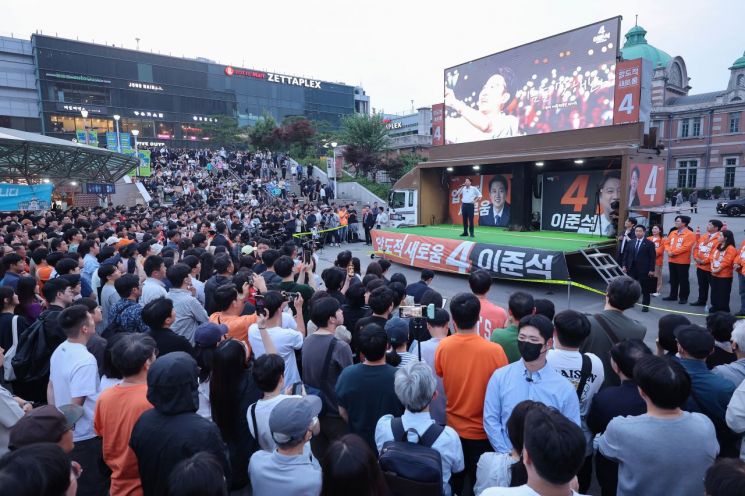
Before heading to Daegu, Lee visited the Korea Polytechnic University Technology Innovation Park in Siheung, Gyeonggi Province, to continue his final "Let’s Eat at the Cafeteria" series with students. This series, which became a signature event during his presidential campaign, began at Korea Aerospace University on April 29, prior to the official campaign period, and continued through visits to 13 universities nationwide, strengthening his connection with young voters in their 20s and 30s.
In the afternoon, Lee is scheduled to campaign at Yeungnam University in Gyeongsan, North Gyeongsang Province, and then hold his final major rally at 6:30 p.m. around Suseongmot in Suseong District, Daegu. Although the official schedule concludes in Suseong District, Lee plans to continue his campaign unofficially by greeting citizens returning home late into the night in Daegu, carrying out an all-night campaign.
Political observers noted that the key issue in this presidential race is how many votes Lee can secure in a three-way contest. With the unification of candidacies with Kim Moonsoo, the People Power Party’s presidential candidate, effectively failing, there is speculation that Lee’s vote share could significantly impact his political trajectory after the election. Some interpret that, if he maintains strong support in the presidential race, he could establish a foundation not only for leadership within the conservative bloc but also for future local elections and even the next presidential race.
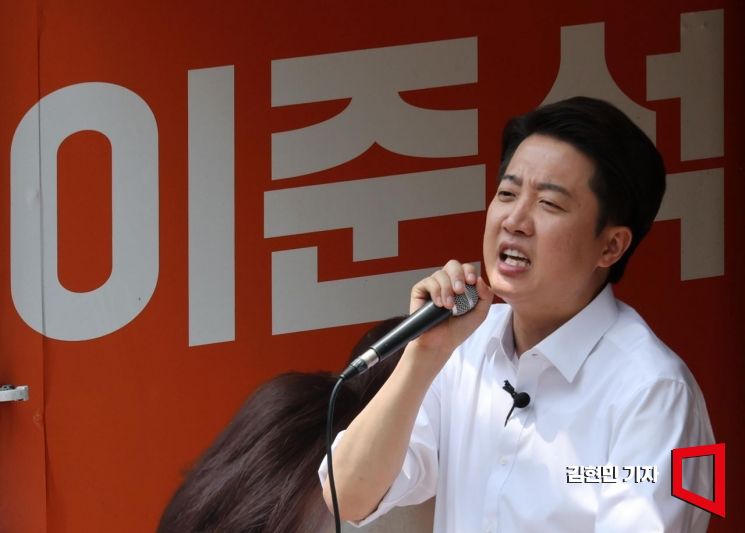 Lee Junseok, the presidential candidate of the Reform New Party, is appealing for support from citizens at Yeouido Park in Seoul on May 28, 2025. Photo by Kim Hyunmin
When the Reform New Party officially entered the presidential race, it initially set a target of a double-digit vote share, but recently raised this goal to 15%. This adjustment was made based on the assessment that support has been on the rise following the first and second televised presidential debates. A key official from the Reform New Party said in a phone interview, "When you look at the crowds at regional campaign sites, they are similar to those when Ahn Cheolsoo had 20% support in the last presidential election. Some within the party even predict that Lee could reach a 20% vote share."
However, controversy over Lee’s remarks during the third televised debate last month is seen as a last-minute variable. Civic groups continue to criticize Lee, and the Democratic Party has filed complaints against him for spreading false information and defamation. Lee bowed his head, saying, "If I made remarks that crossed the public’s threshold, I regret it," but also attempted to confront the issue head-on, stating, "Which of my questions contained hate?"
Political commentator Park Sangbyung said in a phone interview, "Lee’s controversial remarks in the final debate will have a significant impact on his political career going forward." The outcome of the election will likely determine his political fortunes, with the key question being whether he can achieve a vote share of over 10%. Experts believe that whether he reaches double digits could also influence the landscape of the next presidential race.
© The Asia Business Daily(www.asiae.co.kr). All rights reserved.


















