"No Price Increase Until June 2," Says Hyundai
1% Hike Expected as Deadline Nears
Lower Local Production Than Competitors
Concerns Over Weakened Price Competitiveness if Prices Rise
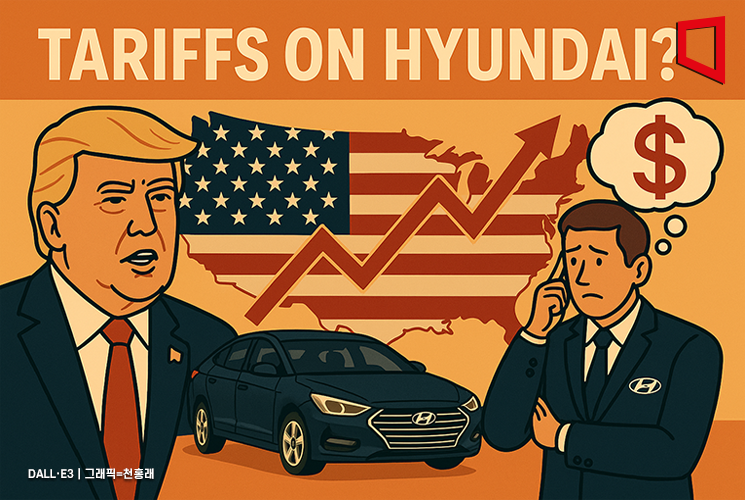
Hyundai Motor Group is deliberating on raising car prices in the United States. Previously, Hyundai Motor President Jose Munoz stated in April that "there will be no price increases until June 2," and now that deadline is approaching.
There is a high possibility that local inventory will soon be depleted. However, since Hyundai's local production volume is smaller than competitors like Toyota, raising prices could weaken its market competitiveness.
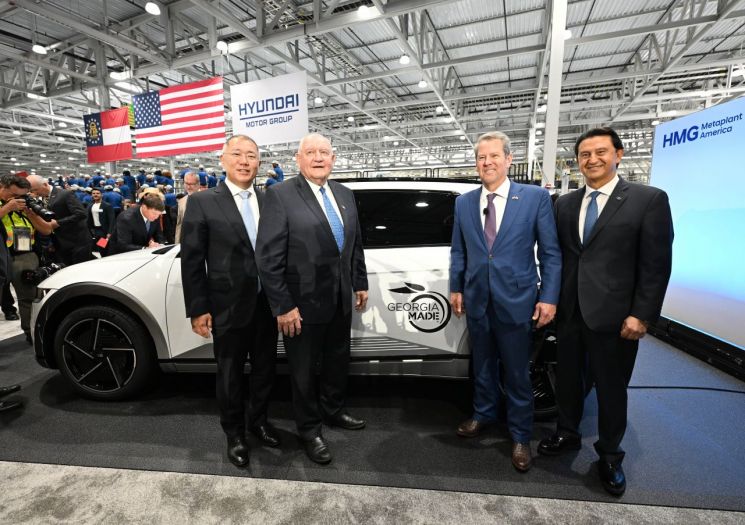
According to Cox Automotive and related industry sources on June 2, Hyundai and Kia's local production capacity in the United States, including the newly operational Metaplant (HMGMA) this year, stands at around 1 million units annually. Until last year, production was at 800,000 units per year, which is less than half of the 1.7 million vehicles sold. This means that more than half of the vehicles sold last year were supplied from outside the United States.
The scale of local production is somewhat lower compared to competitors. As of last year, GM, which sold 2.7 million vehicles in the United States, had a local production capacity of 1.7 million units, while Toyota had a production capacity of slightly over 1.2 million units out of 2.33 million vehicles sold.
Due to the lower local production capacity compared to competitors, Hyundai and Kia are more sensitive to price impacts from tariffs. The longer the delay, the greater the potential losses.
Some observers predict that Hyundai and Kia could raise the manufacturer's suggested retail price of all models sold in the United States by around 1% as early as next week. However, the company maintains that this is part of a regular price policy review unrelated to tariffs.
The timing and extent of reflecting tariff increases in prices have not yet been specified. A Hyundai Motor official explained, "There is no official decision yet regarding price policy in the United States," adding, "We plan to respond according to local market conditions."
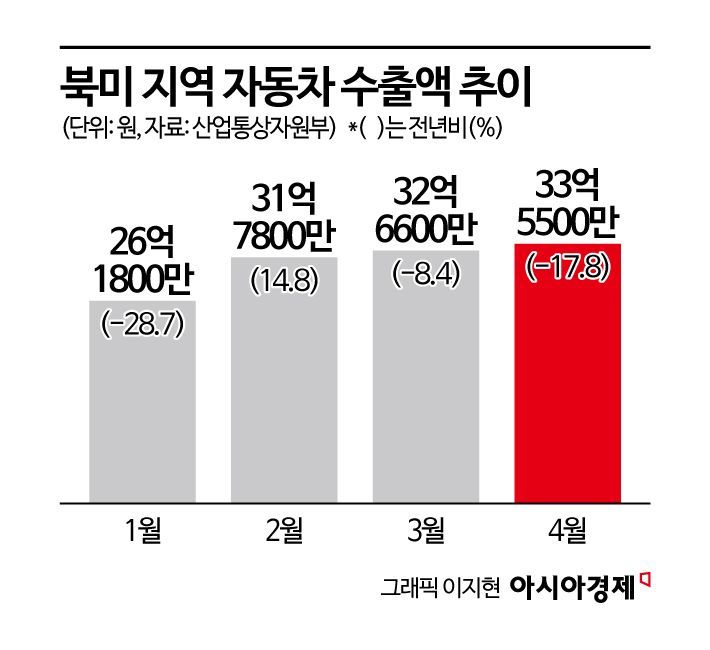
Hyundai and Kia have maintained their stance of utilizing available inventory as much as possible to avoid raising prices. Cox Automotive predicted in early April that Hyundai's inventory in the United States would last 94 days, and Kia's would last 62 days. However, amid growing uncertainties such as tariffs, demand has surged, and inventories are reportedly depleting faster than expected.
Global automakers are implementing or considering measures to raise retail prices in the United States. Last month, Ford increased prices by up to $2,000 for three models, including the Maverick pickup truck, and Japan's Subaru also announced price hikes for some new models.
© The Asia Business Daily(www.asiae.co.kr). All rights reserved.














