Appeals Court Suspends CIT Ruling Within Hours
EU and US to Proceed With Trade Talks as Planned
Japan to Hold Tariff Discussions With US on the 30th
The European Union (EU) has decided to proceed with trade negotiations with the United States as scheduled, despite ongoing confusion over reciprocal tariffs. Given the unpredictability of the Donald Trump administration's response, each country is refraining from making hasty decisions and is maintaining a cautious, wait-and-see approach.
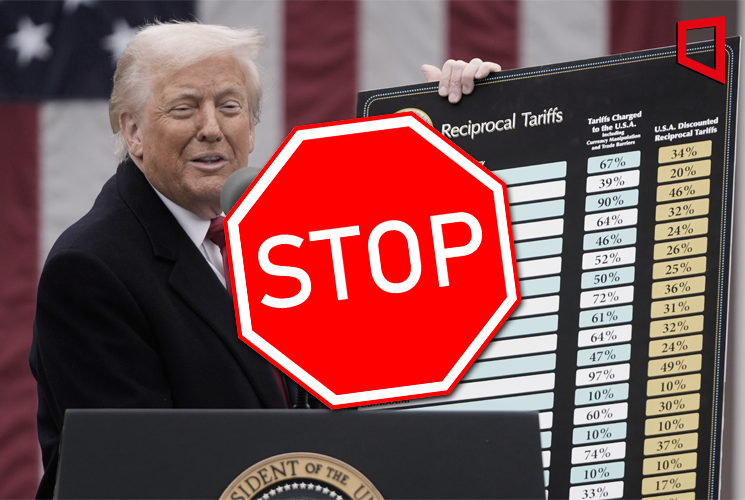
According to the UK’s Financial Times (FT) on the 29th (local time), EU officials stated that they plan to continue trade negotiations with the United States as originally planned during the Organisation for Economic Co-operation and Development (OECD) ministerial meeting to be held in Paris, France next week. This announcement comes immediately after the US Court of International Trade (CIT) ruled that President Donald Trump’s so-called “Liberation Day” reciprocal tariff measures were illegal. Following this, the White House filed an appeal, and the US Court of Appeals for the Federal Circuit overturned the lower court’s invalidation of the tariffs imposed under the International Emergency Economic Powers Act (IEEPA) by President Trump just one day later. As a result, all tariff measures enacted by President Trump remain in effect.
The European Parliament’s trade delegation is also currently in Washington, holding meetings with US trade and agriculture departments as well as businesses. Brando Benifei, an Italian member of the European Parliament who participated in the delegation, stated that they discussed the impact of the court ruling and commented, “We were also somewhat surprised by this bombshell decision.”
Some believe that, regardless of the confusion surrounding tariffs, the EU should continue its negotiations with the United States and focus the talks on steel, aluminum, and automobile tariffs.
Ignacio Garcia Bercero, a member of the Bruegel think tank and former EU trade official, warned that using the US court’s invalidation ruling as a pretext for the EU to withdraw from negotiations would be a “mistake.” He emphasized, “The negotiations must fundamentally focus on steel, aluminum, and automobile tariffs; there is no point in negotiating on other issues.”
Japan also plans to proceed with its talks with the United States as scheduled. Nihon Keizai Shimbun (Nikkei) reported on the 29th that Japanese Prime Minister Shigeru Ishiba held a phone call with President Trump for about 25 minutes that night to coordinate on tariff discussions. This phone call is seen as a preliminary coordination ahead of the fourth ministerial-level meeting on US-Japan tariffs, which is scheduled to take place in Washington on the 30th. The leaders of the United States and Japan are also scheduled to hold a summit during the Group of Seven (G7) summit in Canada from June 15 to 17. Both sides are working to reach a certain level of agreement at that time.
The New York Times (NYT) reported that countries outside Europe are also adopting a cautious stance amid growing uncertainty over tariffs. While there was a brief wave of optimism immediately after the first-instance ruling by the US Court of International Trade, the prevailing view is that, given the unpredictability of the Trump administration’s response, it is necessary to monitor the situation closely.
Australian Trade Minister Don Farrell commented on the ruling, saying, “Further legal proceedings may follow,” and added, “We will closely review the content of the ruling.” A spokesperson for the UK government also stated that the ruling is an internal US matter and only marks the initial stage of the legal process. An Indian Ministry of External Affairs spokesperson said, “As the matter is ongoing, please continue to monitor the situation closely.”
© The Asia Business Daily(www.asiae.co.kr). All rights reserved.
![Clutching a Stolen Dior Bag, Saying "I Hate Being Poor but Real"... The Grotesque Con of a "Human Knockoff" [Slate]](https://cwcontent.asiae.co.kr/asiaresize/183/2026021902243444107_1771435474.jpg)
















