With just six days remaining until the June 3 presidential election, the policy pledges released on May 28 by the leading presidential candidates for the 21st presidential election have placed "economic growth" at the forefront. This directly reflects the sense of crisis facing the Korean economy, which has been hit hard by the Trump-induced global trade war amid growth forecasts in the 0% range. However, critics point out that the pledges lack fundamental solutions to navigate the structural transition marked by declining fiscal revenues and soaring national debt, driven by demographic changes such as low birth rates and an aging population, as well as falling productivity.
The policy pledge book published by Lee Jae Myung, the Democratic Party candidate, on this day features "Real Growth" as its catchphrase, setting a goal to achieve a potential growth rate in the 3% range through structural reforms. However, he did not specify a timeline for achieving this goal. Lee emphasized the development of state-level advanced strategic industries such as artificial intelligence (AI) and defense, as well as structural and institutional reforms to overhaul the outdated economic structure. Nevertheless, his core pledges are largely comprised of large-scale fiscal projects, such as mandating state support for local currency and expanding the eligibility for child allowances.
Kim Moonsoo, the People Power Party candidate, who previously released his pledge book, also placed economic pledges at the center with the keyword "Vibrant Economy." Rather than focusing on fiscal spending, he concentrated on a growth strategy for businesses through regulatory easing, and included a comprehensive set of tax cuts, such as lowering the top rates for corporate and inheritance taxes, reforming the comprehensive real estate tax, raising the basic deduction for earned income tax, and abolishing heavy taxation on capital gains. He also promised to establish a Regulatory Innovation Office to continuously manage and supervise regulations that hinder the economy. This approach is in line with the traditional conservative policies of tax cuts and growth, aiming for a trickle-down effect.
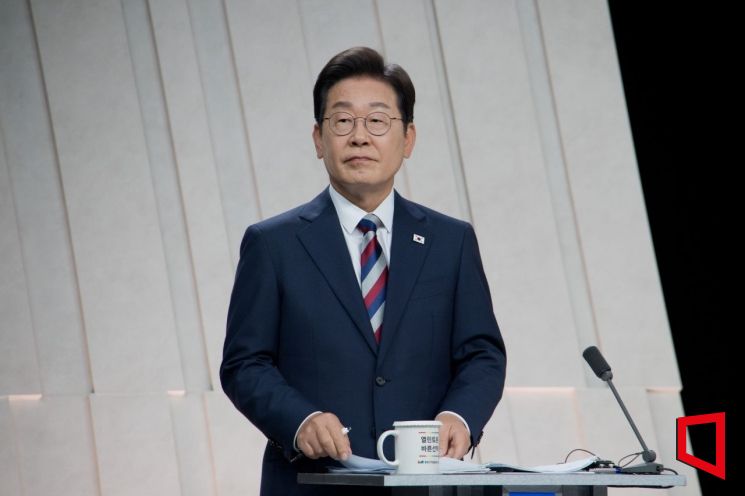 Lee Jae Myung, the Democratic Party presidential candidate, is preparing for a political TV debate held at the MBC studio in Sangam-dong, Mapo-gu, Seoul on the 27th. 2025.5.27 Photo by National Assembly Press Photographers Group
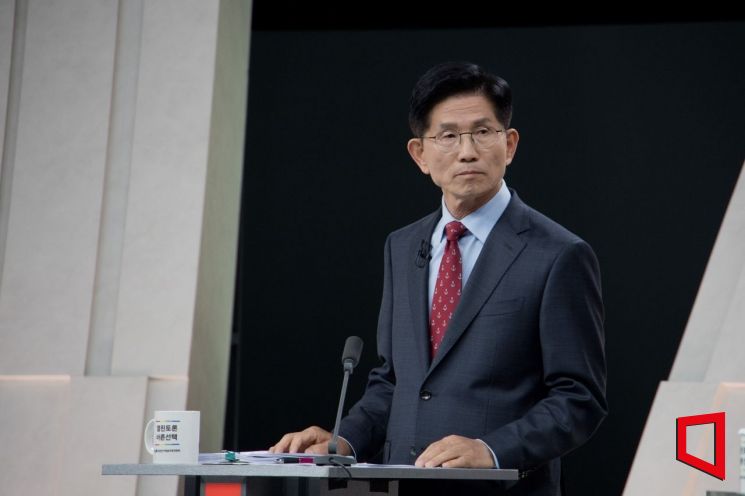 Kim Moonsoo, the People Power Party's presidential candidate, is preparing for a political TV debate held at the MBC studio in Sangam-dong, Mapo-gu, Seoul on May 27, 2025. Photo by National Assembly Press Photographers Group
In the short term, both candidates agree on the urgent need to revive the dwindling domestic demand by immediately pursuing a second supplementary budget (extra budget) upon taking office. While Lee did not specify the size of the supplementary budget, considering that the Democratic Party mentioned 35 trillion won in February and the first supplementary budget passed at 13.8 trillion won, the second supplementary budget is estimated to be around 21 trillion won. Kim also pledged to immediately begin discussions on a 30 trillion won supplementary budget for people's livelihoods through a meeting with the floor leaders of both parties on his first day in office.
The issue lies in securing the necessary funding. Neither candidate has disclosed specific details about the required resources or procurement plans for their individual pledges. Lee stated that he would secure funds through tax and expenditure restructuring, the annual increase in total revenue from 2025 to 2030, and by cracking down on tax evasion (delinquency). However, critics argue that, given the declining economic growth rate, it is unlikely that increased tax revenues will be sufficient to cover the massive fiscal expenditures promised. The resources required to implement the Democratic Party's major pledges are projected to total 210 trillion won over five years.
Kim also suggested utilizing central and local government funds, private investment, and fiscal expenditure adjustments as funding measures. However, he did not provide any estimates of the revenue shortfalls or the overall impact on tax revenues that would result from his key pledges, such as lowering corporate and inheritance taxes and other tax cut policies.
Experts unanimously agree that the pledges, which are focused on fiscal stimulus and tax cuts, fall far short of addressing the fundamental problems of the Korean economy, which is mired in a period of structural low growth. In the first quarter of this year, Korea's exports, domestic demand, and investment all faltered, resulting in a -0.2% contraction compared to the previous quarter. Since the second quarter of last year (-0.2%), the country has experienced four consecutive quarters of growth below 0.1%. With rapid aging driving up government spending and national debt, and growth rates sharply declining, the country's fiscal capacity is deteriorating. According to the Ministry of Economy and Finance, the national debt-to-GDP ratio is expected to reach 48.4% by the end of this year and 55.3% by 2030, far surpassing 50%. This means that the pace at which national debt is increasing is outstripping GDP growth.
Seok Byung Hoon, a professor of economics at Ewha Womans University, pointed out, "Pledging to increase government spending without tax hikes undermines the feasibility of these promises," and "The new administration must urgently address how to fill the revenue gap during this period of structural transition."
© The Asia Business Daily(www.asiae.co.kr). All rights reserved.
![Clutching a Stolen Dior Bag, Saying "I Hate Being Poor but Real"... The Grotesque Con of a "Human Knockoff" [Slate]](https://cwcontent.asiae.co.kr/asiaresize/183/2026021902243444107_1771435474.jpg)












