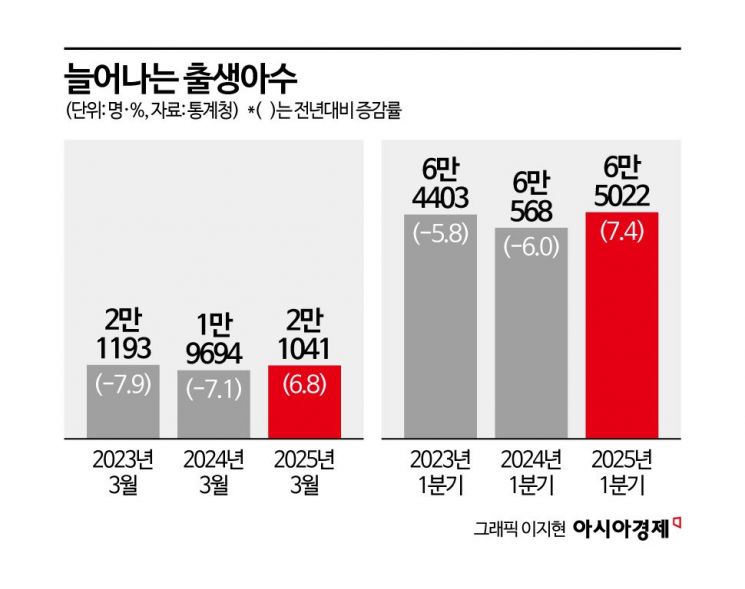
21,041 Babies Born in March, Up 6.8%
First Quarter Births Also Increase to 65,022
Quarterly Marriages on the Rise Since Q1 2023
First Quarter Marriages Up 8.4% to 58,704 Cases
The number of births in the first quarter increased for the first time in ten years since the first quarter of 2015, recording the highest growth rate (7.4%) since statistics on this topic began in 1981. The total fertility rate for the first quarter also rose for the first time in a decade, reaching 0.82. This result is attributed to a recent increase in marriages, a rise in the population in their 30s, and a more positive perception of childbirth.
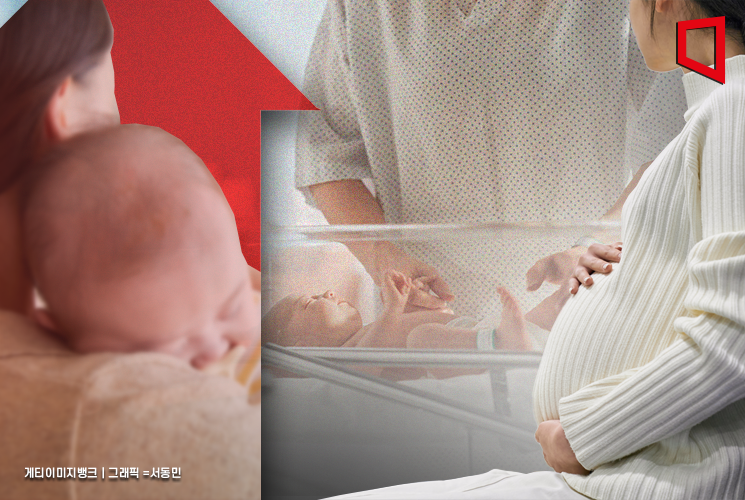
More babies born in the first quarter... Impact of increasing population in their 30s
According to the "March Population Trends" released by Statistics Korea on May 28, the number of births in March was 21,041, up 6.8% compared to the same month last year. This is the first time since 2015 (6.1%) that the number of births in March has increased. The growth rate was the highest for March since 1993 (8.9%).
Including January and February, the number of births in the first quarter of this year was 65,022, an increase of 7.4%. While the number of births has been rising since the second quarter of last year, this is the first time since 2015 that births have increased in the first quarter. The first quarter growth rate was the highest since 1981, when related statistics were first compiled.
A Statistics Korea official explained, "The increase in marriages has continued after the COVID-19 pandemic," and added, "The growing population in their early 30s and the positive shift in perceptions about childbirth also contributed to the increase."
As of March, the total fertility rate stood at 0.77, up 0.4 from the previous year. In the first quarter, the total fertility rate was 0.82, an increase of 0.05, marking the highest first-quarter figure since 2022 (0.87). It is the first time in ten years that the first-quarter total fertility rate has increased, since 2015 (1.34).
The number of marriages in March was 19,181, an increase of 11.5%, making it the highest for March since 2020. The number of marriages in the first quarter was 58,704, up 8.4%, and the highest since the first quarter of 2019 (59,074). The number of marriages per quarter has been increasing since the first quarter of 2023.
A Statistics Korea official analyzed, "The increase in the population in their early 30s, a positive change in perceptions about marriage, and the effects of certain policies are believed to have contributed to the rise in the number of marriages."
The number of deaths in March was 31,141, an increase of 0.2%. The natural decrease in March, calculated by subtracting the number of deaths from the number of births, was 10,100. The number of deaths in the first quarter was 100,896, up 8.1%.
The number of divorces in March was 7,210, a decrease of 3.2%. The number of divorces in the first quarter was 58,704, an increase of 8.4%.
First-quarter total fertility rate increased in all regions except Gangwon
Looking at the number of births by region in March, 13 regions, including Seoul (3,786) and Busan (1,151), saw an increase compared to the same month last year. Four regions, including Ulsan (429) and Sejong (262), saw a decrease.
In the first quarter, the number of births increased in all regions except Gangwon (1,718) and North Gyeongsang (2,660). Incheon (4,216) and Daegu (2,845) recorded high growth rates of 14.4% and 11.5%, respectively. Seoul had 11,618 births, an increase of 9.8%.
In the first quarter, the total fertility rate by region increased in all regions except Gangwon (0.95). Incheon (0.84) and Daegu (0.86), which had high numbers of births, saw increases of 0.10 and 0.09, respectively, and ranked among the regions with higher total fertility rates. Seoul's total fertility rate was 0.65, up 0.05.
Looking at the number of marriages by region in March, 13 regions, including Seoul (3,814) and Busan (1,053), saw an increase. In contrast, three regions, including Sejong (147) and North Gyeongsang (708), saw a decrease.
In the first quarter, the number of marriages increased in all regions except Daegu (2,380) and North Gyeongsang (2,391). Notably, Daejeon (2,106) recorded a remarkable growth rate of 34.3%.
© The Asia Business Daily(www.asiae.co.kr). All rights reserved.
![Clutching a Stolen Dior Bag, Saying "I Hate Being Poor but Real"... The Grotesque Con of a "Human Knockoff" [Slate]](https://cwcontent.asiae.co.kr/asiaresize/183/2026021902243444107_1771435474.jpg)

















