The government has decided to expand available supplies in preparation for a decrease in the shipment volume of summer cabbages and radishes, as it expects the cultivation area for these crops to shrink starting in July this year.
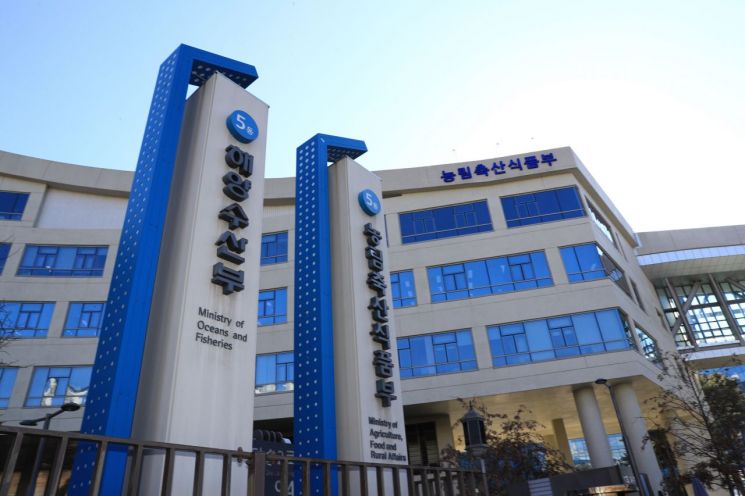
On May 28, the Ministry of Agriculture, Food and Rural Affairs announced that it will continuously monitor the supply and demand trends for key vegetables that significantly impact household food prices in the summer?cabbage, radish, onion, and garlic?and implement proactive measures to stabilize their supply.
Due to increased production and shipments of spring cabbages, the wholesale price per head of cabbage as of late May stands at 1,587 won, which is 33.3% lower than the same period last year and 27.5% lower than the average year. The ministry forecasts that cabbage prices will remain low until early July, when spring cabbages are shipped.
For radishes, the price per unit is currently 1,872 won as of late May, which is higher than both last year and the average year, due to reduced production and storage of winter radishes, which currently make up a large portion of the shipments. However, the ministry expects prices to gradually stabilize to normal levels as shipments of spring radishes, whose cultivation area has increased significantly since early May, begin to enter the market.
It is still difficult to accurately predict the supply and demand for summer cabbages and radishes, which will be shipped starting in July, as full-scale cultivation has not yet begun. However, the ministry expects the cultivation area for cabbages and radishes this year to decrease compared to last year and the average year, due to worsening cultivation conditions for farmers. These conditions have been caused by more frequent abnormal weather events such as heatwaves and heavy rains, as well as increased pest and disease outbreaks in highland areas of Gangwon Province.
Accordingly, the ministry, together with related agencies, plans to support the stable production of summer cabbages and radishes and expand government-held supplies in preparation for a decrease in shipment volume.
First, the Ministry of Agriculture, Food and Rural Affairs, the Rural Development Administration, and Gangwon Province will support farmers with costs for pest and disease control?such as soil sterilization, green manure crop cultivation, and application of microbial compost?to prevent major pests and diseases (such as cabbage cyst nematode and Fusarium wilt), which have been increasing in area every year.
Additionally, to enable summer cabbage and radish farmers to produce with confidence, the ministry will introduce, on a trial basis from this year, an income stabilization insurance that compensates up to 85% of average income in the event of decreased production or market price drops. The ministry also plans to supply 2.5 million reserve seedlings (a 25% increase from last year) for contract farmers, along with providing pesticides, to prepare for abnormal weather events.
Furthermore, to prepare for potential summer shortages of cabbage and radish, the government will pre-purchase and store 23,000 tons of spring cabbages and radishes, which are currently in sufficient supply, and release them to wholesale markets and other outlets when supply is insufficient. The ministry also plans to expand contract farming for summer cabbages and radishes through the National Agricultural Cooperative Federation (Nonghyup) to encourage increased cultivation area.
In addition, the ministry will support small and medium-sized kimchi manufacturers, who have difficulty securing raw materials (cabbage) every summer due to a lack of their own storage facilities, by identifying demand in advance and supplying government-stored cabbages at the necessary time, so that they can produce kimchi stably this summer.
For early-maturing onions, shipments were delayed as harvest operations in Jeju and Jeonnam regions were postponed due to rain and low temperatures. However, for mid- to late-maturing onions, production is expected to increase due to favorable weather conditions and reduced pest and disease occurrence. The production volume of early-maturing onions increased by 9.2% compared to last year, and although the cultivation area for mid- to late-maturing onions decreased by 4.0% compared to last year, yield per unit area increased by 7.5%, resulting in an overall production increase of 3.2% to 1.09 million tons. As a result, the volume entering wholesale markets has increased, and the wholesale price is 619 won per kilogram, which is lower than both last year and the average year.
To address this, the ministry plans to resolve the entire surplus by purchasing and storing 30,000 tons and suppressing the shipment of 4,000 tons of low-quality products using producer funds. For 3,000 tons of mid-maturing onions, the ministry will postpone shipments for a certain period to prevent a glut in the market. The ministry will also proactively stabilize supply and demand by creating new demand through discount support and meetings with large buyers such as school meal providers, the food service industry, and food material marts.
As for garlic, the stock of stored garlic from the 2024 harvest has decreased by 7.0% compared to last year, resulting in a wholesale price of 9,525 won per kilogram, which is higher than both last year and the average year. A ministry official stated, "For the 2025 garlic harvest, growing conditions such as rainfall and temperature have been favorable, and the crop condition is good, so production is expected to increase by 6.6% compared to last year. In some regions, such as Jeju, Goheung in Jeonnam, and Changnyeong in Gyeongnam, shipments of green garlic have already begun. After early June, when the increased production of new garlic from the 2025 harvest enters the market in earnest, supply and demand are expected to stabilize."
To ease the burden on the public from rising prices, the ministry is providing discount support (up to 40%) for all domestically produced agricultural products at large and small supermarkets and traditional markets until June 4. In addition, through the operation of crop management councils composed of the ministry, the Rural Development Administration, local governments, and Nonghyup, the ministry plans to strengthen monitoring of crop conditions at production sites and provide thorough on-site technical guidance in the event of abnormal weather, to ensure stable production of agricultural products.
© The Asia Business Daily(www.asiae.co.kr). All rights reserved.

















