The Gyeongbuk Office of Education (Superintendent Lim Jong-sik) announced on May 28 that it has established and is implementing a "Customized Comprehensive School Meal Plan" to improve the working environment for kitchen staff and to provide students with safer and higher-quality school meals.
This comprehensive plan was launched to continuously maintain the nation's top-level school meal system and includes five major initiatives: improving the treatment of kitchen staff, enhancing cafeteria environments, supporting meal expenses for small schools, providing customized training by job category, and reducing food waste.
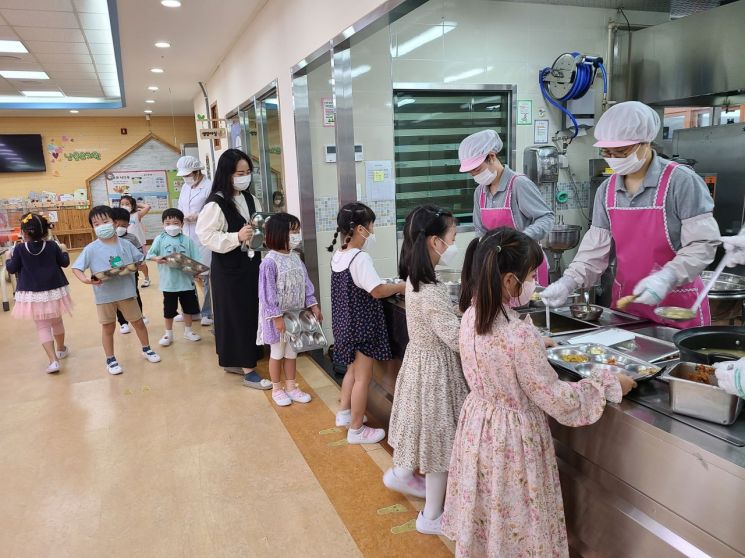
Starting from the 2026 academic year, the Gyeongbuk Office of Education will change the employment status of kitchen staff at schools serving two or three meals per day from non-working during vacations to regular employees.
As a result, the average number of working days per kitchen staff member will increase by 34 days, and an annual wage increase of approximately 3.1 million won per person is expected.
Additionally, beginning in March next year, the minimum staffing standard for kitchen workers will be relaxed from 41 students per staff member to 31, reducing the workload for small schools (with 100 or fewer students). For medium and large schools, the staffing increase unit will be adjusted from every 150 students above 301 to every 130 students, thereby facilitating substantial improvements in working conditions.
With these changes to staffing standards, 227 additional kitchen workers will be deployed, representing about a 7% increase compared to the current staff size. Consequently, schools with more than 500 students will have an average of one additional kitchen worker, and large schools with more than 1,000 students will have an average of 1.5 additional staff. The number of students served per kitchen worker in the Gyeongbuk Office of Education will improve from the current 83.3 to 78.8, a decrease of 4.5 students per worker.
Furthermore, the policy of providing 120,000 won per person for lung cancer health checkups for kitchen staff will continue, supporting early disease prevention and the right to health through low-dose chest CT scans. From 2022 to 2025, a total of 7,751 staff members received these checkups.
The Gyeongbuk Office of Education is also actively working on modernizing cafeterias and improving cooking environments. Every year, modernization projects will be carried out for more than 60 school meal facilities that are over 10 years old. The plan to upgrade ventilation systems in cafeterias, originally scheduled for completion by the 2029 academic year, will be completed two years earlier by the 2027 academic year. As planned, 280 schools will be completed by the end of this year, and with significant budget investment over the next two years, 415 more schools will benefit from improved cafeteria working conditions.
In addition, to prevent industrial accidents and reduce musculoskeletal disorders, the distribution of cooking robots and meal automation devices will be expanded. Currently, nine cooking robots have been supplied to seven schools, including Pohang High School.
Cooking robots help reduce the generation of ultrafine particles and harmful substances during food preparation. School meal automation devices include automatic soup kettles, automatic cup washers, and vegetable cutters, all of which are expected to significantly reduce the workload of kitchen staff.
Currently, the support ratio for food expenses at small schools with 100 or fewer students is 120% of that provided to schools with 500 students. An improvement plan is underway to raise this ratio to 130%, reflecting the difficulties in purchasing high-quality domestic and eco-friendly agricultural products.
The Gyeongbuk Office of Education is also working to provide safe and reliable food ingredients to students by collaborating with the Gyeongbuk Provincial Government and the Gyeongbuk Regional Meal Center.
This year, processed products such as sesame oil and perilla oil have been added to the list of supported items, and the subsidy ratio for each product category has been standardized at 50% to make school operations more convenient.
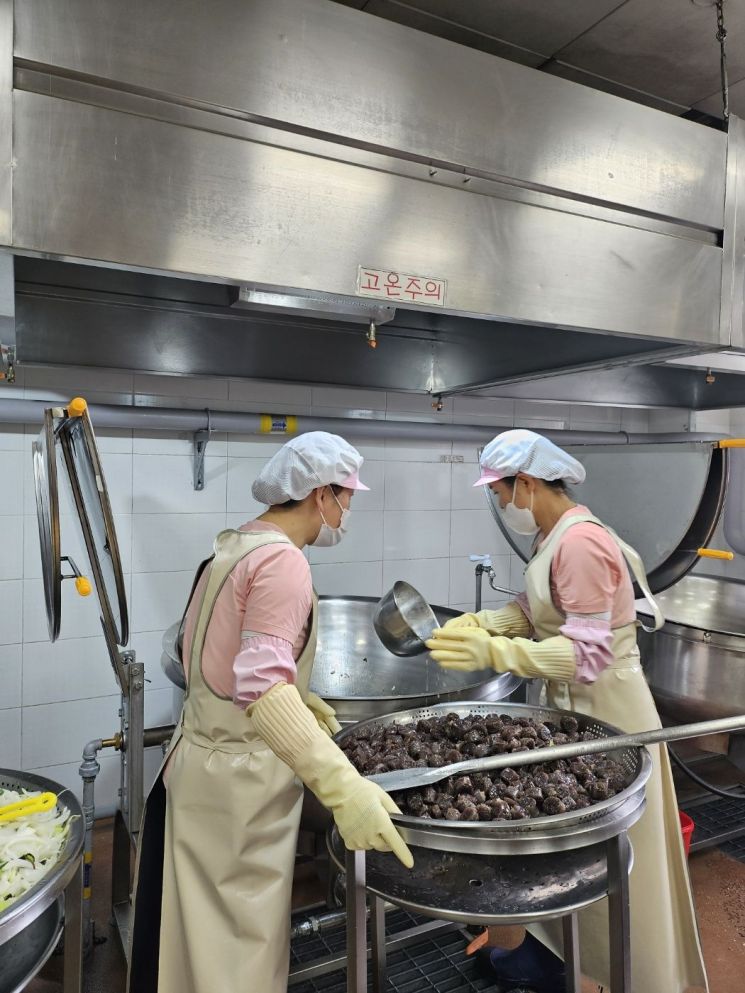
The Gyeongbuk Office of Education will introduce customized training programs to strengthen expertise by job category. Training for nutrition teachers and dietitians will focus on the latest trends in school meals, food allergy response, and nutrition education, while a new "School Meal Cooking Specialist Training Course" will be introduced for kitchen staff.
Newly hired kitchen staff will receive practical training that includes theoretical education, on-site practice, simulated cooking exercises, and hygiene drills. In addition, mental health and healing training for kitchen staff will be expanded to help alleviate physical and psychological stress and to improve job satisfaction.
Measures to reduce food waste generated by school meals have also been established to create a sustainable meal environment. Over the past four years, the amount and cost of food waste per student in the Gyeongbuk region have increased by 4.78% and 7.61%, respectively. In response, the Gyeongbuk Office of Education has set a target to reduce food waste by at least 1.5% annually over a five-year plan, and will implement initiatives such as installing food waste processors, accurately measuring meal preparation quantities, preventing over-preparation, and conducting joint action campaigns.
Lim Jong-sik, Superintendent of the Gyeongbuk Office of Education, stated, "Through this customized comprehensive school meal plan, we have laid the foundation for improving the health and welfare of kitchen staff and providing students with more hygienic and healthy meals," adding, "We will continue to listen to voices from the field and do our best to establish a sustainable school meal model."
© The Asia Business Daily(www.asiae.co.kr). All rights reserved.
![User Who Sold Erroneously Deposited Bitcoins to Repay Debt and Fund Entertainment... What Did the Supreme Court Decide in 2021? [Legal Issue Check]](https://cwcontent.asiae.co.kr/asiaresize/183/2026020910431234020_1770601391.png)

















