KEPCO Delays East Coast to Seoul Transmission Line by 1.5 Years
Hanam City Refuses Approval for East Seoul Substation Expansion
Facility Plan Investment Increased by 16 Trillion Won Due to Rising Costs
Grid Restructuring and New Substations Planned for Semiconductor Cluster
KEPCO Projects 134 Trillion Won Economic Impact and 480,000 Jobs
The city of Hanam, which holds the permitting authority for the expansion of Korea Electric Power Corporation's (KEPCO) East Seoul Substation, has not granted construction approval. As a result, the timeline for completing the 'East Coast?Seoul Metropolitan Area Transmission Line' has been delayed by one year and six months.
On May 27, KEPCO announced that it had established the '11th Long-Term Transmission and Substation Facility Plan,' which was finalized at the 312th Electric Power Committee meeting of the Ministry of Trade, Industry and Energy.
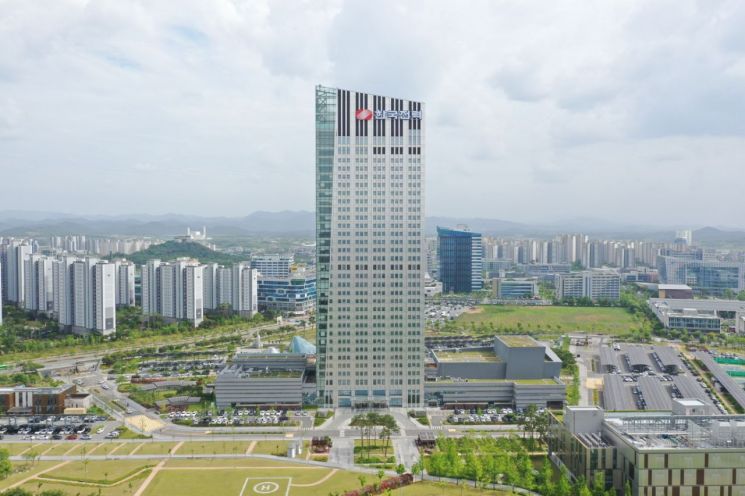
This plan is a detailed transmission and substation facility roadmap for the 15-year period from 2024 to 2038, based on the power demand and generation facility outlook presented in the '11th Basic Plan for Electricity Supply and Demand' announced in February.
KEPCO first adjusted the completion schedules for its ongoing power grid construction projects in Hanam and Dangjin, taking into comprehensive consideration construction delays and changes in grid conditions. KEPCO is pursuing the construction of the nation's longest and largest high-voltage direct current (HVDC) transmission network, spanning 280 kilometers from Uljin on the East Coast to Hanam in Gyeonggi Province. In order to deliver electricity generated at power plants on the East Coast to the Seoul metropolitan area, it is necessary to expand the East Seoul Substation, which is the final stage of the transmission line construction. However, the city of Hanam has refused to grant construction approval, citing opposition from local residents. Due to the prolonged conflict between KEPCO and Hanam, the completion date for the East Coast?Seoul Metropolitan Area transmission line has been pushed back from June next year to December 2027, a delay of one year and six months.
KEPCO also plans to restructure the grid for the efficient operation of the Honam?Seoul Metropolitan Area HVDC and to expand the power supply infrastructure to meet the electricity demand of national high-tech strategic industries such as semiconductors. Taking into account the current voltage-source HVDC technology, the availability of sites for converter stations, and the need to reinforce the supporting grid, KEPCO changed the original plan for two 4GW routes (to be completed in 2036) to four 2GW routes (to be completed in stages in 2031, 2036, and 2038).
In addition, the plan includes the construction of new substations within the industrial complex and the connection with the existing power grid to ensure the timely supply of more than 10GW of large-scale power required for the Yongin Semiconductor Cluster.
KEPCO estimates that an investment of 72.8 trillion won will be required to implement this facility plan by 2038. This is an increase of 16.03 trillion won compared to the 10th plan (56.5 trillion won), mainly due to higher material costs resulting from the Russia-Ukraine war and an increase in underground transmission lines. KEPCO projects that the economic impact of this facility plan will be approximately 134 trillion won in production ripple effects and about 480,000 jobs created.
A KEPCO official stated, "Through the 'Special Act on the Expansion of National Power Grid Infrastructure' enacted in February, we will strengthen the momentum for construction projects, enhance resident acceptance of power facilities by expanding resident-friendly substations and establishing a neutral electromagnetic field management system, and build the power grid in a timely manner." The official added, "Once the sites for new power plants, including large-scale nuclear power plants reflected in the 11th Basic Plan for Electricity Supply and Demand, are confirmed, we will establish optimal grid configuration plans. We also plan to develop linkage measures so that the energy storage system (ESS) central contract market volumes can be efficiently utilized in the power grid to respond to renewable energy fluctuations."
© The Asia Business Daily(www.asiae.co.kr). All rights reserved.












