National Folk Museum Special Exhibition
Memories of the Neighborhood Photo Studio
From Recording Special Moments to Capturing Everyday Life
Souvenirs: Sharing the Value of Memories
The commonality between photographs and souvenirs is that both serve as a means of 'recording.' People capture moments they wish to cherish for a long time through photographs, and recall unforgettable memories from their travels through souvenirs. An exhibition themed on photographs and souvenirs has opened at the National Folk Museum of Korea.
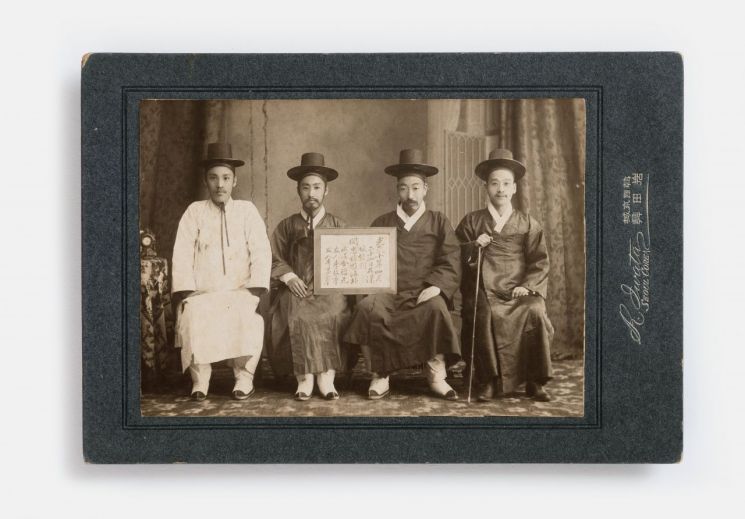 A photo of Hwangseong Christian YMCA School in 1910 and Min Choongsik, the first graduate, taking a commemorative photo with friends in April 1906 before leaving abroad. They held a frame indicating the date of the photo, the reason, and the people appearing in it. National Folk Museum
The exhibition "The Golden Age of Photo Studios" sheds light on the history of photography in Korea. Photo studios began appearing in Korea in the early 1880s with the arrival of Japanese photographers. Starting with the Cheonnyeondang Photo Studio in 1907, the number of photo studios operated by Koreans increased, and the practice spread widely, especially among the royal family and a small elite class.
In the early days, some people were reluctant to have their photos taken due to superstitions that it would steal their soul. However, as the country opened up, photography came to be seen as a symbolic act of embracing Western culture. In 1910, Hwangseong Christian YMCA School had a photography department, and students at the time would take photos holding a frame that displayed the date, the reason for the photo, and the names of those appearing in it. The significance of photography as a record was considerable.
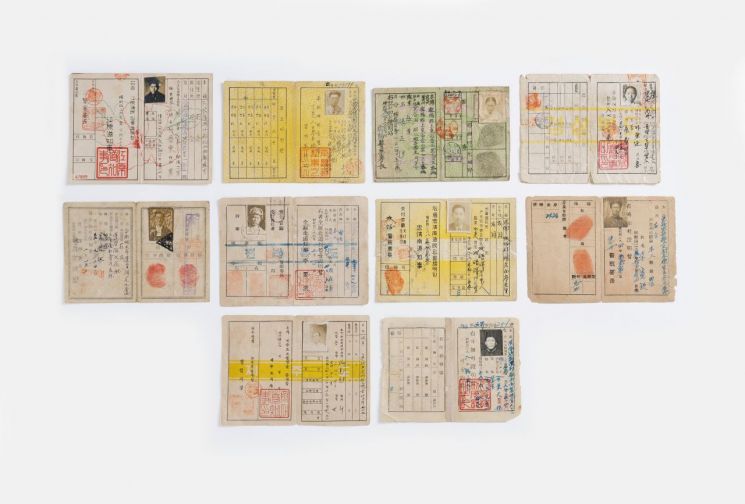
During the Japanese colonial period, the colonial authorities used photography as a tool to monitor and control independence activists, which led to photography being established as a means of identification. After the Korean War, the introduction of the provincial ID card system made it mandatory for people to have their photos taken, even though the cost of photography was high and many had previously hesitated to do so. Quick street photo studios, known as "box photo studios," emerged, offering ID photos in just ten minutes. This marked the beginning of the golden age of photo studios. On holidays, local photography associations would collect camera lenses from studios to prevent work, but customers flocked in such numbers that photographers would use hidden lenses to continue shooting.
However, with the spread of digital cameras, the number of people working in the photography industry plummeted from 13,332 in 1995 to 2,197 in 2013. Nevertheless, as unmanned instant photo booths became more common, the number of photo studios increased from 13,002 in 2017 to 21,012 in 2024. This reflects a shift in photography from "recording special moments" to "recording everyday life."
"The Golden Age of Photo Studios" exhibition features stories and belongings of photographers, as well as over 200 exhibits including photos of significant life events such as the 100th day celebration, first birthday, graduation, wedding, and 60th birthday. The exhibition runs until July 27.
The Value of Memories in Souvenirs
Souvenirs serve as tangible evidence that crystallizes memories people wish to keep and continues the story of their lives. The exhibition "Today, Also, a Souvenir: Why We Keep Souvenirs" introduces items that commemorate life’s milestones, from birth to death, according to each individual’s life cycle. It offers the enjoyment of exploring how special moments intersected with the values of different eras.
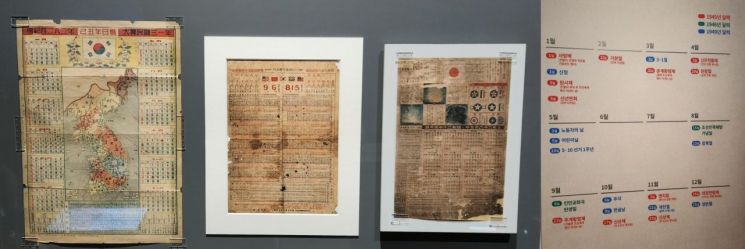 Changes in holidays can be observed in three calendars produced over five years (calendars from 1945, 1946, and 1949). National Folk Museum.
Through the holidays marked on three calendars produced over five years (calendars from 1945, 1946, and 1949), the exhibition highlights how commemorative practices changed with the times, and delivers the message that remembering the past is part of our story as we live today.
This exhibition also unveils many artifacts to the public for the first time. These include a portrait of Yi Yongik, a prominent pro-Russian official of the Korean Empire, along with the actual medals and commemorative badges depicted in the portrait. The commemorative medal for the 50th anniversary of Emperor Gojong’s reign is also being shown for the first time. In addition, a commemorative photo taken at the proclamation of the Constitution is being displayed for the first time, notable for having the names of the individuals written within their likenesses below the photograph. The exhibition runs until September 14.
© The Asia Business Daily(www.asiae.co.kr). All rights reserved.














