Despite Trump's Push for "Reviving U.S. Manufacturing,"
China Signals Determination to Maintain Manufacturing Leadership
Sharper Focus on Goals... Emphasis on Semiconductor Technology
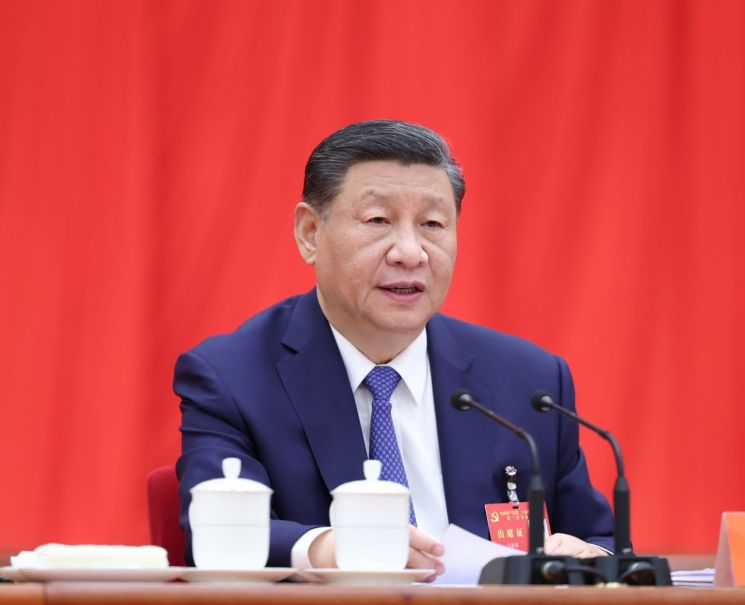
There have been reports that Xi Jinping, President of China, is preparing a follow-up version of the "Made in China 2025" industrial strategy, with a focus on semiconductors. This move is interpreted as China signaling its determination to maintain leadership in manufacturing, at a time when U.S. President Donald Trump is pushing forward with a tariff war aimed at reviving domestic manufacturing in the United States.
On May 26, Bloomberg News, citing multiple sources, reported that the Chinese government is preparing a successor to the "Made in China 2025" strategy, which President Xi has been promoting since 2015.
According to sources, the Chinese government intends to designate advanced technologies, including semiconductor equipment, as a core priority sector for the next ten years. This is in contrast to the previous policy from a decade ago, which took a broad approach by supporting 13 industries. However, it is also known that the new strategy may use a different name to avoid criticism from Western countries.
The Chinese government is also believed to be separately preparing the next five-year plan, which will be implemented starting in 2026. The next five-year plan is scheduled to be officially announced at the National People's Congress (NPC) in March next year. According to sources, this plan aims to maintain the share of manufacturing in gross domestic product (GDP) at a stable level over the medium to long term.
According to data from the National Bureau of Statistics (NBS) of China, as of 2024, manufacturing accounts for about 24.9% of China's GDP. Consumption represents about 40% of China's GDP, which is lower than the 50-70% seen in advanced economies such as the United States and Europe.
There is a general consensus that domestic consumption must be stimulated to achieve the 5% GDP growth target, but concrete implementation measures have yet to follow. In March, Chinese Premier Li Qiang emphasized at the NPC that "vigorously boosting consumption is the top priority this year," and stressed that "domestic demand must be the main driver of economic growth."
President Xi has continued to express his commitment to fostering manufacturing, despite U.S. containment efforts. According to the state-run Xinhua News Agency, on May 19, President Xi visited a bearing factory in Henan Province and emphasized the need to "continuously strengthen manufacturing, adhere to the principle of self-reliance, and secure core technologies independently."
However, Bloomberg News noted that these plans are still under discussion within the Chinese government, and that details could change before they are finalized.
© The Asia Business Daily(www.asiae.co.kr). All rights reserved.












