A local report that the U.S. Department of Defense is reviewing a reduction of U.S. Forces Korea (USFK) has sparked controversy. This comes at a time when North Korea is not only strengthening its nuclear and missile capabilities, but also its conventional forces, leading to heightened military tensions on the Korean Peninsula. The government has stated that "nothing has been discussed at all," but concerns are expected to grow for the incoming administration, which is set to launch in just over 10 days.
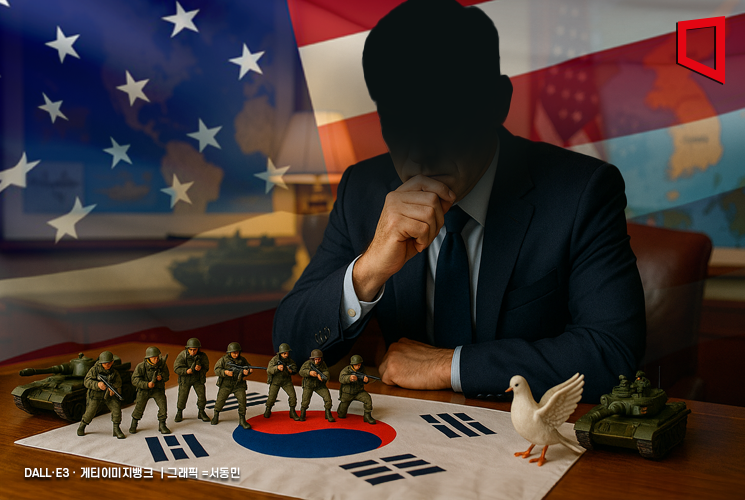
On May 23, the Ministry of Foreign Affairs and the Ministry of National Defense responded to the U.S. media reports about a possible reduction of USFK by stating, "There has been absolutely no discussion between South Korea and the United States regarding the withdrawal of USFK." An official from the Ministry of Foreign Affairs said, "USFK is both the symbol and backbone of the South Korea-U.S. alliance, and has contributed to the peace and stability of the Korean Peninsula and the region by deterring North Korean threats for over 70 years." The official added, "Recently, both the Commander of the U.S. Indo-Pacific Command and the Commander of USFK emphasized the importance of USFK during U.S. Senate hearings, expressing negative views on withdrawal or reduction. The U.S. National Defense Authorization Act (NDAA) has also consistently included provisions to maintain the current level of USFK." The official further emphasized, "South Korea and the United States will continue to make ongoing efforts to maintain and strengthen their robust combined defense posture."
The Ministry of National Defense also stated, "USFK is a key force of the South Korea-U.S. alliance, and together with our military, has maintained a strong combined defense posture to deter North Korean aggression and provocations, contributing to peace and stability on the Korean Peninsula and in the region. We will continue to cooperate to further develop in this direction going forward."
Previously, The Wall Street Journal (WSJ) reported on the previous day (local time) that the U.S. Department of Defense is considering relocating about 4,500 of the 28,500 USFK troops?approximately 16%?to other areas within the Indo-Pacific, including Guam, which is U.S. territory, citing sources. According to WSJ, this plan has not yet been reported to U.S. President Donald Trump and is only one of several proposals currently being discussed by officials conducting policy reviews.
The size of USFK, which peaked at around 300,000 during the Korean War, has steadily declined since the armistice and has remained at around 28,500 since 2008. As of 2022, USFK possesses approximately 90 fighter jets, 40 helicopters, 280 armored vehicles, and 60 Patriot missile launchers. The reduction of USFK was discussed during the first Trump administration but was not implemented; however, it has resurfaced as an issue under the second administration.
The problem is that military tensions surrounding the Korean Peninsula have been rising recently. North Korea, which has focused on developing nuclear weapons and missiles, has also been expanding its conventional forces by strengthening ties with Russia in exchange for participating in the Russia-Ukraine war. In this context, the possibility of adjusting the size and role of USFK could lead North Korea to misjudge the situation, according to some observers.
Voices of concern are also emerging from the political arena, with about ten days left until the presidential election. Han Minsoo, spokesperson for the Democratic Party, said, "It seems to be speculative reporting," but added, "We will continue and strengthen the solidity of the South Korea-U.S. alliance." Shin Dongwook, chief spokesperson for the People Power Party, stated, "Security anxiety is no longer just a concern but has become a reality."
However, some argue that there is no need to overreact to such reports. Although the U.S. Department of Defense is in the process of readjusting the size and roles of U.S. troops stationed around the world, it is unlikely to easily choose withdrawal or reduction of USFK, given its strategic advantages.
Shin Beomcheol, former Vice Minister of National Defense and Senior Research Fellow at the Sejong Institute, explained, "The United States is in the process of adjusting the size and roles of its troops deployed worldwide, such as deciding to reduce the number of four-star generals by 20%, and USFK cannot be excluded from this review. However, in addition to the objective of containing North Korea, the location of USFK is strategically important for the United States, so it is unlikely that a reduction will be made hastily. It is highly likely that any decision will be made in consultation with the incoming administration."
Kwon Boram, Senior Research Fellow at the Korea Institute for Defense Analyses, said, "The Shangri-La Dialogue (Asia Security Summit) is scheduled for next week, and in principle, the defense ministers of the U.S. and China will meet face-to-face there. I am curious why this report (on the review of USFK relocation) emerged at this time, and I wonder if the United States wants to send a message to China or South Korea."
© The Asia Business Daily(www.asiae.co.kr). All rights reserved.












