Introducing the Life and Works of the First Generation of Goryeo Theater Artists
Shedding New Light on Original Plays and International Activities Including "Hong Beomdo"
The Goryeoin Village in Gwangju is attracting the interest of visitors with the "Goryeoin Hangul Literature Exhibition," which is currently being held at the Goryeoin Cultural Center in celebration of the 80th anniversary of Liberation Day.
According to Goryeoin Village on the 23rd, this exhibition highlights the wounds of diaspora and artistic pride found in Goryeoin literature, focusing on shedding new light on the lives of forgotten Goryeoin writers and playwrights.
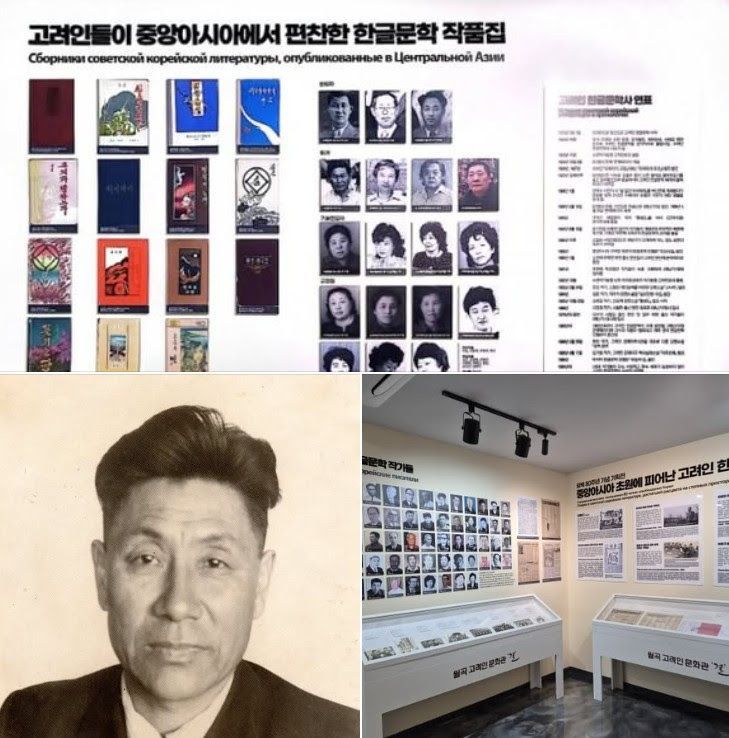 The Goryeoin Village in Gwangju is receiving great sympathy from visitors for the "Goryeoin Hangul Literature Exhibition" currently being held at the Goryeoin Cultural Center in celebration of the 80th anniversary of Liberation Day. Courtesy of Goryeoin Village
The most notable figure is Tae Jangchun (1911?1960), who was an actor, playwright, and theater specialist. Born in North Korea, he laid the foundation for Goryeoin theatrical arts as a first-generation actor at the Goryeo Theater in the 1930s.
Tae Jangchun made his stage debut in 1931 with the youth labor theater play "Hungry Grassland." He joined the Goryeo Theater in 1934 and presented a variety of original plays. His representative works include "Meja," "Slaves" (1939), "Water of Life" (1940), and "Hong Beomdo" (1941).
"Hong Beomdo" was produced based on interviews with independence activist General Hong Beomdo. There is a well-known anecdote that the general himself attended the premiere and remarked, "Do not praise me too highly." This work later made its way to the stage in Moscow, where it received a strong response.
He also released a series of works with social messages, such as "Happy People" (1939), "Heungbu and Nolbu" (1946), "Land of Freedom" (1948), and "South of the 38th Parallel," establishing himself as a leading playwright at the Goryeo Theater. Some of his works were also performed in countries such as Poland and Czechoslovakia.
As an actor, he was acclaimed for playing the lead role of Koshkin in Soviet writer V. Trenev's play "Lyubov Yarovaya." As both theater director and head of the literary department, he devoted himself to nurturing the next generation. In 1944, he became a member of the Soviet Writers' Union, and in 1947, he was named an "Honored Artist of Kazakhstan."
© The Asia Business Daily(www.asiae.co.kr). All rights reserved.
![Clutching a Stolen Dior Bag, Saying "I Hate Being Poor but Real"... The Grotesque Con of a "Human Knockoff" [Slate]](https://cwcontent.asiae.co.kr/asiaresize/183/2026021902243444107_1771435474.jpg)
















