WSJ: "Unofficial Review of U.S. Policy Toward North Korea"
Concerns Over Weakened Deterrence Against China Raise Opposition... Not Yet Reported to Trump
The Wall Street Journal (WSJ) reported on May 22 (local time) that the Donald Trump administration is considering a plan to withdraw thousands of U.S. troops from South Korea.
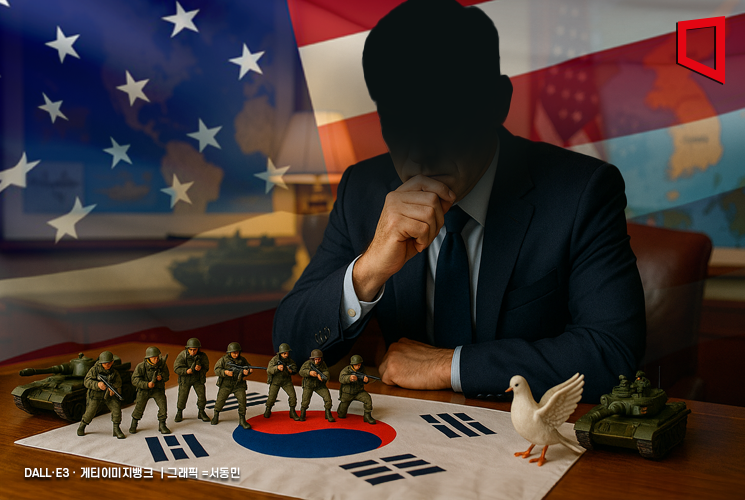
According to the WSJ, the U.S. Department of Defense is preparing a plan to relocate approximately 4,500 of the roughly 28,500 U.S. troops currently stationed in South Korea to other areas within the Indo-Pacific region, including Guam, a U.S. territory. Defense officials told the WSJ that this proposal is being prepared so that President Trump can consider it as part of his informal review of response options to North Korea.
This plan has not yet been reported to President Trump and is only one of several proposals under discussion by senior officials currently conducting policy reviews. Pete Nguyen, spokesperson for the National Security Council (NSC), did not comment on the issue of withdrawing U.S. forces from South Korea, telling the WSJ only that President Trump remains committed to the complete denuclearization of North Korea.
According to the WSJ, U.S. officials stated that no decision regarding the troop levels in South Korea will be made until the outcome of the war in Ukraine and whether the Trump administration will continue military support for Ukraine becomes clearer.
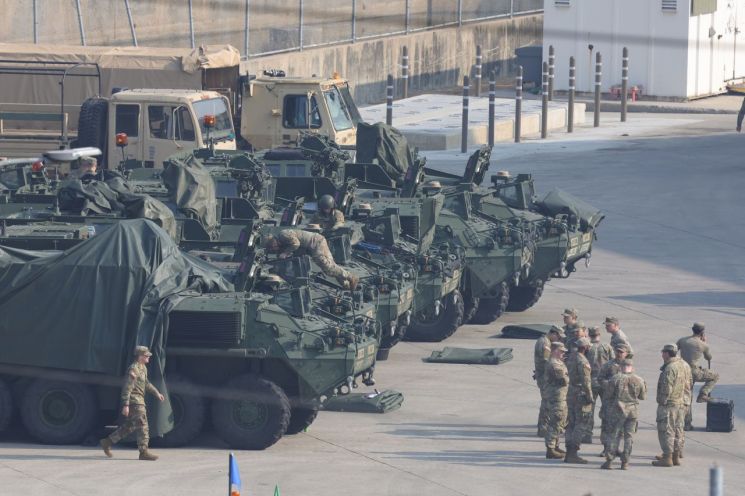
The WSJ also observed that if the Trump administration seriously considers a withdrawal of U.S. forces from South Korea, it could unsettle Indo-Pacific countries such as South Korea, Japan, and the Philippines, which rely on close cooperation with U.S. forces for their national defense. Samuel Paparo, commander of the Indo-Pacific Command, which oversees the Korean Peninsula, and Xavier Brunson, commander of U.S. Forces Korea, expressed negative views at a U.S. Senate Armed Services Committee hearing on April 10, stating that reducing U.S. forces in South Korea would weaken deterrence against North Korea and diminish the ability to counter China and Russia in the Indo-Pacific region. In particular, from the U.S. perspective, U.S. Forces Korea have played a dual role: deterring war on the Korean Peninsula and containing China, which has expanded its territorial claims in the South China Sea and threatened Taiwan.
However, some analysts suggest that if the Trump administration relocates troops from the Korean Peninsula to other areas of the Indo-Pacific, it could alleviate concerns about the reduction of U.S. forces in South Korea. The WSJ specifically pointed out that Guam is emerging as a strategically important location for troop deployment, as it is close to potential conflict areas but remains difficult for Chinese forces to reach.
The issue of reducing U.S. forces in South Korea is expected to be addressed in conjunction with the National Defense Strategy (NDS) currently being developed by the Department of Defense. On May 2, U.S. Secretary of Defense Pete Hegseth instructed the drafting of the NDS, providing guidelines to prioritize the defense of the U.S. mainland, the containment of China in the Indo-Pacific region, and increasing cost-sharing among global allies and partners.
Elbridge Colby, U.S. Deputy Secretary of Defense for Policy and leader of the NDS drafting process, has argued that while the U.S. should continue to provide extended deterrence, including the nuclear umbrella, to protect South Korea from North Korea's nuclear weapons, South Korea should take a more proactive role in defending against North Korea's conventional threats. Last year, before being nominated as Deputy Secretary of Defense for Policy, Colby stated on the social media platform X (formerly Twitter), "I do not support withdrawing troops from South Korea," adding, "I support restructuring U.S. forces in South Korea to focus on China, while having South Korea take on a greater share of conventional defense against North Korea."
© The Asia Business Daily(www.asiae.co.kr). All rights reserved.

![Clutching a Stolen Dior Bag, Saying "I Hate Being Poor but Real"... The Grotesque Con of a "Human Knockoff" [Slate]](https://cwcontent.asiae.co.kr/asiaresize/183/2026021902243444107_1771435474.jpg)
















