Trump's Tax Cut Bill Passes House by One Vote
Focus on U.S. Treasuries Amid Fiscal Deterioration Concerns
Treasury Prices Slightly Down, Dollar Rises
10-Year Yield at 4.59%, 30-Year at 5.1%
The three major U.S. stock indexes showed mixed and flat movements on May 22 (local time) in New York. As the U.S. House of Representatives passed a bill that includes President Donald Trump's tax cut pledges, concerns over a growing fiscal deficit have intensified. Against this backdrop, investors are cautiously watching both the stock and Treasury markets. U.S. Treasury prices are slightly down, while the dollar is on the rise.
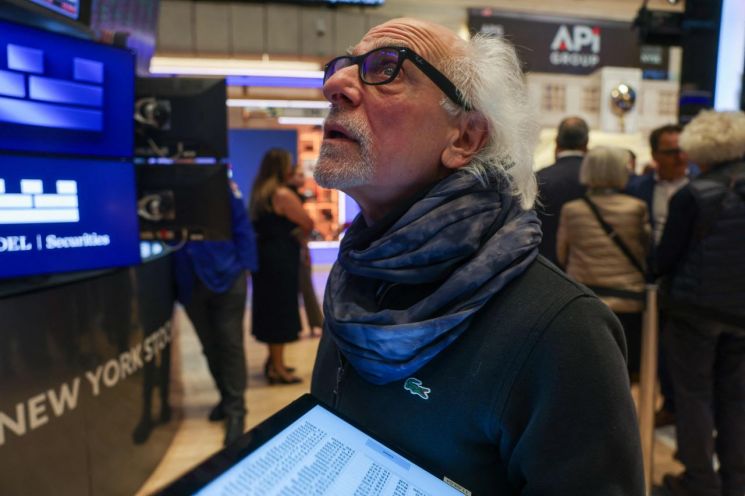
As of 10:32 a.m. on the New York Stock Exchange, the blue-chip Dow Jones Industrial Average (Dow) was down 92.1 points (0.22%) from the previous trading day, standing at 41,768.34. The large-cap S&P 500 Index dropped 2.81 points (0.05%) to 5,841.8, while the tech-focused Nasdaq Index rose 103.43 points (0.55%) to 18,976.08.
On this day, the U.S. House of Representatives, led by the Republican Party, passed President Trump's "big and beautiful single bill." This bill, which includes large-scale tax cuts such as reductions in personal income tax and corporate tax, as well as tax exemptions for tips and additional defense spending, narrowly passed with 215 votes in favor and 214 against, and now moves to the Senate. If the bill passes the Senate and is finalized, the U.S. fiscal deficit is expected to worsen further. The Congressional Budget Office (CBO) projected that the bill would increase the federal government deficit by $3.8 trillion over the next 10 years.
Despite the downgrade of the U.S. sovereign credit rating by global credit rating agency Moody's, President Trump is pushing ahead with tax cuts that will expand the fiscal deficit, fueling doubts in the market about U.S. Treasuries, the world's largest safe asset. As of now, the yields on 10-year and 30-year U.S. Treasuries stand at 4.59% and 5.1%, respectively. After surging by more than 10 basis points (1bp = 0.01 percentage point) the previous day, due to President Trump and the Republican Party's push for tax cuts and weak demand at the Treasury auction, yields remain at elevated levels. There is an assessment that, amid fears of fiscal deterioration, investors are withdrawing their trust in the once rock-solid U.S. economy.
Poor demand at the U.S. Treasury auction also accelerated the rise in yields. The U.S. Treasury conducted a $16 billion auction of 20-year bonds the previous day. Due to weak investor demand, the auction yield reached 5.047%, the highest since 2020. This was 46 basis points higher than the six-month average of 4.613%. As the market's appetite for Treasuries waned, the U.S. had to offer a higher risk premium.
This is adding further pressure to the Treasury market, which was already shaken by tariff uncertainties. As President Trump pushed forward with his unpredictable tariff policies, last month saw a "Sell America" phenomenon in the market, where investors simultaneously sold off U.S. stocks, Treasuries, and dollars. If tariff-induced inflation materializes, the high-interest-rate environment could be prolonged and Treasury yields could be pushed even higher.
Mark Haefele, Chief Investment Officer (CIO) at UBS Global Wealth Management, said, "With uncertainties surrounding trade policy and fiscal outlook reigniting, market volatility has resurfaced," adding, "As bond yields rise and tariff and budget risks attract attention, such volatility could persist going forward."
By stock, Alphabet (Google) is up 3.54%. Nvidia is up 0.86%, and Tesla is up 1.87%. Apple is down 0.71%.
© The Asia Business Daily(www.asiae.co.kr). All rights reserved.

















