Confusion Continues After Legalization in June 2022
"Both Thais and Foreigners Must Prove Medical Purpose"
The Thai government has decided to strengthen regulations on cannabis sales following a rise in side effects such as cannabis smuggling and misuse after the legalization of cannabis in 2022.
According to reports from the Associated Press and the Bangkok Post on May 22, Health Minister Somsak Thepsuthin announced at a press conference the previous day that the government plans to introduce new regulatory measures within the next few weeks, including a requirement that only those with a prescription will be able to purchase cannabis. He further stated that both Thais and foreigners will be required to provide certification proving medical necessity in order to buy cannabis. Minister Somsak emphasized that exporting cannabis abroad without official authorization is a violation of Thai law.
Airport authorities stated that cases of cannabis smuggling have been increasing, and that they have stepped up inspections. In March, Thai police apprehended 13 people, including British nationals, after discovering 22 suitcases containing 375 kilograms of cannabis at the airport on Koh Samui, a popular tourist destination. Additionally, last week, two British women were arrested in Georgia and Sri Lanka after attempting to leave Thailand with cannabis.
The British government stated that more than 50 of its nationals have been arrested in Thailand on cannabis trafficking charges since July last year. In February, the British government, in a joint operation with Thailand, seized more than two tons of cannabis. Earlier this month in South Korea, two Thai nationals were arrested on charges of smuggling 3.1 kilograms of cannabis, which had been vacuum-sealed and hidden inside dried mango packaging.
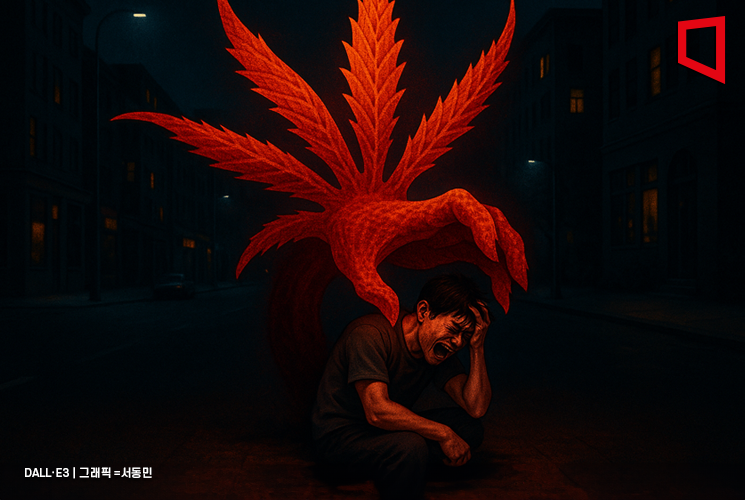
Thailand was the first country in Asia to legalize medical cannabis in 2018, and in June 2022, removed cannabis from the list of narcotics and permitted home cultivation. Since then, thousands of cannabis shops have opened across Thailand, and cannabis has been widely consumed for recreational purposes in tourist areas and entertainment districts. As indiscriminate abuse of cannabis led to side effects such as youth addiction, the Thai government announced plans to reclassify cannabis as a narcotic. This move sparked strong protests from cannabis farmers and merchants, as well as opposition within the coalition government. Cannabis can directly affect the nervous system, causing side effects such as sensory paralysis, memory impairment, and mental confusion.
© The Asia Business Daily(www.asiae.co.kr). All rights reserved.
![Clutching a Stolen Dior Bag, Saying "I Hate Being Poor but Real"... The Grotesque Con of a "Human Knockoff" [Slate]](https://cwcontent.asiae.co.kr/asiaresize/183/2026021902243444107_1771435474.jpg)
















