Five Chances, Failure Leads to Debt... The Shadow of 1,737 Otalja
One in Two Fails the Bar Exam
Repeat Test Takers Struggle to Join Study Groups
Tuition at Sillim-dong Academies Reaches 10 Million Won
Law School Student Loan Delinquencies on the Rise
Lee Hyejin (33), who graduated from a private law school in a provincial area, registered for the "Sparta Class for Repeat Test Takers" in Sillim-dong after failing the bar exam in January this year. She said that the civil law exam, which she was usually confident about, was unexpectedly difficult, and she failed to reach the passing score. Hyejin will attempt the bar exam for the fourth time next January. The tuition fee is around 10 million won. From this month until December, she will receive intensive management from the academy for eight months. Hyejin said, "The moment you become a repeat bar exam taker, it's hard to even join a study group, and I am now taking anti-anxiety medication because of the fear that I might become an 'Otalja'.
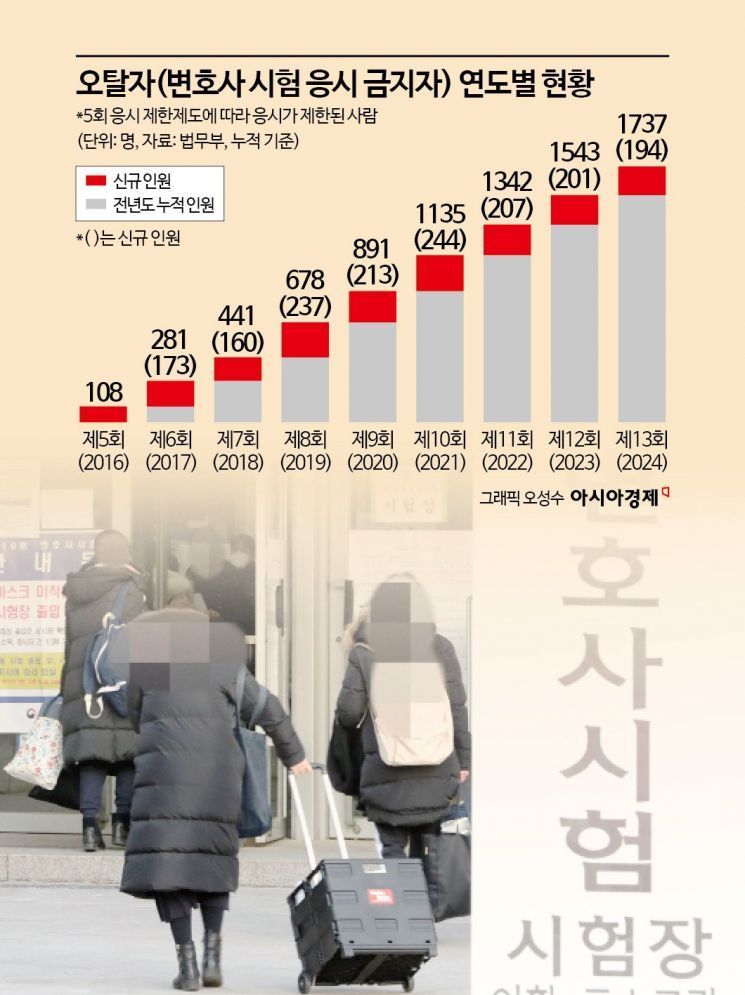
'Otalja' is a slang term referring to law school graduates who have failed the bar exam five times. The number of attempts for the bar exam is limited to five, so Otalja are those who, despite graduating from law school, are unable to become lawyers.
According to the Ministry of Justice, the bar exam pass rate this year is 52.3%. This is significantly lower compared to the 87.15% pass rate when the exam was first held in 2012. Up until last year, there have been a total of 13 bar exams, and as the number of unsuccessful candidates has accumulated, the number of Otalja has surpassed 1,700. This is because about 200 new Otalja are added each year. Some examinees do not even take the exam five times; there are cases where they give up after failing three or four times. There are also cases where people, although they do not have a lawyer's license, look for jobs with only a law school certificate.
In this situation, there has been a surge in cases where law school graduates are unable to repay their student loans borrowed during law school and fall into delinquency. According to data received by Kim Mi-ae, a member of the People Power Party, from the Korea Student Aid Foundation, as of March this year, 97 law school students had been unable to repay their student loans for more than six months, nearly triple the number from eight years ago. The graph of long-term delinquents rises every year. Since the foundation's loans have a deferment period of 7 to 10 years, the rising delinquency rate signals that more people are failing the exam and unable to repay their loans.
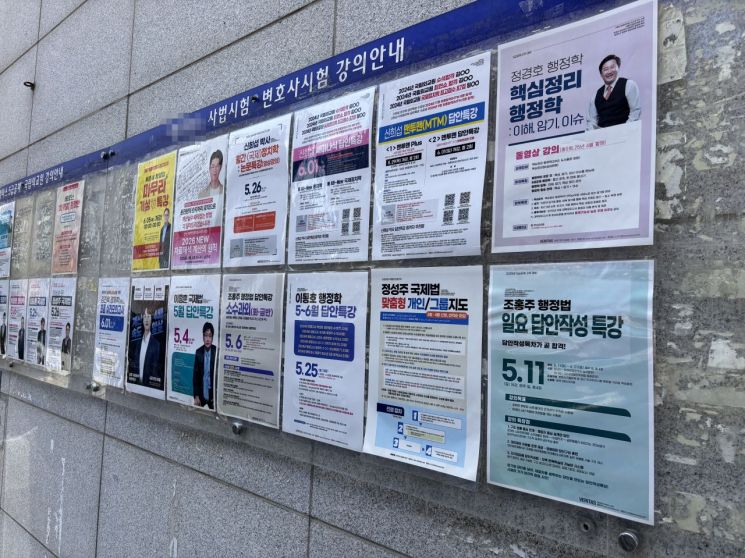
The burden is even greater for repeat bar exam takers who come up from provincial areas to receive private education. In Lee Hyejin's case, she spends 300,000 won per month on a gosiwon (small room accommodation) and 500,000 won per month on living expenses. She will have to spend about 16.4 million won just to study until December this year. She said, "My parents took out a loan for me, so I really want to pass the exam this time and pay them back."
Just like residential academies for college entrance exam repeaters, "bar exam residential academies" have also emerged. One well-known residential bar exam academy promotes itself as a "hotel-style study space" and charges 3 million won per month for a single room. Another famous bar exam academy, which is known for managing students' daily schedules from 9 a.m. to 10:30 p.m. without providing accommodation or meals, charges 10.68 million won for classes from February to December.

Law school graduates have filed several constitutional complaints claiming that the "five attempts within five years" restriction for the bar exam is unconstitutional, but the Constitutional Court ruled in 2016, 2018, and 2020 that the law is constitutional. The court recognized the need for this restriction to prevent the mass production of "exam wanderers" that could result from unlimited attempts. A representative of a group advocating for the abolition of the attempt limit said, "The bar exam was originally intended to be a qualification test, like the medical licensing exam, which could be passed without much difficulty if the curriculum was faithfully completed. However, it has now turned into a competitive selection test, just like the old national judicial exam."
© The Asia Business Daily(www.asiae.co.kr). All rights reserved.



















