Korean Medical Association Medical Policy Forum
Concerns Over Declining Quality of Medical Education... Policy Effectiveness Also Uncertain
"Support Existing Medical Schools and Improve Settlement Conditions in Regional Areas"
Physician organizations are raising criticism and concerns regarding the presidential campaign pledge by Lee Jaemyung, the Democratic Party candidate, to establish public medical schools. They argue that in Korea, where the concept of public healthcare remains unclear and the training environment is insufficient, pursuing additional public medical workforce training systems?such as regional medical schools or public medical academies?will not only lower the quality of medical education but also make it difficult to expect any policy effect in terms of strengthening regional and essential healthcare services.
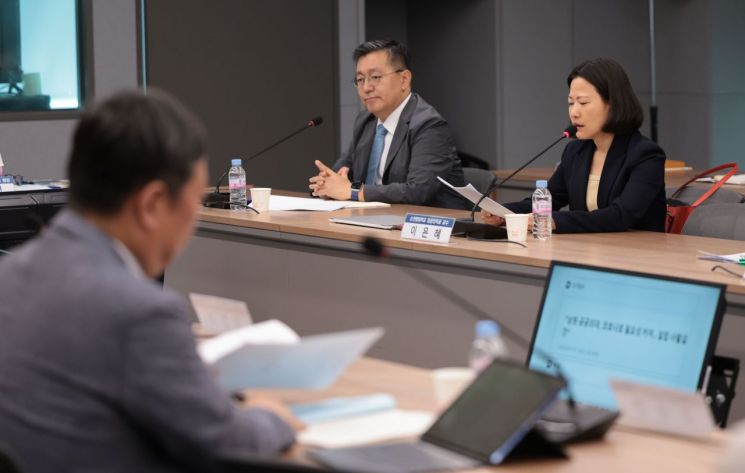 On the 19th, at the Korean Medical Association building in Yongsan-gu, Seoul, Professor Eunhye Lee of Soonchunhyang University Bucheon Hospital gave a presentation titled "Problems and Alternatives of Public Medical Schools" at the Medical Policy Forum hosted by the Korean Medical Association Medical Policy Research Institute. Photo by Yonhap News
On the 19th, the Korean Medical Association Medical Policy Research Institute held a medical policy forum at the Korean Medical Association building in Yongsan-gu, Seoul, under the theme "Problems and Alternatives of Public Medical Schools." At the event, Kim Taekwoo, president of the Korean Medical Association, stated, "Policies that do not reflect reality and the field are being used as political tools," adding, "Establishing a separate public model when educational infrastructure and training systems are not properly in place will not only degrade the quality of medical education, but also raises questions about its actual effectiveness."
The Korean Medical Association especially emphasized that, since it takes at least 10 years for public medical school graduates to become established as part of the regional medical infrastructure, the imbalance in regional healthcare and the shortage of essential medical personnel cannot be resolved in the short term. Previously, in 2020, the Moon Jae-in administration also proposed increasing the number of doctors by 4,000 over 10 years and establishing public medical schools, but the plan was scrapped due to strong opposition from physician organizations.
President Kim argued, "Establishing new public medical schools requires enormous budgetary investment, but the effectiveness of such a policy is highly uncertain," and insisted, "It would be more effective to expand financial support for practical measures, such as strengthening the infrastructure of regional public hospitals, improving reimbursement rates for essential and core medical services, and supporting the settlement of medical personnel in regional areas."
At the forum, Professor Eunhye Lee of the Department of Radiology at Soonchunhyang University Bucheon Hospital, who delivered the keynote presentation, said, "The Democratic Party's pledge for public medical schools lacks justification and practical benefit," and explained, "The existing 40 medical schools have been educating doctors for decades to work in public healthcare, specifically in the National Health Insurance system, and are already fulfilling the role of public medical schools." She pointed out that, given the unique characteristic of the Korean healthcare system?where all medical institutions are automatically designated as National Health Insurance providers?the distinction between public and private healthcare is already blurred.
Professor Lee further argued, "For public medical schools to have a legitimate rationale, only graduates from these schools should work in public healthcare, while those from existing national and private medical schools should work in the private sector. However, to provide National Health Insurance services to the entire population solely with graduates from public medical schools, the enrollment quota would have to be around 3,000, which is impossible from the outset."
Kim Gyehyeon, a research fellow at the Medical Policy Research Institute, introduced the case of Taiwan, which once operated public medical schools. In the 1970s, Taiwan established National Yang-Ming University to address the shortage of medical resources in rural areas and provided full educational support to students selected for the Publicly Funded Medical Program (PFMP). These students were required to serve in regional areas for six years after graduation.
However, most of these doctors left medically underserved areas after completing their obligatory service. Of the 4,111 graduates from National Yang-Ming University, 3,739 are still practicing medicine, but only 99?just 2.7%?are working in underserved regions. Kim noted, "In fact, the university failed to fill its government-assigned quota in 1988 and operated with a mix of self-funded students, eventually ending the PFMP in 2009," and argued, "The establishment of public medical schools in Korea is likely to be a foreseeable failure."
Japan has had a similar experience. According to researcher Kang Juhyun, the Japanese government implemented the "Regional Quota System" in 2006 as part of its "New Comprehensive Measures for Securing Physicians," adjusting medical school quotas in areas with physician shortages. Medical students admitted under this system are required to serve for nine years in remote or mountainous regions after graduation. However, after completing their mandatory service, most doctors moved to major cities in search of higher incomes.
Researcher Kang stated, "The problem of regional disparity cannot be fully resolved simply by increasing the number of doctors or expanding regional quotas," and emphasized, "It is necessary to seek incentives that encourage voluntary settlement in regional areas, rather than relying on compulsory assignments."
In the subsequent panel discussion, Kim Daeyeon, director of Taebaek Hospital under the Korea Workers' Compensation and Welfare Service, said, "Many regional medical centers have a large number of beds but are unable to fill them," and lamented, "In situations where public hospitals compete with private hospitals, they may be less competitive in terms of investment." Director Kim suggested, "We should also consider utilizing the current 10 national medical schools for public healthcare purposes."
Kim Chungki, policy director of the Korean Medical Association, commented, "Compared to various overseas cases, Korea provides significantly less support for medical personnel working in underserved areas," and added, "Young doctors are highly unlikely to voluntarily go to places with poor educational or residential conditions, so this issue requires careful consideration."
© The Asia Business Daily(www.asiae.co.kr). All rights reserved.












