"Supply Surges Due to Redevelopment...
Vacancies Expected to Rise Further"
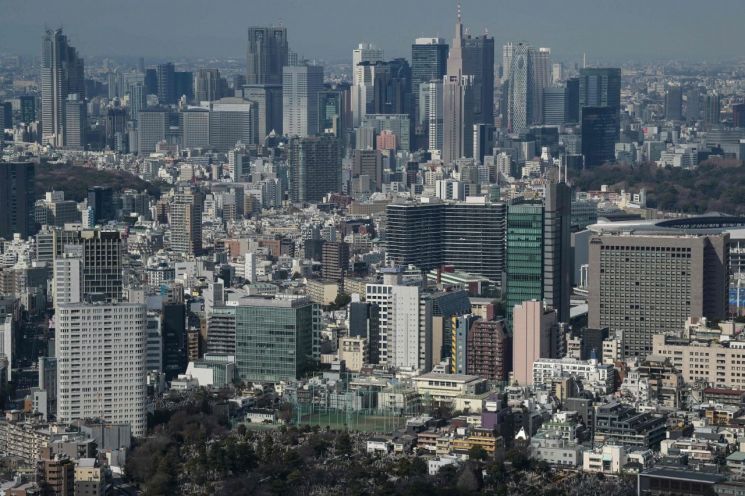
On May 19, the Nihon Keizai Shimbun (Nikkei) reported that the number of large office buildings with long-term vacancies is rapidly increasing in central Tokyo. A survey of buildings with vacancy rates exceeding 20% for more than a year found that the total vacant floor space last year surged twelvefold compared to 2021. Although workers have been returning to offices after COVID-19, the sharp increase in supply due to redevelopment is a major factor.
Real estate research institute Xymax analyzed monthly office move-in and move-out trends in Tokyo’s 23 wards from July 2012 to January 2025. The survey focused on large buildings with a total floor area of at least 16,500 square meters, identifying those where more than 20% of the leasable area has remained vacant for over a year. In 2024, the long-term vacant floor space reached approximately 185,000 square meters, which is twelve times higher than in 2021. Since 2013, when annual averages became available, this is the second-highest level recorded. In terms of the number of buildings, there were 16.6 such cases, representing a sevenfold increase over the past three years.
Typically, an office vacancy rate above 5% is considered an oversupply. In 2013, due to the aftermath of the global financial crisis and the Great East Japan Earthquake, companies reduced hiring and the average vacancy rate in Tokyo’s 23 wards stood at around 7%. However, last year, as companies scaled back remote work that had continued during the COVID-19 pandemic, the vacancy rate dropped to just above 3%.
Nikkei pointed to the increase in supply from successive redevelopment projects as the reason for the rise in long-term vacancies in large buildings, despite the overall vacancy rate not being high. According to Xymax, by the end of 2025, the total leasable floor area of large buildings in Tokyo’s 23 wards is projected to reach about 24 million square meters, an increase of nearly 20% compared to the end of 2014.
Yoshio Nakayama, president of Xymax, stated, “In the 2010s, the large office market was smaller, so new buildings were quickly occupied. However, as supply has expanded, signs of saturation have begun to appear.”
The increase in long-term vacant buildings is limited to large-scale buildings. For small to mid-sized buildings with a total floor area between 9,900 and 16,500 square meters, long-term vacant space has dropped to about one-quarter of the 2013 level. Nikkei explained that this is because more small and mid-sized buildings are being converted into hotels and commercial facilities through redevelopment, and by the end of 2025, their total leasable area is expected to decrease by 5% compared to 2013.
Long-term vacancies in large buildings are expected to continue rising. According to Mori Trust, in 2025, the supply of office buildings with a total floor area of at least 10,000 square meters in Tokyo’s 23 wards will reach 1.19 million square meters, 1.9 times higher than the previous year. However, the number of workers remains stagnant, and as the trend of returning to offices stabilizes, office demand is likely to plateau. Nikkei concluded that the number of large buildings with long-term vacancies is likely to increase further, marking a significant turning point for urban redevelopment in central Tokyo.
© The Asia Business Daily(www.asiae.co.kr). All rights reserved.

![Clutching a Stolen Dior Bag, Saying "I Hate Being Poor but Real"... The Grotesque Con of a "Human Knockoff" [Slate]](https://cwcontent.asiae.co.kr/asiaresize/183/2026021902243444107_1771435474.jpg)














