Windows Shattered and Some Roads Paralyzed
Warnings Issued, but Insufficient to Prevent Damage
A sudden weather anomaly occurred in Beijing, the capital of China, as large hailstones poured down. Hailstones comparable in size to eggs also fell, resulting in damage to hundreds of vehicles and paralyzing major transportation networks in Beijing.
On May 13, the state-run Global Times, citing an announcement from the Beijing Meteorological Observatory, reported that between 4 p.m. and 11 p.m. that day, strong hail was observed over a period of seven hours across 13 districts, including Mentougou, Changping, Haidian, Chaoyang, and Fengtai. On this day, Beijing experienced midsummer heat with daytime high temperatures reaching 32 degrees Celsius, but a sudden change in air currents in the late afternoon is believed to have caused the abrupt shift in weather conditions.
 According to local media reports, hailstones with a diameter of 4 cm and a weight exceeding 30 g fell in some areas. Among these, multiple eyewitness accounts describing the hailstones flying like bullets were posted on online communities and social networking services (SNS). Weibo
According to local media reports, in some areas, hailstones with a diameter of 4 cm and a weight exceeding 30 g fell. Multiple eyewitness accounts describing the hailstones flying like bullets were posted on online communities and social networking services (SNS). In a parking lot in Fengtai District, more than 100 vehicles were damaged, and citizens tried to minimize the damage by hurriedly covering their cars with plastic and cardboard or moving them indoors.
Videos of the hailstorm quickly spread on Chinese social media. A video with the hashtag "Beijing hail is too large" recorded 410 million views. One user expressed shock, saying, "I have lived in Beijing for over 30 years, but I have never seen hailstones of this size." The torrential rain that accompanied the hailstorm caused traffic congestion and flooding in various parts of the city. In particular, the southern districts of Fengtai and Daxing experienced paralyzed roads as the severe weather coincided with the evening rush hour.
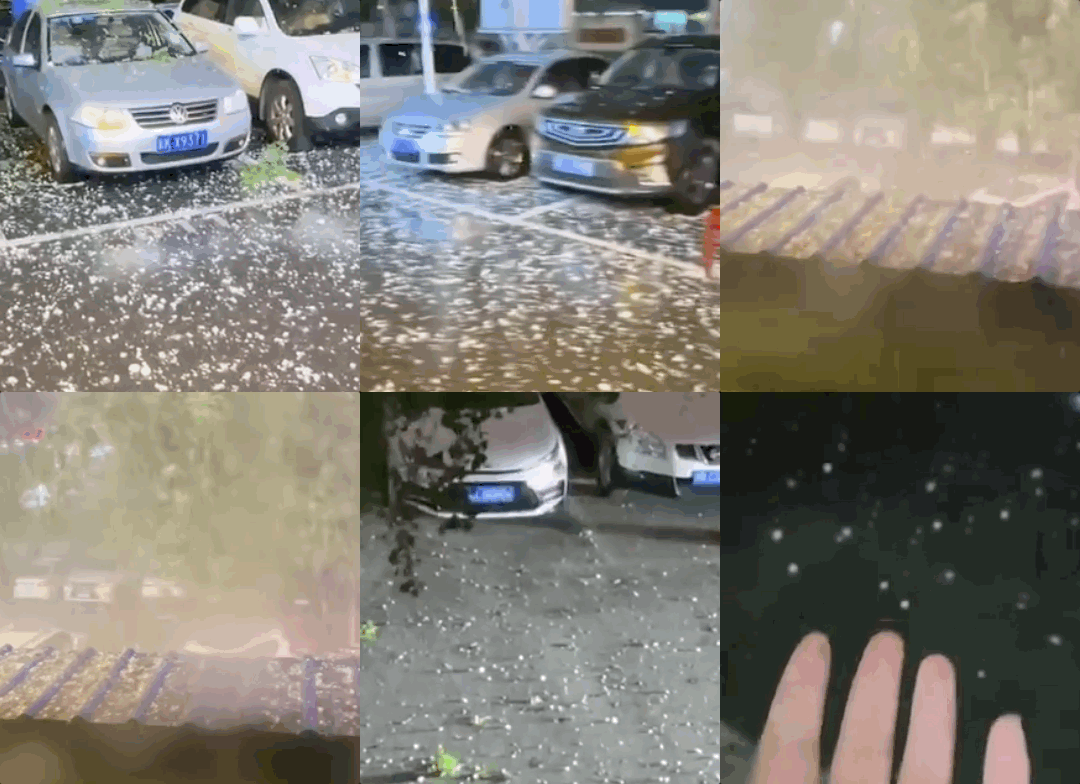 A sudden weather anomaly occurred in Beijing, the capital of China, with large hailstones pouring down. Hailstones comparable in size to eggs also fell, causing damage to hundreds of vehicles and paralyzing major transportation networks in Beijing. Weibo
The Beijing Meteorological Observatory analyzed that "a strong convective phenomenon occurred as cold air at high altitudes and hot air near the surface collided intensely, resulting in the formation of large hailstones." Authorities issued a yellow thunderstorm warning, a blue gale warning, and a yellow hail warning in succession before the hail fell, but these measures were insufficient to prevent damage. In China, weather warnings escalate in the order of blue, yellow, orange, and red. In recent years, Beijing has faced a combination of climate risks, including yellow dust, heat waves, droughts, and now hailstorms. Experts warned that "due to global warming, atmospheric instability is increasing, making such weather anomalies more likely to occur frequently."
© The Asia Business Daily(www.asiae.co.kr). All rights reserved.


















