Trump's High Tariffs Confirmed as Negotiating Tactic... Easing Concerns Over Export Contraction
Korea's May Export Decline Likely Temporary... Some Deliberate Export Slowdown
With the United States and China agreeing to significantly reduce the high tariffs they had imposed on each other, there are growing expectations that this could also signal positive prospects for tariff negotiations between South Korea and the United States. As global supply chain uncertainties ease and the extreme protectionist stance softens, the South Korean industrial sector is also beginning to feel less anxious.
On May 13, domestic industry experts assessed that the improvement in demand for intermediate goods and the resolution of supply chain instability resulting from the recent U.S.-China tariff negotiations could have a positive impact on South Korean industries. Previously, the U.S. and China announced on May 12 that, following their first high-level trade talks held in Geneva, Switzerland on May 10-11, they had agreed to lower the reciprocal tariffs they had competitively raised since February for a period of 90 days.
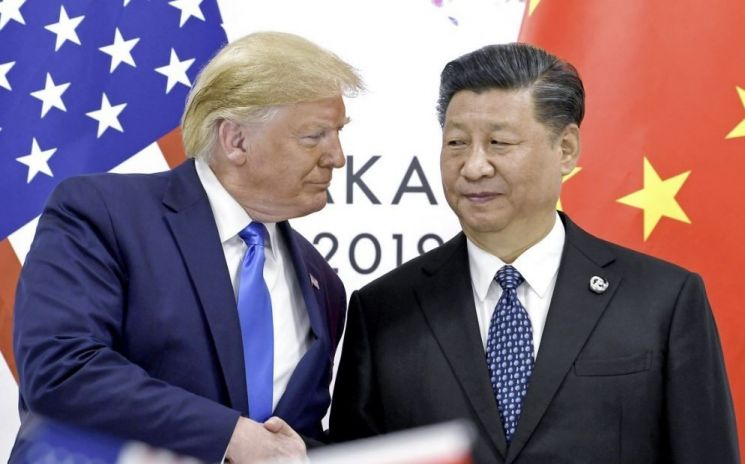
"Trump's High Tariffs Confirmed as Negotiating Tactic... Easing Concerns Over Export Contraction"
Kang Insu, professor of economics at Sookmyung Women's University, explained, "It has been confirmed that the high tariffs imposed by the Trump administration were merely a negotiating tactic," adding, "This means there is now more room for negotiation on South Korea’s key export items to the U.S." Jang Sangshik, head of the International Trade and Commerce Research Institute at the Korea International Trade Association, commented, "Since the structure becomes increasingly disadvantageous for the U.S. over time, the Trump administration has quickly shifted to a phase of resolution," and assessed, "This is a significant positive factor for South Korea, which counts both the U.S. and China as its largest trading partners and supply chain hubs." He added, "This will help ease concerns over contraction in exports of intermediate goods to China, exports to the U.S. via China, and exports for the Chinese domestic market," and noted, "Uncertainties stemming from China’s export controls on critical minerals have also been partially resolved."
However, it was also predicted that U.S. pressure during the negotiation process would continue. Jang further stated, "Just as in the U.S.-UK agreement, the U.S. is highly likely to strongly demand measures from South Korea to prevent circumvention exports of Chinese goods," and forecast, "While reciprocal tariffs may be reduced to the lower limit, the main point of negotiation will be the extent to which tariffs on specific items such as automobiles, steel, and semiconductors are lowered, leading to a tense tug-of-war between the two countries."
Lee Taekyu, head of the Global Risk Team at the Federation of Korean Industries, said, "Although uncertainties remain, this is a positive signal for South Korea," and analyzed, "While the U.S.'s strategic goal of containing China will continue, it has recognized the reality that China cannot be completely excluded from trade." He continued, "We will have to watch how far the conflict between the two countries is resolved and whether this will have a positive or negative impact on South Korea’s exports to the U.S. and China."
However, perspectives on the negotiations differed by industry. The petrochemical sector expects that if Chinese products are diverted to the U.S., oversupply will ease and the volume of low-priced, pushed-out goods will decrease. An official from the Korea Chemical Industry Association stated, "This will give breathing room to South Korea’s exports to China." On the other hand, the battery industry is concerned about the possibility of increased exports of low-priced Chinese products to the U.S. An industry official explained, "If the price competitiveness of Chinese lithium iron phosphate (LFP) batteries is further highlighted due to tariff reductions, competition in some segments may inevitably intensify." Jang also predicted, "Compared to when tariffs on Chinese goods exceeded 100%, the indirect benefits for South Korean companies may decrease."
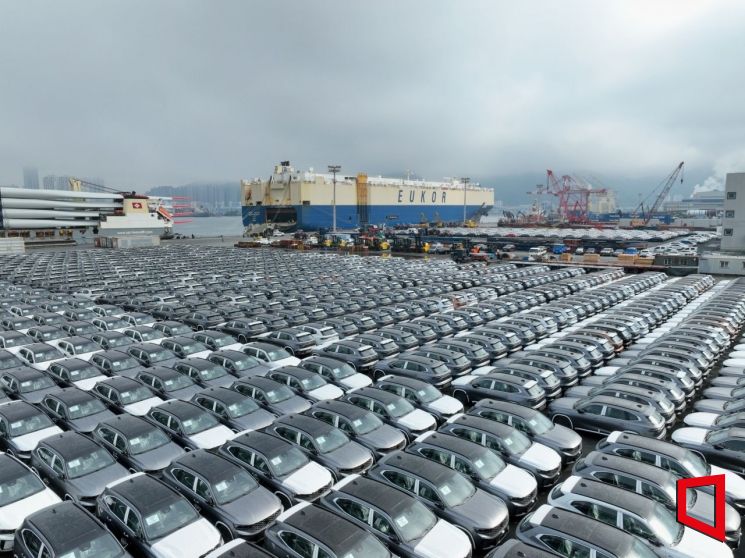
Korea's May Export Decline Likely Temporary... Some Deliberate Export Slowdown
Previously, South Korea experienced a decline in exports in May, showing signs of instability. In particular, exports to the U.S. (from May 1 to 10) plunged by 30.4% year-on-year, with the rate of decline widening from the previous month (-6.8%). Total exports fell by 23.8%, marking the largest drop in four years and seven months. While some have analyzed this as the beginning of a tariff shock from the U.S., the industry believes such conclusions are premature. The reduction in working days due to holidays, as well as deliberate adjustments in export pace in industries such as steel and automobiles, are seen as more significant factors.
Although steel exports to the U.S. fell by 41.2% year-on-year during May 1-10, the industry cautioned against attributing this to tariff impacts. An industry official said, "Steel export volumes fluctuate greatly depending on shipping schedules. In fact, exports last month were higher than the same month last year. It is difficult to see this as a tariff shock based only on early statistics."
Shipbuilding exports also decreased by 8.7% year-on-year in early May, but the industry attributes this to a temporary gap caused by reduced working days and delivery schedules. A shipbuilding industry official noted, "Given the long production and delivery periods in shipbuilding, it is difficult to assess the industry’s situation based on short-term export statistics."
The automobile industry is closely monitoring the impact of tariffs and has slowed the pace of export shipments. Prior to the imposition of the 25% high tariff, exports were increased up to March to secure ample inventory. In last month's earnings announcement, Hyundai Motor stated it had secured three months' worth of inventory, while Kia reported two months' worth. For Hyundai Motor and Kia, the decrease in electric vehicle exports was also influenced by the ramp-up in production rates at Hyundai Motor Group Metaplant America (HMGMA), their U.S. local plant, since March. Currently, HMGMA produces two models: IONIQ 5 and IONIQ 9. An industry official commented, "The Trump administration’s tariff policies are changing rapidly, creating uncertainty for domestic export companies’ strategies. We are closely monitoring this week's working-level trade consultations between South Korea and the U.S."
Semiconductors were the only product category to see an increase in export value (14.0%), as high value-added memory such as high-bandwidth memory (HBM) performed well, seemingly avoiding the impact of the tariff situation. However, some in the industry interpret the increase as resulting from customers stockpiling semiconductors ahead of the imposition of item-specific tariffs. An industry official explained, "For general-purpose semiconductors used in PCs and smartphones, there is a trend to advance supply requests before tariffs are imposed. As uncertainty may increase over time, we are working to strengthen cooperation with our customers."
In the home appliance sector, which saw the largest year-on-year decline in export value at 47.2%, there was no direct hit from tariff deferrals, but overall consumer demand contraction due to uncertain policies is believed to have had an impact. An industry official added, "The Trump administration’s tariff policies likely dampened consumer sentiment across all regions. In addition, the announcement of last year’s tariff policies may have led to early orders or fluctuations due to local inventory, creating the appearance of a temporary decline."
Meanwhile, the Korea Customs Service noted that the reduced number of working days may have caused a statistical illusion. In early May, there were five working days, down from 6.5 during the same period last year. A Korea Customs Service official stated, "While the total export value decreased, the average daily decline, adjusted for working days, was around 1%, so it is difficult to attribute this to tariff impacts."
© The Asia Business Daily(www.asiae.co.kr). All rights reserved.













