Discussion on Building Supply Chains for New Industries and Policy Directions for Responding to Future Industries
The Ministry of SMEs and Startups announced on May 13, 2025, that it held a "Regional Innovation Roundtable" at the Spaceware Seoul Station Center in collaboration with the Korea Technology and Information Promotion Agency for SMEs.
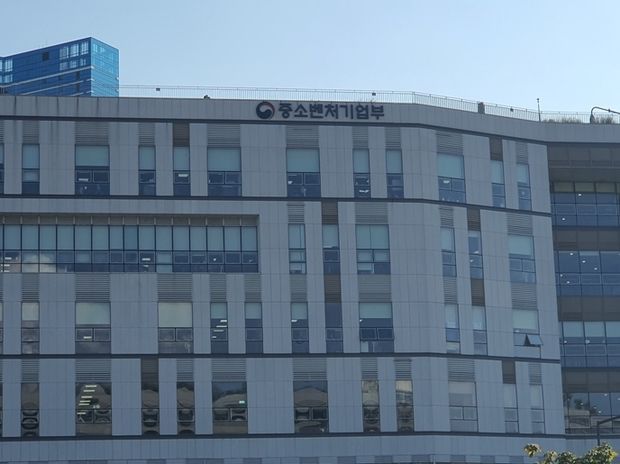
Since the beginning of this year, the Ministry has been operating roundtables to discuss innovative policy directions with experts from industry and academia, aiming to "revitalize regional economies by strengthening the competitiveness of regional SMEs."
This roundtable focused on two key tasks that will shape the future of local regions: "Establishing AI-based manufacturing innovation supply chains by regional hubs for new industries," and "Policy directions for SMEs to respond to future industries and achieve sustainable growth." The discussion particularly centered on seeking policy directions to secure regional self-reliance and achieve balanced national development amid complex structural changes, including low birth rates and an aging population, regional extinction, and global supply chain crises.
The meeting was structured around two main presentations, followed by a comprehensive discussion during which a variety of policy suggestions based on local field realities were shared.
In the first presentation, Jung Jongseok, Director of the GIP Strategy Research Institute, stated, "The widening gap in economic power and innovation capacity between the Seoul metropolitan area and non-metropolitan areas continues to be a primary cause of regional extinction," and proposed, "It is necessary to establish AI-based manufacturing innovation supply chains for new industries in each regional hub."
Jung further emphasized, "Fostering SMEs and venture companies in the ten future growth industries linked to the nation’s super-gap and strategic industries is essential for balanced national development and regional innovation-led growth." He added, "It is important to create an innovative manufacturing ecosystem by converging AI technology with the ten future growth industries, and to this end, about 30,000 regional SMEs and venture companies should be intensively nurtured." He also stressed, "Budgets and policy tools from all relevant ministries, including the Ministry of SMEs and Startups, must be intensively invested."
The second presentation was delivered by Kim Sangshin, Head of the Regional SME Innovation Team at the Korea Small Business Institute, under the theme "Policy Proposals to Support SMEs for Responding to Future Industries and Achieving Sustainable Regional Growth."
Kim diagnosed, "Regional SMEs are at the core of local employment and play a crucial role in maintaining the industrial ecosystem and balanced development," and emphasized, "It is important to establish a self-reliant foundation led by local governments, universities, and innovation institutions through strengthened collaboration."
He continued, "To address the decline in regional innovation capacity and the crisis of regional extinction, and to foster anchor companies that can create stable jobs, a growth-centered policy framework led by the Ministry of SMEs and Startups must be established." He also stated, "To support this, it is necessary to strengthen the R&D capabilities of regional SMEs and establish a policy network for inter-ministerial collaboration."
Participants agreed that the foundation for balanced regional development and national economic growth lies in the recovery of local economies, and that fostering SMEs and venture companies is essential for this purpose. There was also consensus that narrowing the gap between the metropolitan and non-metropolitan areas could serve as the driving force for a renaissance in Korea’s manufacturing sector.
In addition, the importance of strategies linking future industries such as AI, semiconductors, eco-friendly energy, and bio with regional SMEs was discussed, as well as the significance of "region-customized SME support policies" that take into account the industrial characteristics, workforce supply, and living conditions of each region.
Noh Yongseok, Director General of SME Policy, stated, "This roundtable is highly meaningful as it seeks practical policy alternatives that reflect the rapidly changing external environment, such as AI adoption and digital transformation, as well as regional characteristics and industrial bases." He added, "Based on the opinions presented, we plan to actively reflect them in the design of follow-up policies for balanced regional development and nurturing regional SMEs."
The Ministry of SMEs and Startups plans to continue holding roundtables with private sector experts on a regular basis to continuously identify policy needs and ideas from the field, and to strengthen the policy foundation for building an innovation ecosystem for regional SMEs and venture companies led by local regions.
© The Asia Business Daily(www.asiae.co.kr). All rights reserved.












