Seo Kyungduk on Social Media: "Japan Once Again Turns a Blind Eye to Forced Labor of Koreans"
"If We Have Been Deceived by Japan for the Past Ten Years, It Is Time to Change Our Diplomatic Strategy... Continued Interest Is Needed"
Nine years have passed since the Hashima coal mine, commonly known as "Gunkanjima"?where countless Koreans were forcibly taken and subjected to forced labor during the Japanese colonial period?was inscribed as a UNESCO World Heritage Site. However, it has been confirmed that there are still no signs or phrases anywhere on the island acknowledging the "forced labor." In particular, after it was recently reported that the city of Nagasaki produced a virtual reality (VR) video depicting the vibrant atmosphere of Gunkanjima in the 1970s, Professor Seo Kyungduk of Sungshin Women's University criticized Japan, saying, "Japan is once again turning a blind eye to the forced labor of Koreans."
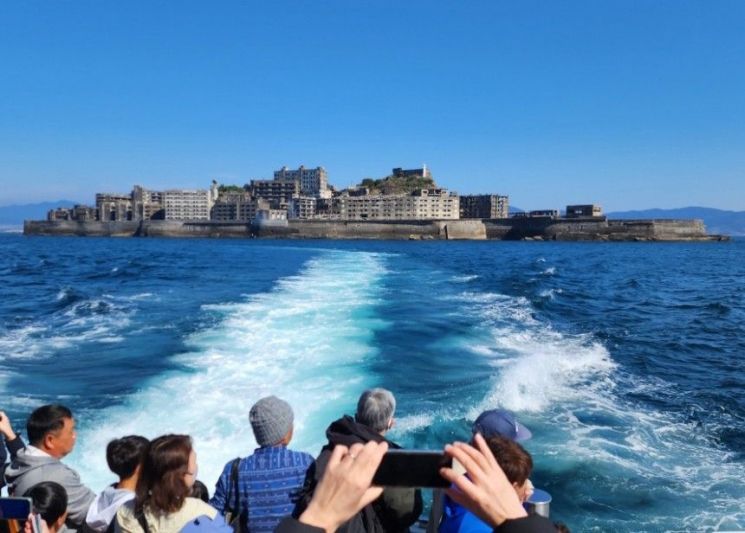
Previously, in 2015, when the Japanese government registered the Hashima coal mine, Takashima coal mine, Miike coal mine, and others as World Heritage Sites symbolizing the industrial revolution after the Meiji Restoration, it promised to present the full history, including the forced labor of Koreans. However, the Japanese government has failed to keep this promise for nine consecutive years.
Most notably, the city of Nagasaki recently released a VR video, stating, "We hope this will provide an opportunity to experience the vibrancy of the 1970s and recognize the value of the heritage." However, it has been confirmed that there is no mention of "forced labor" anywhere in the video.
On May 12, Professor Seo stated via social media, "According to a report by Nihon Keizai Shimbun, tourists can watch the video by downloading the free application 'Street Museum' at designated spots on Gunkanjima. If the app is launched at locations other than the island, the video cannot be viewed, but an animation recreating the era can still be accessed."
Professor Seo further criticized, "It is said that everything needed for daily life, including entertainment facilities, was available on the island. However, once again, the historical facts regarding the forced labor of Koreans have been ignored." He went on to point out, "Since Gunkanjima was inscribed as a World Heritage Site, Japan has established the 'Gunkanjima Digital Museum' in Nagasaki and the 'Industrial Heritage Information Center' in Tokyo. Yet, there has been no mention whatsoever of the forced labor of Koreans." He concluded, "If we have been deceived by Japan for the past ten years, it is now time to change our diplomatic strategy toward Japan. Above all, what is most important is the continued interest of our people in the history of forced mobilization."
Meanwhile, in January, the UNESCO World Heritage Committee released a follow-up report on Japan's Meiji Industrial Revolution heritage sites. According to the report, Japan has largely neglected the promises it made at the time of inscription, such as exhibiting testimonies of Korean victims of forced mobilization and providing a full explanation of the history of forced labor at the Industrial Heritage Information Center. This report was in response to a request made by the World Heritage Committee in September of last year, asking Japan to report on whether it had properly implemented the follow-up measures promised at the time of inscription.
© The Asia Business Daily(www.asiae.co.kr). All rights reserved.
![Clutching a Stolen Dior Bag, Saying "I Hate Being Poor but Real"... The Grotesque Con of a "Human Knockoff" [Slate]](https://cwcontent.asiae.co.kr/asiaresize/183/2026021902243444107_1771435474.jpg)
















