A large number of maternity and childcare products that were distributed with false intellectual property rights markings have been uncovered.
On May 12, the Korean Intellectual Property Office announced that, together with the Korea Consumer Agency, it had conducted a focused investigation from March 24 to April 25, 2025, to check for false intellectual property rights markings on maternity and childcare products. As a result, 836 cases were detected, including baby detergents and bath products that falsely displayed intellectual property rights.
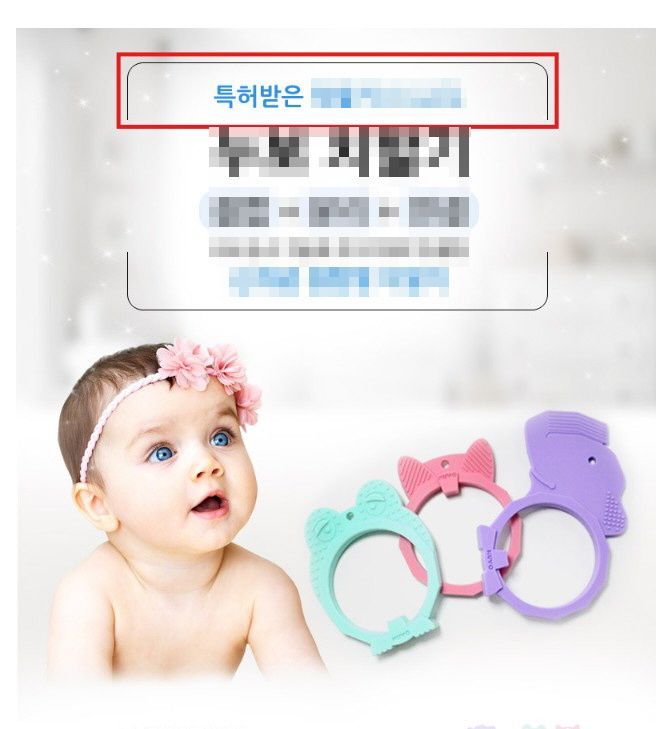 A post promoting a product using an expired utility model mark was detected during a focused investigation by the Korean Intellectual Property Office. Photo by Korean Intellectual Property Office
The focused investigation targeted products used by infants and young children, such as baby food, snacks, feeding supplies, diapers, baby detergents, and toys. The purpose of the investigation was to verify whether intellectual property rights markings used in product advertisements, such as "patented," "design registered," or "registered trademark," were consistent with the facts.
Among the products detected in the focused investigation, the most common were: 329 cases of baby detergents (39.4%), 160 cases of bath products (19.1%), 116 cases of toys and mats (13.9%), 77 cases of infant and children's clothing (9.2%), 59 cases of disinfection and sterilization products (7.1%), 56 cases of diapers and outing products (6.7%), and 39 cases of safety products (4.7%).
Regarding the types of false markings detected, the most common was the display of rights as valid even after expiration, with 625 cases (74.8%). This was followed by 177 cases (21.2%) of incorrect intellectual property rights names and 34 cases (4.1%) of displaying rights that had been denied registration.
By type of intellectual property right, there were 506 cases (60.5%) of false patent markings, 322 cases (38.5%) of false design markings, and 8 cases (1%) of false utility model markings.
For the first time, the Korean Intellectual Property Office introduced artificial intelligence (AI) search in this investigation. Previously, investigations for false markings were conducted by entering search terms such as "patented baby products," but with the introduction of AI, false markings could be detected directly from product detail pages (images), allowing the identification of false intellectual property rights markings through various channels.
As a result, the average number of detections per special investigation increased from 314 cases (as of last year) to 836 cases, according to the Korean Intellectual Property Office.
Intellectual property rights markings are a key factor in determining product reliability. In particular, infant and young child guardians, who are the main purchasers of childcare products, are highly sensitive to product credibility, so even a single misleading phrase can lead to consumer harm, making caution necessary.
For products determined to have false markings as a result of the inspection, the Korean Intellectual Property Office will recommend improvements to the markings and provide guidance on administrative measures and legal procedures.
Shin Sangkon, Director General of the Industrial Property Protection and Cooperation Bureau at the Korean Intellectual Property Office, stated, "Maternity and childcare products are directly related to the health of pregnant women and infants, so creating a trustworthy market environment is more important than anything else." He added, "The Korean Intellectual Property Office will strengthen inspections of false intellectual property rights markings on maternity and childcare products to ensure that a proper culture of intellectual property rights markings is established in the field."
© The Asia Business Daily(www.asiae.co.kr). All rights reserved.

















