'Reigniting the Growth Engine' Grand Forum
Policy Committee Chairs from Both Parties Attend... Positions Introduced by Party
SME Community Proposes Industrial Transformation and Sustainable Growth Policies
"Everyone Must Join Forces to Overcome the Current Crisis"
The small and medium-sized business community has issued a warning that unless the economic structure is shifted to focus on SMEs, the current trend of low growth could become entrenched. They point out that the large corporation-centered growth model has reached its limits due to the stagnation of export items, making industrial restructuring urgent. Ahead of the 21st presidential election, SME representatives called on both ruling and opposition parties to establish a foundation for sustainable growth.
On May 12, the Korea Federation of Small and Medium Business (KBIZ) held a major policy forum titled "Reigniting Korea's Growth Engine" at the KBIZ Hall in Yeouido, Seoul. This event marked the opening of the 37th annual "SME Week," a statutory event under the Framework Act on Small and Medium Enterprises, and was attended by around 300 participants from the SME sector, academia, and government. They discussed policy directions for SMEs that the next administration should pursue.
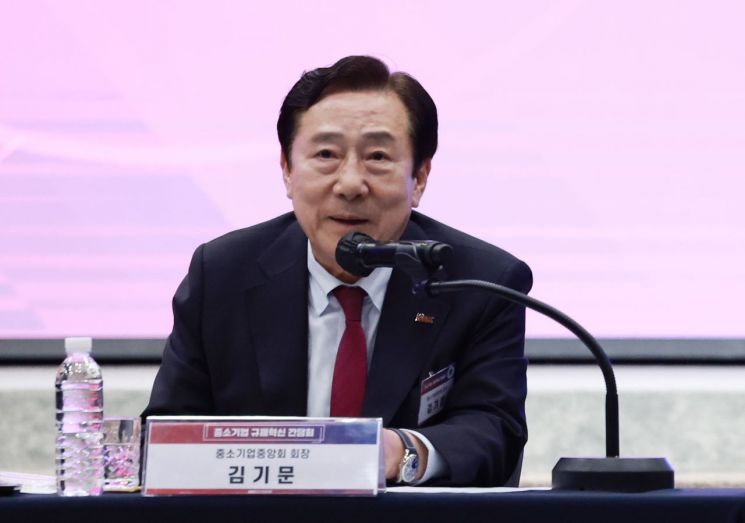
In his opening remarks, Kim Kimoon, Chairman of the Korea Federation of Small and Medium Business, stated, "Some 75.7% of SME entrepreneurs cited 'driving economic growth' as the most important quality for the next president. Currently, not only SMEs and small business owners but also the general public are feeling a great deal of anxiety about the political situation. However, when it comes to economic issues, everyone?regardless of political affiliation?must come together to overcome the current crisis."
According to a survey conducted last month by the Korea Federation of Small and Medium Business of 604 SMEs and small business owners, the most common response regarding the direction the next president should take was "revitalizing domestic demand and stabilizing livelihoods" (48.0%). This was followed by "labor reform and job creation" (45.7%), "overcoming demographic crises such as low birth rates and an aging population" (36.6%), "corporate innovation and regulatory easing" (24.5%), and "reducing imbalances between the capital region and other areas" (19.2%).
Before the start of the forum, the policy committee chairs of each political party introduced their respective SME policy directions in congratulatory remarks.
Jin Sungjoon, Policy Committee Chair of the Democratic Party of Korea, stated, "The Korean economy is facing complex internal and external crises, including sluggish domestic demand, an aging population, U.S.-China tensions, and protectionism. The Democratic Party has worked to reflect the demands of the SME community in its policies, such as granting negotiation rights to SME cooperatives, including energy and transportation costs in the list of items subject to price linkage, and introducing an SME win-win finance index. We will continue to do our utmost to develop policies for the sustainable growth of SMEs and the recovery of livelihoods."
Kim Sanghoon, Policy Committee Chair of the People Power Party, said, "The People Power Party will strive to make Korea a country where it is easy to do business and attractive to invest, based on the voices from the field. These include proposals from the SME community such as flexible working hours, differentiated minimum wages by industry and company size, developing prevention-focused industrial accident reduction measures, and revitalizing private investment in aging local industrial complexes."
In his keynote presentation, Chu Moongap, Head of Economic Policy at the Korea Federation of Small and Medium Business, emphasized, "While industries are changing, the limitations of the large corporation-centered growth policy are becoming evident. We need a major shift toward an SME-centered economic structure by creating sustainable jobs, reviving the manufacturing sector, and resolving polarization."
The subsequent general discussion was moderated by Lee Sangmyung, Professor of Business Administration at Hanyang University, and included participants such as Kang Donghan, Chairman of the Korea Forging Industry Cooperative; Sung Misook, President of the Korea Women Venture Association; Bae Youngsook, CEO of Pacho; Noh Yongseok, Director of SME Policy at the Ministry of SMEs and Startups; Oh Dongyun, Professor of Economics at Dong-A University; Koo Inhyeok, Professor at the School of Global Service at Sookmyung Women’s University; and Noh Minseon, Research Fellow at the Korea Small Business Institute, who shared their perspectives.
© The Asia Business Daily(www.asiae.co.kr). All rights reserved.

















