Prices of Pork and Eggs Continue to Rise
Pork Belly Reaches 2,486 KRW per 100g
Short-term Burden Remains Despite Second Half Stabilization Forecast
Prices of certain livestock products, such as pork and eggs, which have a significant impact on dining table costs, have surged dramatically.
 Prices of certain livestock products, such as pork and eggs, which have a significant impact on dining table costs, have surged dramatically. Photo by Getty Images
According to the Livestock Products Quality Evaluation Institute's Livestock Distribution Information on May 11, the consumer price of domestic pork belly in April was recorded at an average of 2,486 KRW per 100g. This represents a 6.8% increase compared to the same month last year and is 7.9% higher than the average price over the past three years (excluding the maximum and minimum values).
Pork shoulder, which has traditionally been known as a more affordable cut compared to pork belly, was priced at 1,436 KRW per 100g, reflecting a 5.9% increase from the same period last year and a 19.4% rise compared to the average year.
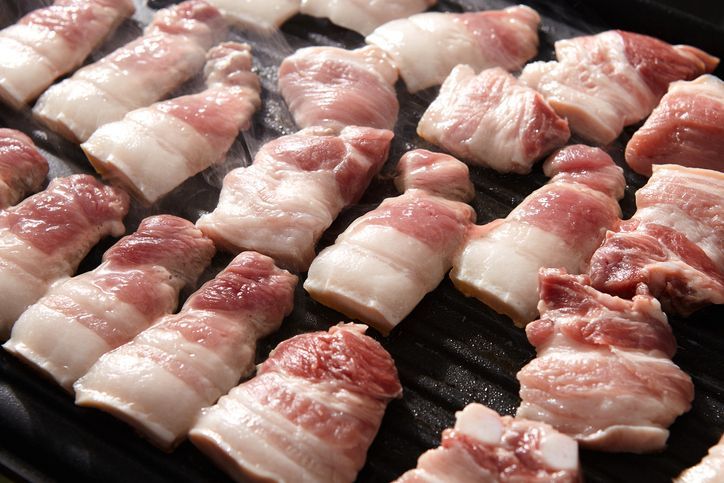 In April, the consumer price of domestic pork belly was recorded at an average of 2,486 KRW per 100g. This represents a 6.8% increase compared to the same month last year and is 7.9% higher than the average price over the past three years (excluding the maximum and minimum values). Getty Images
The background to this price increase is a rise in demand. The price of imported pork, which is mainly used as a raw material for processed foods such as ham and sausage, has increased due to higher production prices in major exporting countries like the United States and the European Union, as well as a rise in the KRW-USD exchange rate. As a result, the demand for domestic pork has increased. This led to higher wholesale prices, which were ultimately passed on to consumers.
 According to the Livestock Products Quality Evaluation Institute's Livestock Distribution Information, the consumer price of domestic pork belly last month averaged 2,486 KRW per 100g, which is a 6.8% increase compared to the same month last year. This is 7.9% higher than the average price over the past three years. Yonhap News Agency
In fact, last month, the price of imported frozen pork belly was 1,472 KRW per 100g, up 3.2% from the same month last year and 7.8% higher than the average year.
In addition to pork, egg prices are also on the rise. Based on extra-large eggs, the consumer price for a pack of ten last month was 3,625 KRW, which is at the average level for the year but represents a 10.5% increase compared to last year. This is interpreted as a normalization of prices that had temporarily dropped last year due to government discount events.
In contrast, the prices of chicken and beef have shown some stability. The price of domestic chicken (1kg) last month was 5,718 KRW, down 3.1% from the previous year and 2.1% lower than the average year.
For domestic beef, an increase in supply has led to an overall decline in prices. For example, 1+ grade sirloin was priced at 10,747 KRW per 100g, which is 1.0% lower than last year and 7.1% below the average year. Brisket, on the other hand, increased by 7.2% compared to last year but was still 8.7% lower than the average year, at 5,995 KRW.
The Korea Rural Economic Institute forecasts that pork wholesale prices may fall again in the second half of the year due to increased supply. However, at this point, the current price increases are putting a tangible burden on household food expenses.
The government has stated that it will closely monitor livestock product price trends and seek to stabilize prices through supply control and import measures. However, there are also concerns that, given external variables such as international prices and exchange rates, domestic prices will inevitably be affected, making it urgent to come up with short-term solutions.
© The Asia Business Daily(www.asiae.co.kr). All rights reserved.



















