[Why&Next]
Special Law Enacted in 2021
Project Cost Estimated at 13.7 Trillion Won
Soaring Construction Costs and Tight Schedule
Existing Contract Termination Process
Bidding Conditions Are Key
The outlook for opening Gadeokdo New Airport in 2029 has dimmed after Hyundai Engineering & Construction, which had been in charge of the project, decided to withdraw. The company abandoned the contract after failing to reach an agreement with the government, citing soaring construction costs and an unmanageable construction schedule.
With the need to find a new contractor, there are calls to improve the bidding conditions, especially since Hyundai E&C was selected as a negotiator after several failed attempts at private contracts. However, as it will take several months to complete the necessary procedures, the opening of the new airport is expected to be delayed.
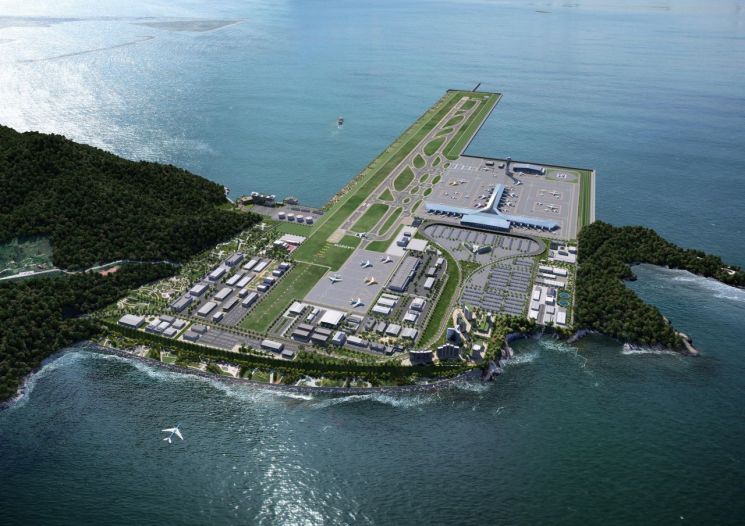
Why Did Hyundai E&C Withdraw from the Gadeokdo New Airport Project?
According to the Ministry of Land, Infrastructure and Transport and other sources on May 9, the total project cost for Gadeokdo New Airport, which has been promoted under a special law since 2021, is approximately 13.76 trillion won. Industry experts believe this budget is insufficient given the complexity of the construction. The preliminary feasibility study released by the ministry in 2022 based the construction costs?which account for a significant portion of the total budget?on 2020 standards (standard market prices and standard unit prices).
Due to COVID-19, the supply of raw materials became difficult, and labor and other expenses surged after the second half of 2020. However, these increases were not reflected in the construction costs. The government held four rounds of bidding for site preparation last year, but none succeeded, with low profitability cited as the main reason.
Japan’s Kansai International Airport, the world’s first airport built on reclaimed sea land, took seven years to construct, starting in 1987, and cost about 15.5 trillion won. The second phase, which added another runway, began in 1999 and was completed in 2007, costing over 9 trillion won. Similarly, Hong Kong’s Chek Lap Kok International Airport, also built offshore, now has three runways, including one that began operation last year. The total construction cost for both phases reached 50 trillion won.
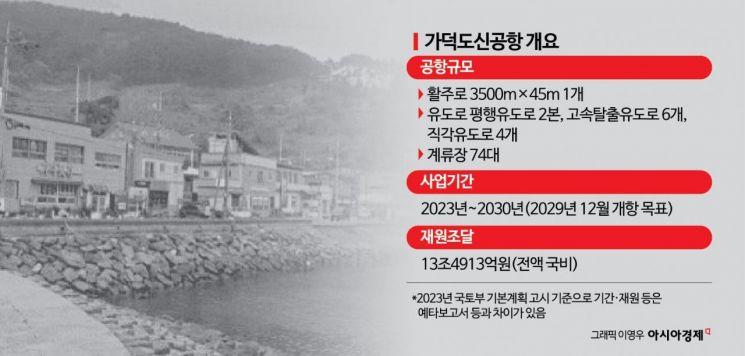
The tight schedule was another major obstacle. The Hyundai E&C consortium (including Daewoo Engineering & Construction, POSCO E&C, and others, hereafter Hyundai E&C), which was selected last year as the sole bidder for a private contract, submitted a statement of reasons for design changes to the ministry on May 8, highlighting these issues. Hyundai E&C explained to the ministry that at least two additional years would be needed: 17 months to stabilize the soft ground and 7 months to adjust the construction sequence.
The basic plan called for simultaneous construction of the breakwater and land reclamation. However, after on-site inspections, Hyundai E&C determined that reclamation would only be possible after partial completion of the breakwater. The construction period proposed by Hyundai E&C in its basic design was 108 months.
The government’s initial bid notice for site preparation, issued in the first half of last year, set the construction period at six years (72 months). After consulting with industry experts, the government extended the schedule by one year in July. However, the target opening date remained “the end of 2029.” The plan was to open the airport before all construction was complete. This timeline was tied to the “Busan Expo” schedule, which was strongly promoted by the previous administration, including the president. Despite the failure to win the expo bid, the airport opening schedule was not adjusted.
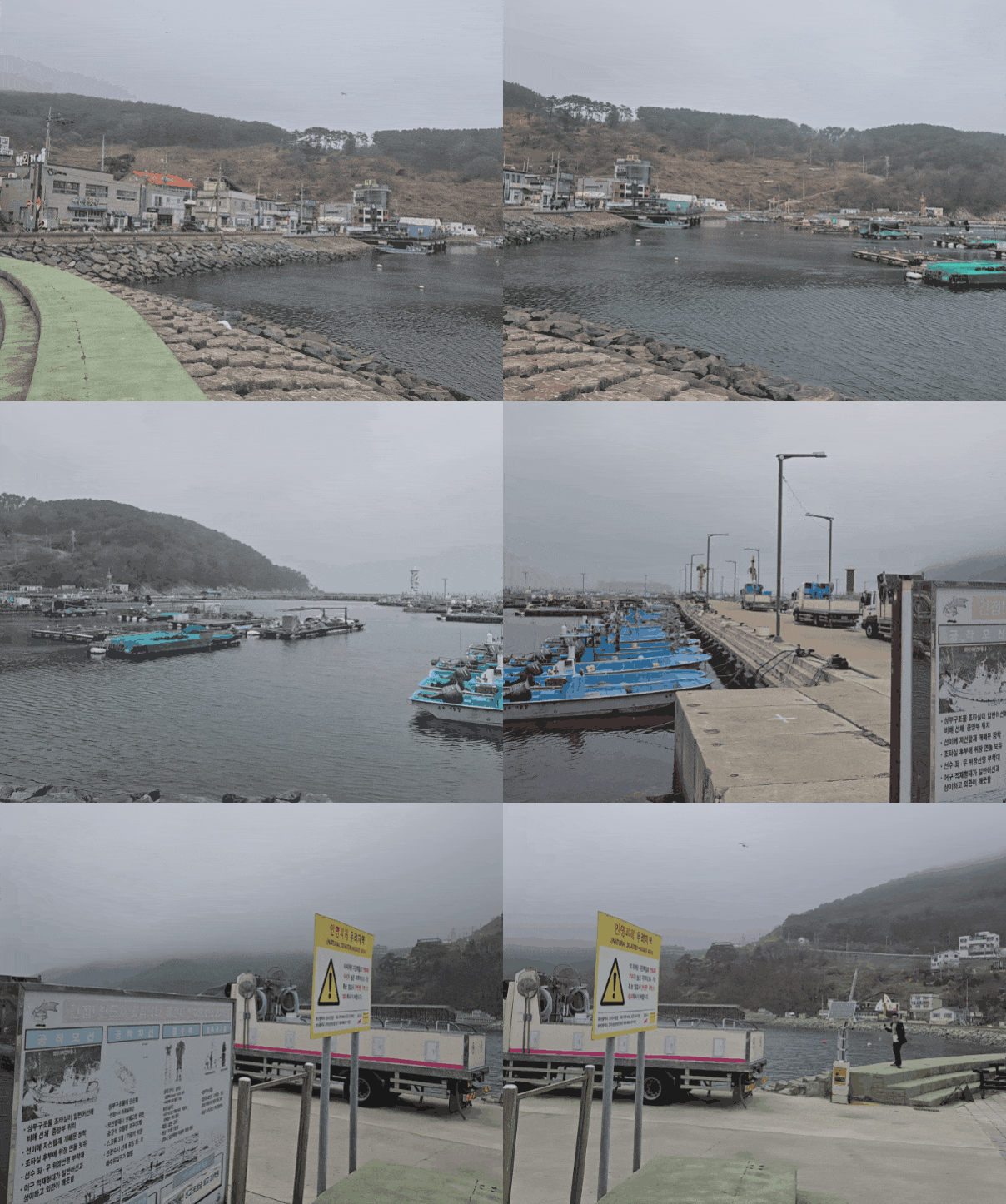 Busan Gangseo-gu Gadukdo Daehang Pier and village scenery. Once full-scale construction begins, the entire area will be reclaimed. Photo by Choi Seoyoon
Rebidding Required...Bidding Conditions Are Key
Since Hyundai E&C made it clear that it could not shorten the construction period without revising the design, the existing contract will be terminated. The ministry announced the previous day that it would halt the private contract process. Under relevant laws, any changes to the contract require a new bidding process.
With Hyundai E&C’s withdrawal, the opening schedule will be further delayed. Even if the government’s original six-year timeline were followed, construction would have had to begin by the end of last year to meet the 2029 opening. The rebidding process?including announcements, applications, and evaluations?is expected to take several months. As before, there is a high possibility that competitive bidding will fail, and the process may have to be repeated several times.
The ministry plans to review both Hyundai E&C’s proposed design and the existing basic plan with experts. If the government improves project conditions through this review, it is expected that Hyundai E&C and other construction companies may participate. However, an industry insider noted, “Given the massive scale of this civil engineering project, which would require mobilizing virtually all available equipment nationwide, it is difficult for any construction company other than Hyundai E&C, which has extensive experience, to take the lead.”
The likelihood of the project being scrapped is low. Since it is being promoted as a national project under a special law, it would be difficult to halt unless the law is significantly amended or repealed. The basic plan has already been announced under the special law, and a considerable budget has been allocated. Land compensation also began last year.
© The Asia Business Daily(www.asiae.co.kr). All rights reserved.

![Clutching a Stolen Dior Bag, Saying "I Hate Being Poor but Real"... The Grotesque Con of a "Human Knockoff" [Slate]](https://cwcontent.asiae.co.kr/asiaresize/183/2026021902243444107_1771435474.jpg)

















