Celltrion Overturns First-Instance Loss with Victory in Appellate Court
[Court Ruling]
The court has ruled that the bio company Celltrion is not obligated to directly employ subcontractor workers responsible for cleaning and disinfection. While the first trial found that Celltrion had in effect dispatched and used these workers, the appellate court reversed this decision, stating that there was no supervisory relationship regarding work duties. Until now, illegal dispatch cases have mainly involved large-scale process industries such as automotive and steel, but recently, such cases have expanded to include not only the pharmaceutical and bio industries but also ultra-precision industries such as semiconductors, drawing attention to whether this ruling will affect related cases.
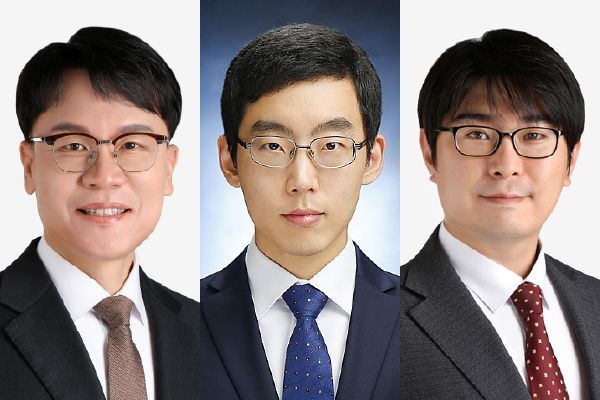
The Incheon Civil Division 2 of the Seoul High Court (Presiding Judge Shin Jongo) on May 1 reversed the first-instance ruling that partially favored the plaintiffs and ruled against them (2023Na15293) in an appellate case filed by employee A and others from Freezon, a Celltrion partner company, against Celltrion (represented by Sihoon Yang, Choongun Lee, and Juyeol Yang of law firm HwaWoo) regarding employment.
[Facts of the Case]
Celltrion outsourced to Freezon the cleaning and disinfection of the walls and floors of cleanrooms in its biopharmaceutical production plant during nighttime hours after its own employees had left for the day. Employee A and Employee B, who had been responsible for these tasks at the Celltrion plant since 2009 and 2011, respectively, filed a lawsuit in 2019, claiming that Celltrion should directly employ them. If a dispatched worker is employed at the same workplace for more than two years, the employer is required to directly hire the worker. A and B argued that although Celltrion had formally entered into a subcontracting agreement with Freezon, in reality, it was a structure in which workers were dispatched to Celltrion.
They asserted, "Celltrion exercised significant supervision and command over the performance of our duties," and "Celltrion employees specifically determined the dates, locations, and scope of cleaning tasks and issued instructions to the night cleaning team via email and other means." They further claimed, "Celltrion employees frequently observed and supervised night cleaning operations, notified us of issues identified via email, requested corrections and improvements, or supervised the night cleaning work." In contrast, Celltrion argued, "The night cleaning work was independently supervised by Freezon."
[First-Instance Ruling]
The first-instance court found that Celltrion had in effect dispatched and used A and others, citing the detailed nature of Celltrion's Standard Operating Procedure (SOP) that Freezon workers were required to follow, and the fact that Celltrion gave specific instructions for individual tasks. The court stated, "A and other Freezon workers were bound by Celltrion's SOP in performing their work," and "All work clothing, equipment, and disinfectant solutions were provided by Celltrion."
[Appellate Ruling]
The appellate court ruled that merely performing tasks according to the SOP does not constitute supervision or command over work duties.
The court stated, "The types and uses of solutions used in night cleaning, the work content and procedures to be followed, as specified in Celltrion's SOP, are all stipulated according to relevant regulations to comply with Good Manufacturing Practices (GMP)," adding, "Since night cleaning team workers are obligated to comply with GMP, the mere fact that they perform their duties according to the SOP does not mean that Celltrion exercised supervision or command over A and others." The court further explained, "There are more than 400 cleanrooms in the Celltrion plant where the night cleaning team works, and each cleanroom contains different equipment and structures. The SOP does not prescribe every response method for these differences," and "It is fully expected that the night cleaning team exercised considerable discretion in carrying out their actual work as long as it did not deviate from the SOP."
The court also rejected the claims by A and others that Celltrion employees managed and supervised the night cleaning work by frequently observing the operations and notifying them of identified issues via email. The court stated, "Celltrion did not hold the night cleaning team workers accountable or reprimand them based on the results of these observations. Instead, Celltrion notified them of the identified issues and requested preventive education to avoid recurrence," and "There is ample room to view this as the client checking the quality of the work entrusted and requesting rectification of defects from the contractor."
[Legal Representation]
Sihoon Yang, a lawyer at law firm HwaWoo (age 52, Judicial Research and Training Institute class 32), who participated as Celltrion's legal representative and led the victory, stated, "Repeated practice and delivering a persuasive presentation in court likely played a key role in changing the court's perception."
Reporter: Han Suhyeon, Legal Times
※This article is based on content supplied by Law Times.
© The Asia Business Daily(www.asiae.co.kr). All rights reserved.

![Clutching a Stolen Dior Bag, Saying "I Hate Being Poor but Real"... The Grotesque Con of a "Human Knockoff" [Slate]](https://cwcontent.asiae.co.kr/asiaresize/183/2026021902243444107_1771435474.jpg)















