TSMC Begins Overseas Dispatch Recruitment in Taiwan
Rising Labor Costs in the US Pose Challenges... Samsung May Face Similar Issues
TSMC, the world's largest foundry (semiconductor contract manufacturing) company, has recently begun new hiring at its headquarters in Taiwan. However, there are growing concerns locally that the wage levels are excessively low, considering the working conditions.
Since April 22, TSMC has started recruiting language-specialized engineers fluent in English and German. This move is interpreted as an attempt to secure talent and reduce labor costs by directly recruiting personnel in Taiwan, amid continued large-scale deficits at overseas subsidiaries.
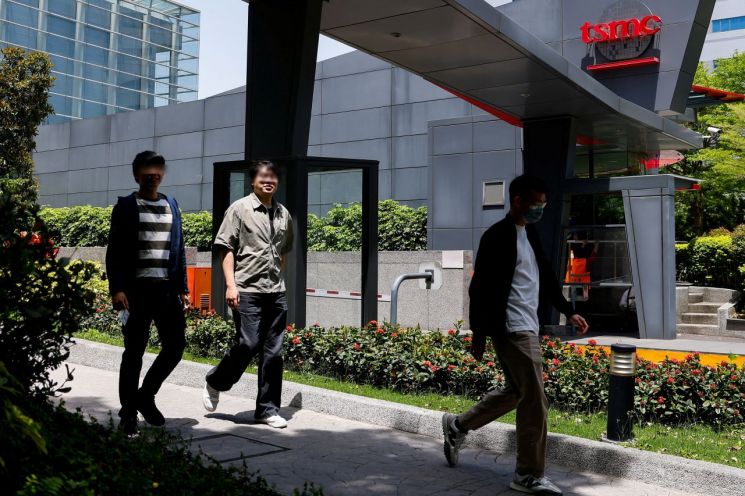
According to the job posting, selected candidates will undergo training for one to two years and then work at overseas factories for more than two years. Their likely workplaces are the Dresden plant in Germany and the Arizona plant in the United States, which began construction on April 30. These engineers will be responsible for monitoring production equipment in cleanrooms and managing wafer raw material inventories, working in four-group, two-shift rotations.
The average annual salary for language-specialized engineers offered by TSMC is around 750,000 Taiwan dollars (approximately 33.4 million won). However, on April 25, the Taiwanese business daily Commercial Times reported that local sentiment was dominated by concerns such as, "I'm afraid it's impossible to live in the United States on this salary," and, "It is necessary to verify whether this amount matches local living costs."
Nevertheless, analysts say that sending domestic personnel overseas is an unavoidable choice. Chinese state media reported that "the high labor costs in the United States are significantly weakening TSMC's price competitiveness."
Last year, TSMC's new overseas factories posted losses exceeding 800 billion won. This is attributed to higher-than-expected costs for securing local raw materials and personnel, due to recent global supply chain instability.
Since 2020, TSMC has invested 12 billion dollars (17 trillion won) in building the Arizona plant. According to TSMC's annual report, the Arizona plant recorded a net loss of 14,298 million Taiwan dollars (about 625.2 billion won) last year, an increase of more than 30% compared to the previous year. Taiwan Economic Daily reported, "Although mass production of 4-nanometer semiconductors will begin at the Arizona plant this year, it may be difficult to reduce losses as investments in the United States expand significantly."
TSMC's European base in Dresden, Germany, posted a loss of 500 million Taiwan dollars (22 billion won). The Kumamoto plant in Japan also reported losses.
As a result, Samsung Electronics, which is about to begin operations at its new fab (semiconductor production facility) in the United States, may face similar challenges. There are predictions that a shortage of semiconductor talent in the United States, combined with increased investments by TSMC and Intel, will inevitably drive up labor costs. Labor costs in the United States are two to four times higher than in Asia.

Global consulting firm McKinsey & Company, in a semiconductor industry report released on April 21, analyzed that the share of labor costs in fab operating expenses in the United States is up to 20 percentage points higher than in Asia. McKinsey stated, "Fabs in the United States and Europe face heavy capital expenditure burdens, and their operating costs are up to 35% higher than in Asia, making it difficult for companies to be confident about long-term profitability."
As of the end of last year, the construction progress of Samsung Electronics' Taylor plant in Texas stood at 99.6%, and it is now in the final stages of completion.
© The Asia Business Daily(www.asiae.co.kr). All rights reserved.


















