GDP Growth Forecast Revised from 1.1% to 0.5%
Yen Depreciation Pushes Yen-Dollar Exchange Rate to 144.7
The Bank of Japan (BOJ), which has been raising interest rates since early last year, has kept its benchmark interest rate unchanged at around 0.5% for the second consecutive time. This move is seen as an adjustment in the pace of rate hikes amid concerns that global economic growth could slow due to the impact of U.S. tariff policies.
According to Kyodo News and the Asahi Shimbun on May 1, the BOJ decided to maintain its short-term policy rate, the benchmark interest rate, without any adjustment at the Monetary Policy Meeting held over two days until that day.
At this meeting, the BOJ expressed the view that the global economic growth rate is slowing and the profitability of Japanese companies is deteriorating due to the impact of trade friction triggered by U.S. tariff policies. Regarding future monetary policy, the BOJ added a new condition to its existing stance of "continuing to raise policy rates to adjust the degree of monetary easing," specifying that this would depend on "improvements in economic and price conditions," according to the Yomiuri Shimbun. NHK explained that, given the uncertain outlook caused by tariff measures by the Donald Trump administration, the BOJ judged that it must carefully monitor the impact on the economy and prices.
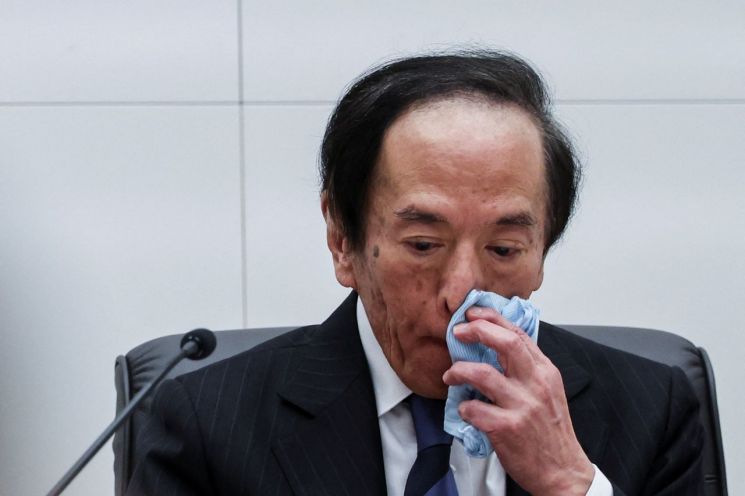
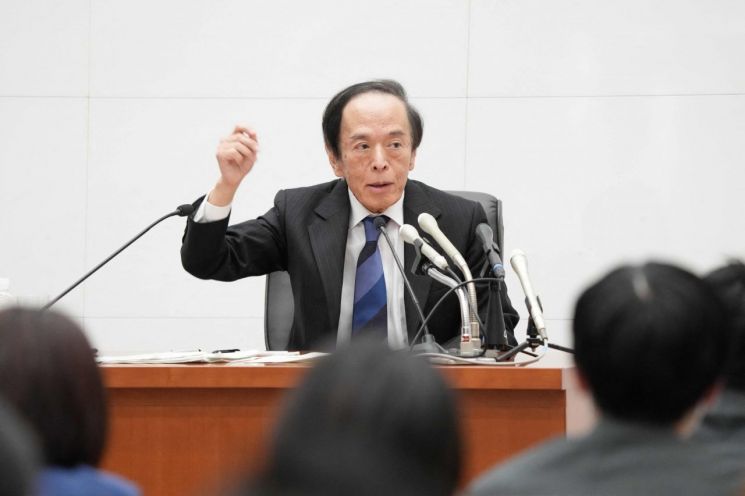
BOJ Governor Kazuo Ueda stated at a press conference that day, "There is significant uncertainty surrounding the development and impact of trade policies in each country," but also said that the BOJ would continue to raise the benchmark interest rate depending on economic and price conditions. Regarding the timing of additional rate hikes, he said, "It will not necessarily be delayed, and it could be brought forward depending on future data," adding that he does not intend to raise rates aggressively when inflation is not high.
Previously, at the Monetary Policy Meeting in March of last year, the BOJ raised rates for the first time in 17 years, ending its negative interest rate policy. It also raised rates again in July that year, attempting to move away from large-scale monetary easing. At the end of January this year, the BOJ raised the short-term policy rate from around 0.25% to around 0.5%, and at the mid-March meeting, it kept the rate unchanged.
On this day, the BOJ also released its quarterly "Outlook for Economic Activity and Prices" report. For fiscal 2025 (April 2025 to March 2026), the real GDP growth forecast was revised down by 0.6 percentage points to 0.5%, and for fiscal 2026 (April 2026 to March 2027), the GDP growth forecast was lowered by 0.3 percentage points to 0.7%. The consumer price inflation forecast was set at 2.2% for fiscal 2025 and 1.7% for fiscal 2026, each revised down by 0.2 percentage points and 0.3 percentage points, respectively. For fiscal 2027 (April 2027 to March 2028), the real GDP growth rate was projected at 1%, and the consumer price inflation rate at 1.9%. The Nihon Keizai Shimbun (Nikkei) explained that these revisions reflect the economic slowdown caused by the Trump administration's tariff policies.
Meanwhile, the yen-dollar exchange rate rose sharply due to yen depreciation after the results of the BOJ's Monetary Policy Meeting were released. The yen-dollar rate, which was in the 143 yen range in the morning, rose to 144.7 yen by 4:10 p.m., up nearly 2 yen from the previous day's closing price. The Nikkei attributed the yen's weakness to the growing view that it will be difficult for the BOJ to raise the benchmark rate early after it lowered its forecasts for GDP growth and inflation.
© The Asia Business Daily(www.asiae.co.kr). All rights reserved.
![A Woman Who Jumps Holding a Stolen Dior Bag... The Mind-Shaking, Bizarre Con of a "Human Knockoff" [Slate]](https://cwcontent.asiae.co.kr/asiaresize/183/2026021902243444107_1771435474.jpg)

















