The defendant in the so-called Geoje dating violence death case appeared to deny the charges once again during the closing arguments of the appeal trial.
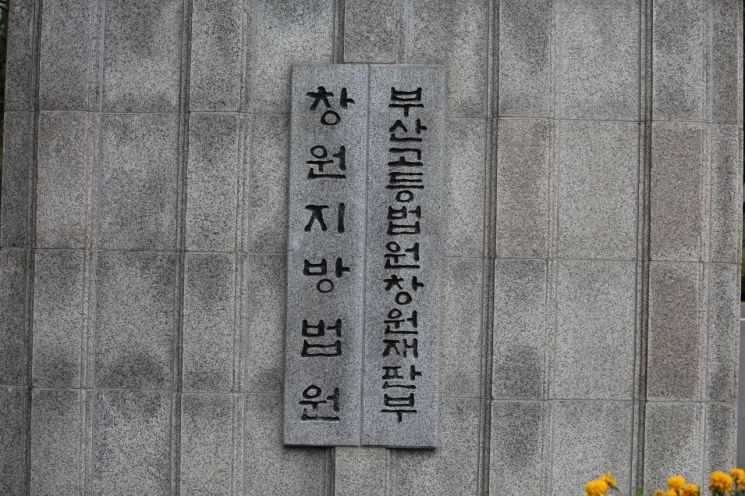
The Criminal Division 1 of the Changwon Branch of the Busan High Court held the closing hearing for this case on the afternoon of April 30, listening to the final arguments and statements from both sides.
The doctor from the hospital where the victim was treated, who had been requested as a witness by the defense, did not appear and instead sent a written response to the court's inquiry. As a result, the defense withdrew their witness application.
The attorney for defendant A, a man in his 20s indicted for assaulting and killing his ex-girlfriend, argued, "I have strong doubts as to whether the possibility of improper treatment or judgment by the hospital that treated the victim has been completely ruled out."
Referring to the hospital's written response, the attorney stated, "The hospital said that even they could not have foreseen the victim's rapid deterioration into pneumonia and sepsis on the day of her death." The attorney requested, "Please review according to the law whether the defendant can be held criminally liable for death resulting from bodily injury."
The attorney further emphasized, "The defendant should be punished appropriately for his wrongdoing, but no unjust verdict should be rendered against him based on incorrectly established facts or sentencing factors."
In the previous hearing, defendant A's side also argued, "We admit to trespassing, but regarding bodily injury resulting in death, there was no foreseeability of death, and the actions do not constitute stalking, so the sentence is too severe."
The attorney for the victim stated, "The victim, who had just turned 20, ended her life in pain without ever having the chance to live it fully. The bereaved family was forced to face the sudden loss of their beloved family member overnight, without any warning."
"For two years, which is not a short period, the victim suffered habitual violence from the perpetrator. She tried to escape by taking a leave of absence from school, reporting to the police multiple times, and attempting to move her residence, but she was unable to break free until the moment she lost her life," the attorney said. "This case should not be treated lightly as if it were merely a conflict arising from personality differences between boyfriend and girlfriend, as the defendant describes."
The attorney also appealed, "Given the current prevalence of dating violence in society, the defendant's crime is even more socially harmful and its impact is significant. The court should impose a severe sentence to serve as a warning to society, taking all these factors into account."
On this day, the prosecution requested the court to overturn the original verdict of 12 years in prison and instead sentence the defendant to 20 years in prison, as previously demanded.
The indictment was never amended to apply the charge of murder, despite the bereaved family's repeated requests.
In his final statement, defendant A said, "I am sorry to the victim and her family," and added, "I will reflect on my actions while serving my time in prison."
Previously, on April 1 of last year, A was indicted for breaking into the residence of his ex-girlfriend B, a woman in her 20s, climbing on top of her while she was sleeping, beating her head and face, strangling her, and violently assaulting her, resulting in her death. He was sentenced to 12 years in prison in the first trial.
Due to A's assault, B suffered serious injuries including traumatic subdural hemorrhage, requiring six weeks of medical treatment, but died in the hospital ten days later from systemic inflammatory response syndrome caused by head trauma.
A began dating B, his high school classmate, in 2022 and committed multiple acts of violence. Even after breaking up with B just before the incident, he called her 14 times and, when she did not answer, went to her residence.
Following the incident, the National Forensic Service conducted an initial oral opinion and a detailed examination, concluding that it was highly likely that B died from complications caused by head trauma.
Based on the autopsy results from the National Forensic Service and the attending physician's medical opinion, the prosecution determined that there was a causal relationship between the assault and the victim's death, and indicted A on charges of bodily injury resulting in death, stalking (excessive approach behavior), and trespassing.
The verdict for this appeal trial is scheduled to be delivered at 2:00 p.m. on May 21.
© The Asia Business Daily(www.asiae.co.kr). All rights reserved.












