Analysis of the Shock from Imposing a 145% Tariff on China
"Shortages Similar to the Pandemic Expected to Follow"
The tariff bomb imposed by U.S. President Donald Trump is now boomeranging back toward the American economy. As the U.S. government has decided to maintain its policy of a '145% reciprocal tariff' on China, Wall Street has issued a warning that, as a result, American consumers may see empty shelves in retail stores as early as next month.
According to CNBC on April 28 (local time), Apollo Global Management, a major U.S. asset manager, recently stated in a presentation to investors that the shock from the tariff policy "will result in empty store shelves across the United States within weeks, leading to shortages similar to those experienced during the pandemic."
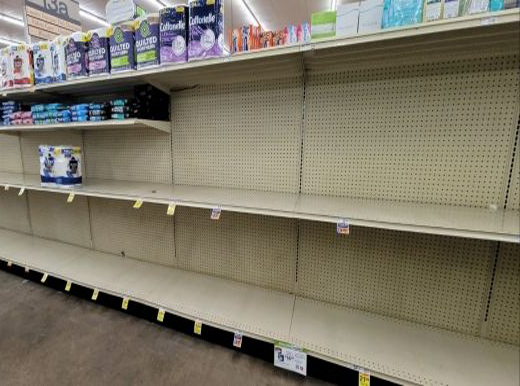 Wall Street has issued a warning that due to the tariff policies of the Trump administration, American consumers may see empty shelves in retail stores as early as next month. The photo shows empty toilet paper shelves at a major U.S. supermarket during the large-scale port workers' strike in 2024. Photo by X
Apollo presented a timetable outlining the real economic impact of tariffs on China, expressing concern that the shock would affect not only consumers but also companies that use Chinese-made products as intermediate goods. Since the U.S. government imposed a 145% tariff on Chinese imports, bookings for containers heading from China to the U.S. have plummeted.
Based on the time required to transport Chinese imports, Apollo predicted that container ships carrying Chinese goods would stop arriving at U.S. ports in early to mid-May. From mid to late May, demand for truck transportation is expected to halt, resulting in empty store shelves and declining retail sales. By late May to early June, Apollo anticipates layoffs in both the transportation and retail industries.
Apollo analyzed that, if this trend continues, the United States will enter a recession this summer. The firm argued that the sharp declines in new corporate orders, earnings outlooks, and capital expenditure plans in recent weeks support the possibility of a U.S. recession.
Currently, the United States is imposing a 145% tariff on Chinese imports. In response, China has imposed a 125% tariff on U.S. imports, escalating the U.S.-China trade war into a full-blown confrontation. However, the Trump administration has recently sent a conciliatory message, stating that "tariffs on China could be cut in half" and that there has been "progress in negotiations." In contrast, China maintains that "no negotiations have taken place with the United States."
Experts agree that even if trade negotiations between the two sides begin, the United States is likely to continue pressuring China by imposing port entry fees on Chinese ships or controlling semiconductor exports, making a dramatic improvement in relations unlikely. In addition, disputes over Taiwan and territorial claims in the South China Sea are expected to further heighten tensions between the two countries.
© The Asia Business Daily(www.asiae.co.kr). All rights reserved.

















