KFTC Issues Corrective Orders and Imposes 23.7 Billion Won Fine
Twenty architectural firms that engaged in collusive bidding as "decoy participants" in public sector construction project management service tenders conducted by Korea Land and Housing Corporation (LH) and the Public Procurement Service will face sanctions from the Korea Fair Trade Commission (KFTC).
On April 29, the KFTC announced that it has decided to issue corrective orders and impose a total fine of 23.7 billion won on 20 companies, including KD, ITM, Tomoon, Shinsung, Gunwon, and Dongil Engineering, for violations of the Fair Trade Act.
According to the KFTC, these companies predetermined the successful bidder or agreed to participate as decoy bidders in advance for 92 public sector construction project management service tenders conducted by LH and the Public Procurement Service from December 2019 to January 2023.
Construction project management services refer to managing planning, design, and evaluation of construction projects on behalf of the client, in accordance with the Framework Act on the Construction Industry.
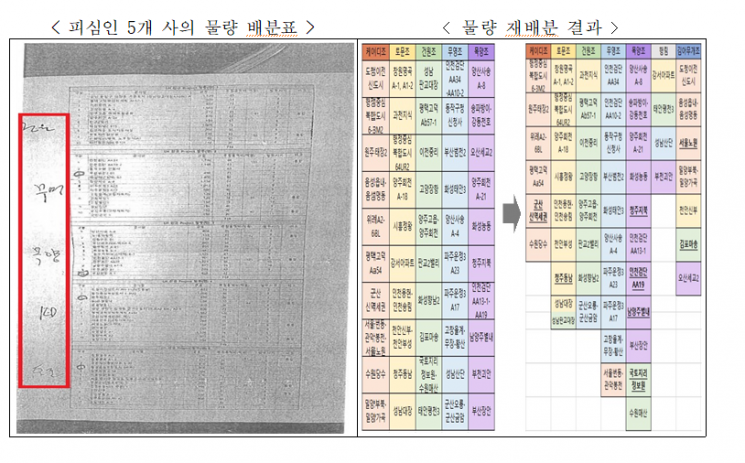
These firms participated in supervision service tenders ordered by LH and the Public Procurement Service for the construction of public (rental and for-sale) housing and public buildings (such as government offices and national hospitals) nationwide. Prior to each bid, they held meetings to designate the intended successful bidder for each tender and agreed that the other companies would not participate competitively. They also recruited decoy participants before each tender was held. The total contract value affected by this collusive conduct amounts to 556.7 billion won.
The KFTC believes that the companies initiated this collusion to avoid excessive competition and reduce costs incurred during the bidding process. The collusion was later expanded to include tenders ordered by the Public Procurement Service in order to ensure stable winning of contracts.
The KFTC stated, "This case is significant in that it involved strict measures against extensive and organized bid-rigging in the public construction supervision sector, which took place over several years and involved most of the major players."
© The Asia Business Daily(www.asiae.co.kr). All rights reserved.

















