Cesarean Section Rate Rises from 51% in 2019 to 67% in 2024
Seo Myungok: "A Growing Tendency to Avoid Medical Accidents Rather Than Rely on Medical Judgment"
As the rate of cesarean deliveries has surged, there are growing concerns that medical professionals are increasingly opting for defensive medicine, not based on medical judgment but to avoid medical accidents and related liabilities.
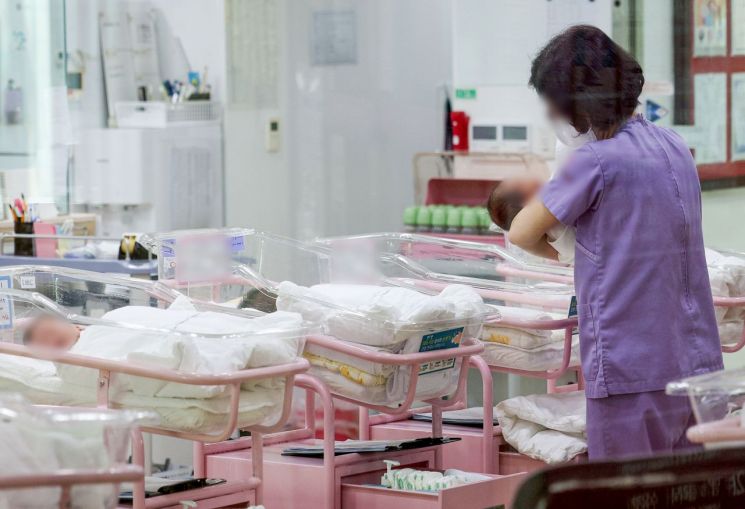
According to data submitted by Representative Seo Myungok of the People Power Party, a member of the National Assembly's Health and Welfare Committee, from the National Health Insurance Service on April 25, there were a total of 235,234 deliveries in Korea last year. Of these, only 76,588 were natural births, while 158,646 were cesarean deliveries. The cesarean section rate reached 67.4%, which is a sharp increase of 16.3 percentage points compared to five years ago in 2019, when the rate was 51.5%.
Experts point out that this change cannot simply be seen as a shift in delivery methods. Shin Bongshik, president of the Korean Association of Obstetric Clinics, explained, "The increase in cesarean deliveries indicates a trend toward defensive medicine. When it comes time to decide between attempting a natural birth or performing a cesarean section, the decision is increasingly based on concerns about medical accidents and patient transfers, rather than purely medical judgment."
Indiscriminate cesarean sections can negatively affect the health of both mothers and babies. For mothers, undergoing a cesarean section increases the likelihood of experiencing pregnancy-related complications in the future.
The problem is that legal mechanisms to resolve judicial risks related to unavoidable delivery accidents are effectively toothless. Since 2013, the government has operated a system under Article 46 of the Medical Dispute Mediation Act, in which the state compensates victims of unavoidable obstetric medical accidents, provided the doctor exercised sufficient duty of care. Starting this July, the maximum state compensation will be raised from 30 million won to 300 million won.
However, it is not easy for cases to be recognized as unavoidable delivery accidents during the compensation process. According to data submitted by the Ministry of Health and Welfare to Representative Seo, mediation was initiated for a total of 101 unavoidable medical accidents from 2021 to March 2025, but actual compensation was provided in only half of these cases.
In light of this reality, the government included measures to strengthen safety nets for medical accidents, aimed at reducing judicial risks in essential medical fields such as obstetrics and gynecology, in its "Second Phase Medical Reform Implementation Plan" announced last month. However, due to ongoing conflicts between the government and medical associations, concrete discussions have yet to take place.
Representative Seo stated, "As the trend toward defensive medicine intensifies, as seen with the increase in cesarean sections, it is becoming more difficult to make purely medical judgments. If a doctor's medical judgment was legitimate, there must be prompt improvements to systems that reduce or exempt them from judicial risks such as lawsuits."
© The Asia Business Daily(www.asiae.co.kr). All rights reserved.

















