Earlier this year, a 35-year-old pregnant woman, referred to as Ms. A, visited an obstetrics and gynecology clinic for a prenatal screening test. The government-supported maternal serum screening (integrated screening test) indicated a high-risk result. Concerned about the invasiveness and risk of miscarriage associated with amniocentesis, she opted for the highly accurate non-invasive prenatal test, G-NIPT.
The test results revealed an unusual genomic pattern, distinct from typical patterns associated with fetal chromosomal abnormalities. In response, GC Genome, which conducted the test, requested verification of the mother's clinical information. Through her attending physician, it was subsequently confirmed that the mother had a history of breast cancer diagnosis.
According to industry sources on April 25, GC Genome's G-NIPT is an AI-based non-invasive prenatal screening test that holds the top distribution share among university hospitals in Korea, establishing itself as the most trusted service in the domestic prenatal testing market. By analyzing cell-free fetal DNA (cfDNA) derived from the placenta in pregnant women, it screens for fetal chromosomal abnormalities.
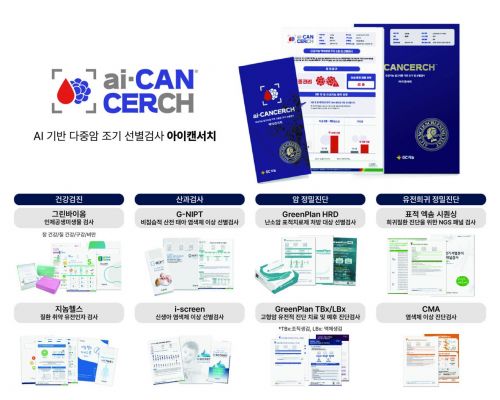
GC Genome has advanced abnormal signal detection technology within maternal cfDNA, successfully developing the core technology (G-SeNTInEL) for its 'iCanSearch' platform. This platform applies a whole genome sequencing (WGS)-based AI analysis algorithm. Its greatest strength is its theoretical potential to detect all types of cancer.
'iCanSearch' is a multi-cancer early detection test developed independently by GC Genome, utilizing its proprietary AI algorithm analysis method based on this technology. With only a small blood sample (10 mL), it can predict the potential presence of more than six major cancers, including lung, liver, colorectal, pancreatic and biliary tract, esophageal, ovarian, and other cancers. The AI-based analysis method, for which GC Genome holds a patent, has secured the largest clinical sample dataset in Korea from over 7,000 healthy individuals and cancer patients at leading university hospitals, demonstrating a high sensitivity of 82.2%.
The clinical results of the key technology applied in 'iCanSearch' have received international recognition, having been presented at major global cancer conferences and published in academic journals. Domestically, the technology was also recognized for its excellence, winning the Best Paper Award at the 19th Annual Meeting of the Korean Society of Diagnostic Genetics in 2024, among other accolades.
GC Genome also achieved a milestone by successfully transferring its liquid biopsy technology to Genis Health in the United States, marking the first such technology transfer from Korea. The company signed an exclusive license-out (technology transfer) agreement, granting Genis Health the rights to research, develop, manufacture, and commercialize the technology in the Americas.
© The Asia Business Daily(www.asiae.co.kr). All rights reserved.












