Reviewing Exemption of Auto Parts from Steel and Aluminum Tariffs
Auto Parts Included in Tariffs Imposed on China for Fentanyl
On April 23 (local time), the Financial Times (FT) reported that U.S. President Donald Trump is planning to exempt certain tariffs on auto parts in order to support domestic automobile manufacturers. This move comes as both domestic and international criticism has mounted, arguing that tariffs on auto parts could disrupt global supply chains and lead to higher consumer prices.
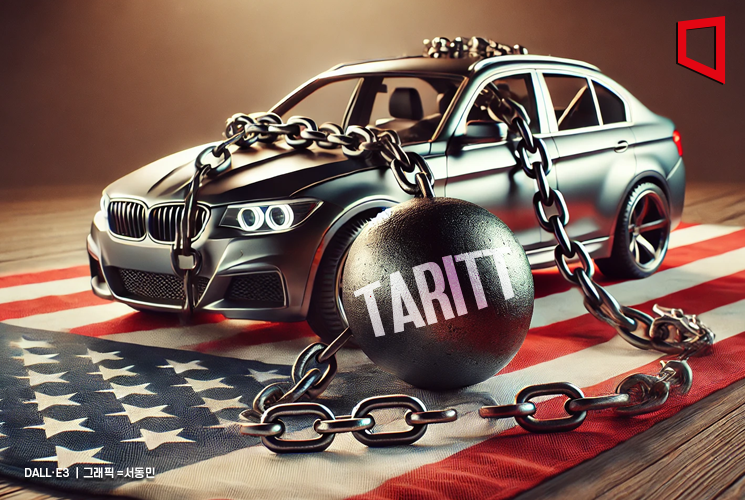
Quoting sources, FT reported that the Trump administration is considering exempting auto parts from the 20% tariff imposed on products imported from China in relation to synthetic opioid fentanyl imports, as well as from the 25% global tariffs on steel and aluminum. This adjustment appears to be a response to the sharp decline in the U.S. stock market following successive tariff measures and concerns over the anticipated aftereffects of tariffs, such as rising automobile prices.
However, the existing 25% tariff on imported automobiles will remain in place. In addition, auto parts that are not subject to the exemption will be subject to a 25% tariff starting from the 3rd of next month.
Previously, the U.S. automobile industry jointly requested President Trump to cancel the planned 25% tariff on auto parts. They argued that tariffs on auto parts would disrupt the global automotive supply chain and would have a domino effect, leading to higher prices as well as increased vehicle maintenance and repair costs.
FT interpreted, "This measure is a recent signal that President Trump is willing to propose exceptions for favored industries, following warnings that his tariff policies could trigger massive sell-offs in global markets and potentially cause a U.S. recession."
If this plan is implemented, it would amount to another postponement of tariff enforcement, following President Trump's 90-day deferral of reciprocal tariffs (excluding China). President Trump had already suspended the country-specific reciprocal tariffs just 13 hours after they took effect on the 9th. On the 11th, he decided not to impose tariffs on smartphones and semiconductors, and on the 14th, he decided not to impose tariffs on major auto parts.
Meanwhile, the Trump administration has begun taking measures to restrict imports of commercial vehicles, in addition to passenger cars, through tariffs and other means. The U.S. Department of Commerce announced that it has launched an investigation under Section 232 of the Trade Expansion Act to assess the impact of imports of medium- and heavy-duty trucks and their parts on national security.
Medium-duty trucks are defined as trucks with a gross vehicle weight of more than 10,000 pounds but less than 26,001 pounds, while heavy-duty trucks are those with a gross vehicle weight of 26,001 pounds or more. Parts include engines, engine components, transmissions, powertrains, and electronic components.
© The Asia Business Daily(www.asiae.co.kr). All rights reserved.

















