Useful for Early Identification, Diagnosis, and Treatment of High-Risk Patients
A joint research team composed of Yonsei Sarang Hospital, Severance Hospital, and Gangbuk Yonsei Hospital announced on April 23 that they have successfully developed an artificial intelligence (AI) model capable of accurately predicting the risk of patellar (kneecap) dislocation using AI technology.
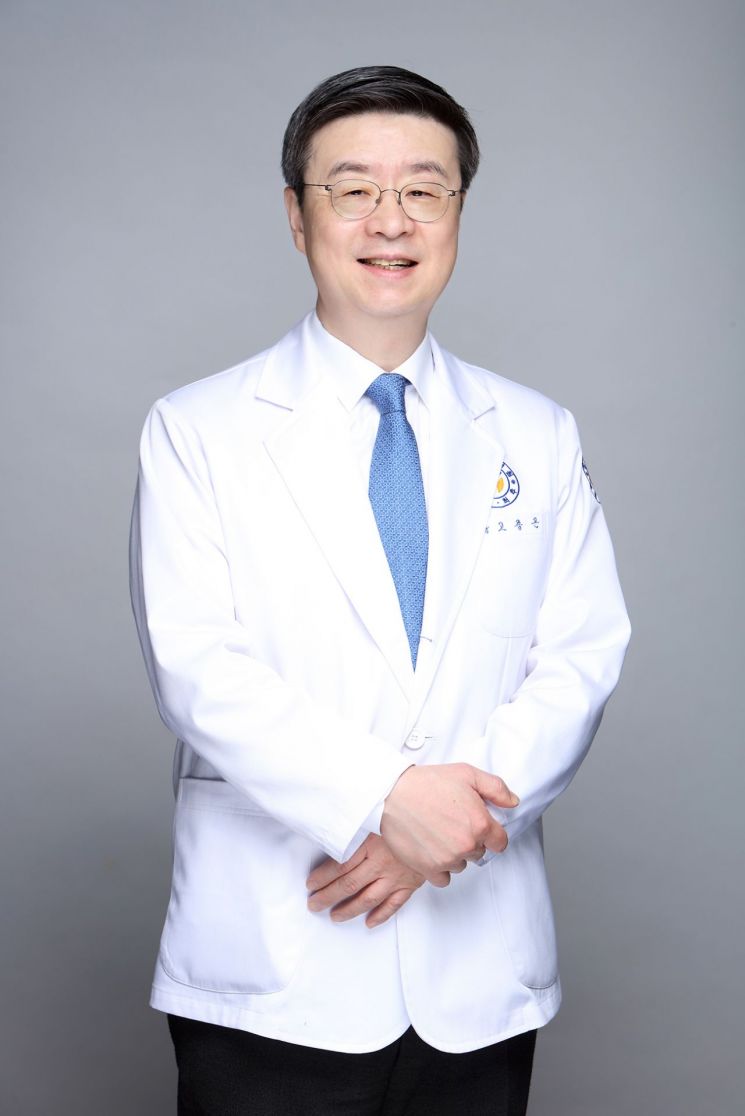
The research paper, titled "Comparative Analysis of Three Machine Learning Methods to Identify the Minimum Predictive Factors of Patellofemoral Instability Risk," was published in the April online edition of the internationally renowned orthopedic journal, Orthopaedic Journal of Sports Medicine.
Patellar dislocation refers to a condition where the patella, the small, saucer-shaped bone located at the front center of the knee, is dislocated or deviates from its normal position. Although it is a severe condition that causes pain and discomfort, patients often fail to recognize the symptoms early, missing the optimal treatment window. This delay can lead to damage to the knee cartilage, muscles, and cruciate ligaments, and can accelerate the onset of arthritis.
This study is notable for the collaboration among orthopedic specialists from the three institutions, who developed an AI model capable of accurately predicting the risk of patellar dislocation in adults using only a minimal set of variables.
According to the paper, the research team analyzed MRI data from 124 adult patients aged 20 or older who were diagnosed with acute lateral patellar dislocation between 2010 and 2022, and compared these with a control group of 121 individuals. The analysis revealed that patellar tilt and femoral trochlear depth were the factors most closely correlated with patellar dislocation.
The study applied and compared the performance of three machine learning techniques: logistic regression analysis (LRA), support vector machine (SVM), and light gradient boosting machine (LGBM). The LGBM model, which utilized eight variables, achieved the highest performance with an AUC (area under the curve) of 0.873. The SVM model demonstrated both high efficiency and accuracy, achieving an AUC of 0.858 using only three variables.
The research team stated, "In actual clinical practice, efficiency is just as important as diagnostic accuracy," and emphasized, "A machine learning model that achieves high predictive power with a small number of variables is more suitable for practical clinical application."
This study presents an efficient approach for predicting the risk of patellar dislocation in adults. In particular, the SVM model demonstrated excellent performance with a minimal number of variables, indicating strong potential for clinical application.
Meanwhile, this achievement builds upon the previous research jointly conducted by Yonsei Sarang Hospital and the team of Professor Kwak Yunhae at Asan Medical Center, which focused on applying machine learning and optimization methods to predict risk factors for patellofemoral instability in children and adolescents. That paper was published in the internationally recognized orthopedic journal, Knee Surgery, Sports Traumatology, Arthroscopy.
Ko Yongkon, Director of Yonsei Sarang Hospital, commented, "This is also being recognized as a successful case of joint research achieved through close cooperation and synergy among independent medical institutions." He added, "If this technology is introduced and utilized in clinical settings in the future, it is expected to greatly aid in the early and easy identification and diagnosis of high-risk patients for patellar dislocation, as well as in taking appropriate preventive measures and providing active treatment."
© The Asia Business Daily(www.asiae.co.kr). All rights reserved.
![Clutching a Stolen Dior Bag, Saying "I Hate Being Poor but Real"... The Grotesque Con of a "Human Knockoff" [Slate]](https://cwcontent.asiae.co.kr/asiaresize/183/2026021902243444107_1771435474.jpg)
















